
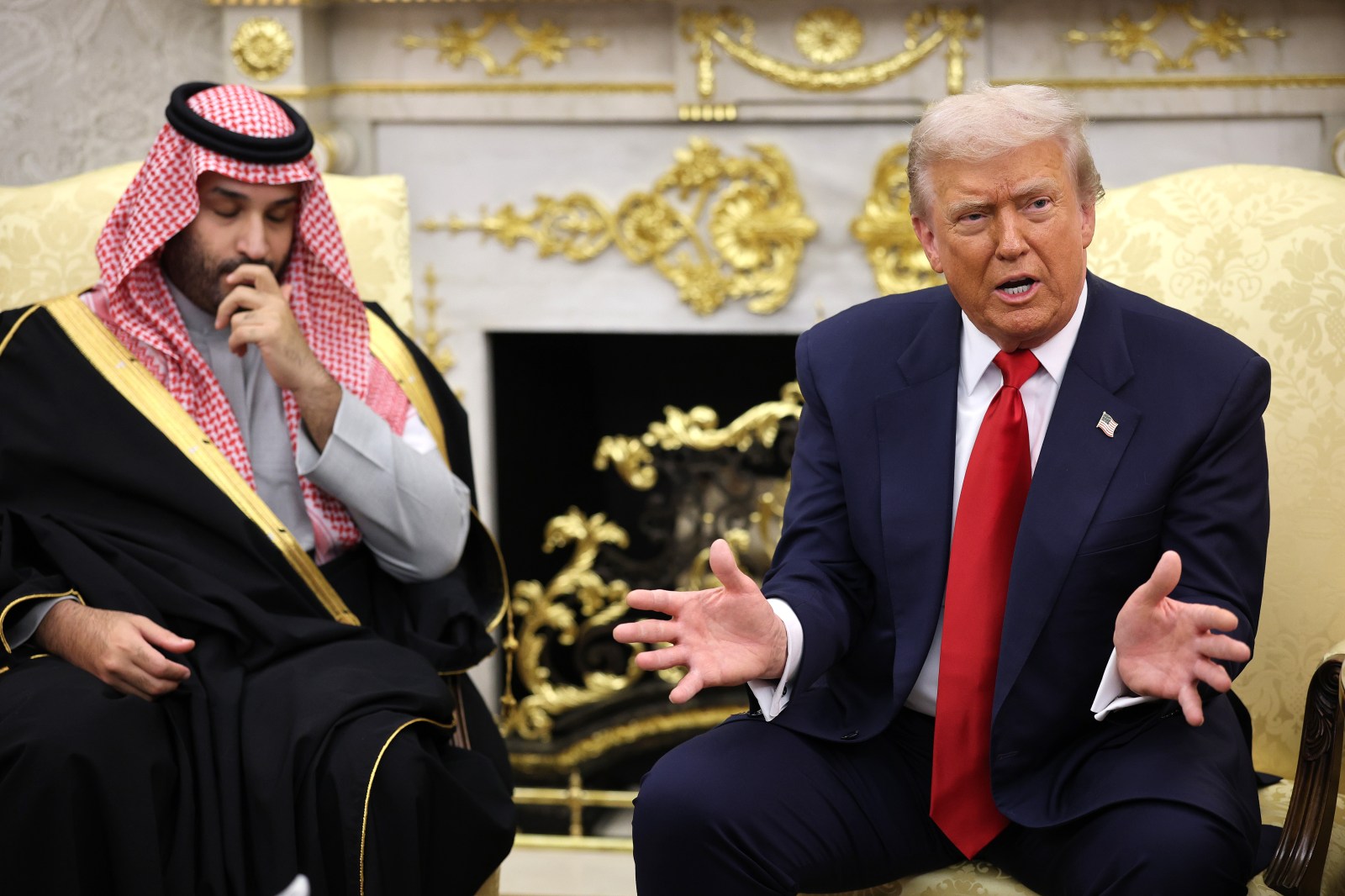
Republican Senator John Kennedy has voiced his discomfort with the Trump administration’s proposed civilian nuclear agreement with Saudi Arabia. This represents an uncommon case of dissent within the president’s party as lawmakers gear up to scrutinize the deal.
Concerns Over the Saudi Nuclear Deal
Kennedy’s remarks coincided with President Trump’s announcement of the agreement and a subsequent requirement for Saudi Arabia to normalize relations with Israel before proceeding. This condition has already drawn Democratic criticism and questions about the deal’s viability under congressional review. The Trump administration was contacted by Newsweek for comments.
Why Kennedy is Opposing the Deal
During an interview on CBS News’ Face the Nation, when asked about the deal, Kennedy responded, “No. Maybe someday, but not right now.” He argued that initiating a nuclear agreement with Saudi Arabia, while the U.S. is in conflict with Iran, sends mixed signals. “We’re bombing a country to keep them from getting a nuclear weapon, but we’re signing a deal with another country,” he stated, illustrating the contradiction.
Kennedy mentioned that his main issue is not with civilian nuclear cooperation but with the timing. He emphasized that global tensions around nuclear deterrence require careful consideration. Noteworthy is his support of Trump’s broader foreign policy and his defense of the administration’s stance on Iran.
Despite this, Kennedy urged maintaining pressure on Iran through sanctions and military actions while avoiding a full-scale ground war. His focus on the timing contrasts with Democrat opposition, which centers on the handling of the agreement.
Details of the Deal
The agreement, unveiled the previous week, aims to establish a framework for civilian nuclear cooperation between the U.S. and Saudi Arabia. It requires congressional approval before implementation. The Trump administration claims the deal will bolster strategic ties with a crucial Middle East partner and create opportunities for American businesses in Saudi Arabia’s growing nuclear energy sector.
Advocates argue that U.S. involvement would enable the country to exert greater influence over Saudi Arabia’s nuclear developments. However, concerns persist about a potential Saudi nuclear program accelerating the kingdom’s path to nuclear weapons. These concerns are heightened by Crown Prince Mohammed bin Salman’s earlier statement that Saudi Arabia might pursue a bomb if Iran acquired one.
Trump’s Israel Normalization Requirement
The political discourse intensified when Trump imposed a significant new condition requiring Saudi Arabia to join the Abraham Accords, thereby normalizing relations with Israel. Given Saudi Arabia’s stance on Israeli relations, this condition raises doubts about the deal’s progress.
For years, Saudi Arabia has linked normalization to progress towards Palestinian statehood. Though dialogues about closer ties with Israel exist, breakthroughs have been tied to the Palestinian issue. Kennedy expressed skepticism about meeting this requirement, indicating that it could become a significant hurdle.
Differing Criticism from Van Hollen
While Kennedy questioned the timing and strategic rationale, Democratic Senator Chris Van Hollen criticized the negotiation process. On ABC’s This Week, he highlighted how the terms were changed post-agreement announcement, describing it as a “bait-and-switch scheme.” Van Hollen argued this move sent wrong signals to a key U.S. ally.
He focused on how the introduction of a new political condition, after reaching an agreement, caused confusion for Saudi Arabia. His argument stands apart from Kennedy’s, as it primarily addresses how the framework was altered.
Implications for Congressional Review
The criticism from both parties presents challenges for the administration as the deal approaches congressional review. Kennedy’s criticism centers on timing with Iran, while Van Hollen targets the post-agreement changes. The administration faces resistance from both angles.
Kennedy’s support for Trump’s Iran strategy gives weight to his objections. Meanwhile, Democrats continue to scrutinize the agreement’s linkage to Saudi-Israeli normalization. This scenario complicates the deal’s initial presentation as a foreign-policy success.
Future Steps
The agreement still requires congressional scrutiny, where lawmakers will assess its nonproliferation measures and strategic implications. The administration argues for the partnership’s strength and increased American influence in the Middle East. However, critical focus may pivot to why the U.S. pursues a nuclear deal with Saudi Arabia amidst nuclear proliferation in the conflict with Iran.
As of now, the deal encounters an unusual political dynamic. Democrats challenge the negotiation process while at least one prominent Republican questions its timing. This combination could transform an intended foreign-policy triumph into a challenging proposition on Capitol Hill.