
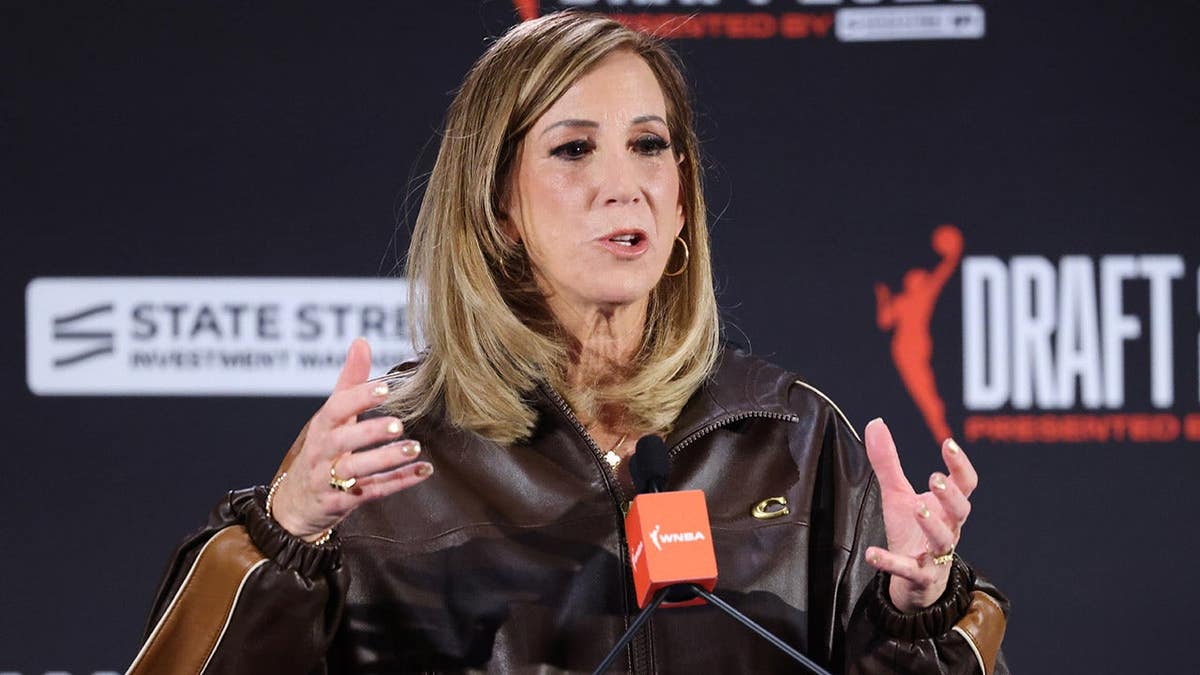
WNBA Commissioner Cathy Engelbert has criticized those using the league to create division regarding transgender athletes. Her comments came in Dallas, following a statement by the league addressing concerns over transgender participation.
Engelbert remarked, “People are trying to use the league to sow divisiveness,” speaking alongside Greg Bibb, Wings CEO and managing partner.
“We’re being a center of political football for people who have never watched the WNBA, never have written about the WNBA or reported on the WNBA,” Engelbert added.
The controversy mainly surfaced after WNBA players and media condemned Sophie Cunningham of the Indiana Fever, who advocated protecting young girls from competing against biological males in sports during an ESPN profile.
This led to public figures like former NBA players Enes Kanter Freedom and Royce White declaring themselves eligible for the WNBA draft, identifying as women.
The WNBA’s collective bargaining agreement states eligibility is strictly for players who are women, without further specifying guidelines on gender identity.
Navigating Complex Responses
The response within the WNBA reflected differing opinions. Some individuals criticized Cunningham’s stance, creating tension that spilled into league events.
DiJonai Carrington of the Chicago Sky was notably ejected for an aggressive foul on Cunningham, intensifying the scrutiny of Cunningham’s remarks.
Unpublished comments from Cunningham stirred further controversy: “I got a lot of negative feedback about me hating trans. I’m like, ‘I never once said that.’ I think that I am here to extend love. But I also think with that love is truth, being honest. And I want to protect young girls in a locker room, or young girls in sport who shouldn’t have to go against biological men.”
A significant percentage of adults, around 78%, support the idea that males should not compete against females in sports.
Outside Perspectives
Outsiders have defended players like Caitlin Clark, viewing her treatment as representative of broader issues within sports and media, including racial and gender-based hostilities.
Discussions emerged when Cindy Brunson argued against the ejection of Carrington for her foul on Cunningham, suggesting that Cunningham’s reaction warranted ejection instead.
Many feel defenders of players like Cunningham and Clark are mischaracterized. They contend the real division comes from broader societal debates that single out selective groups based on skin color and political stance.