
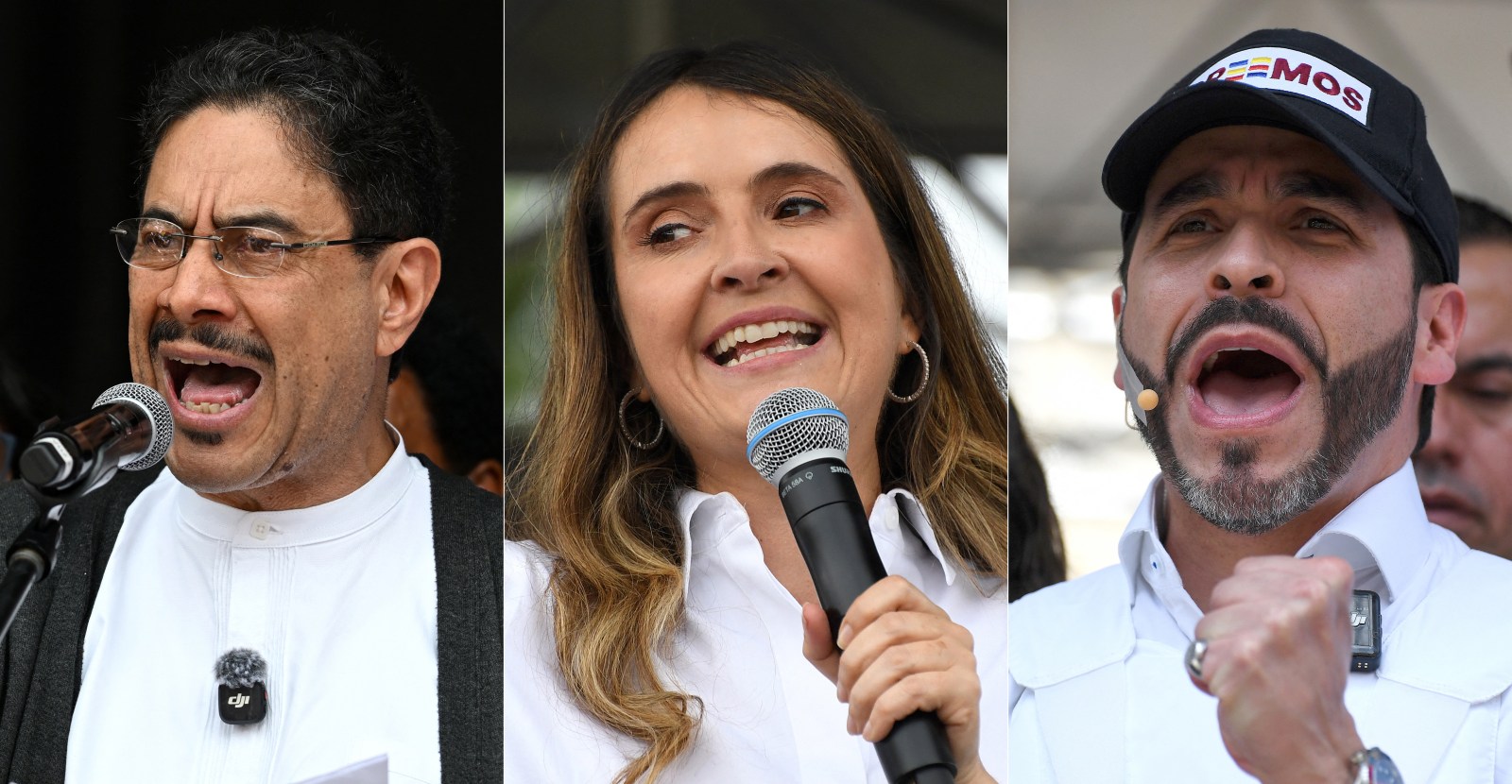
Four years after Gustavo Petro’s historic election as Colombia’s first left-wing president, the nation stands on the brink of another pivotal decision. Voters are preparing to choose between continuing his political legacy or shifting to a hard-right alternative emerging in the political landscape.
Rising Political Figures
Leading the electoral race are Ivan Cepeda, supported by Petro as his successor, and Abelardo De La Espriella, a lawyer with a new voice in Colombian politics. De La Espriella, initially on the political periphery, has become a prominent right-wing figure. His campaign strategy echoes a broader trend in the Americas: using anti-establishment messages, active social media engagement, and pledging to enhance security and combat leftist influences. Known as “The Tiger,” his approach mirrors that of figures like Donald Trump and Jair Bolsonaro.
A Divided Political Landscape
Colombia enters the election deeply divided. As Petro’s term ends, his approval ratings reveal a nation split between supporters and opponents. Gimena Sanchez from the Washington Office on Latin America reflects this sentiment, highlighting voter fatigue with the traditional political spectrum and an appetite for change. De La Espriella capitalizes on this by focusing his campaign on challenging Petro’s movement rather than detailed policy discussions. His platform advocates for smaller government, expanded prisons, and a security strategy akin to that of Nayib Bukele of El Salvador, complete with nationalistic tones.
De La Espriella is leveraging the widespread anti-establishment sentiment in Colombia, focusing on emotional appeals over policy details.
His opponent, Ivan Cepeda, a seasoned left-wing senator, is expected to reach a runoff, leading in polls while battling Paloma Valencia, an establishment-backed conservative candidate. Despite her initial strong institutional support, Valencia’s influence is waning as De La Espriella’s outsider status turns into a key asset.
Dynamics of the Electoral Race
In the early months of 2025, De La Espriella’s campaign showed modest support, polling at only 1.1%. Yet by November, it surged to 14%, and by January, public opinion placed him neck-and-neck with Cepeda. As the election approached, they were nearly tied, reflecting an unpredictable contest.
Though some polls predict Cepeda leading slightly in a potential runoff, the race remains volatile. Observers suggest that even with a loss, De La Espriella’s rise signifies a shift towards new hard-right, anti-establishment politics in Colombia.
Legal Background and Controversy
De La Espriella’s legal career has stirred controversy. He represented high-profile clients, including paramilitary leaders associated with significant violence, and Alex Saab, a figure linked to money laundering for Venezuela’s government. Critics argue against his legal choices, yet De La Espriella maintains his role as legal representation rather than personal endorsement.
Relations with the United States
Colombia’s relationship with the United States, historically strong, has waned. Petro’s administration coincided with a rise in coca cultivation, prompting the U.S. to sanction Petro personally. Both De La Espriella and Valencia aim to restore ties with Washington, emphasizing renewed security collaboration.
However, a hard-right security policy could risk further human rights issues, echoing past controversies and potentially exacerbating violence and inequality, according to Sanchez from WOLA. Critics urge a cautious approach, advocating systemic solutions over strict enforcement.
Venezuela and Border Issues
Colombia’s foreign relations with Venezuela are pivotal, shaped significantly by U.S. policy in the region. The extensive shared border presents complex challenges involving armed groups and migration. Future relations may depend heavily on Washington’s stance toward Venezuela, limiting Colombia’s diplomatic flexibility.
The strategic autonomy Colombia once had with Venezuela has shifted, driven by U.S. foreign policy interests. This evolving dynamic suggests a necessity for Colombia to diversify its international relations, as independent maneuvering becomes increasingly challenging.