
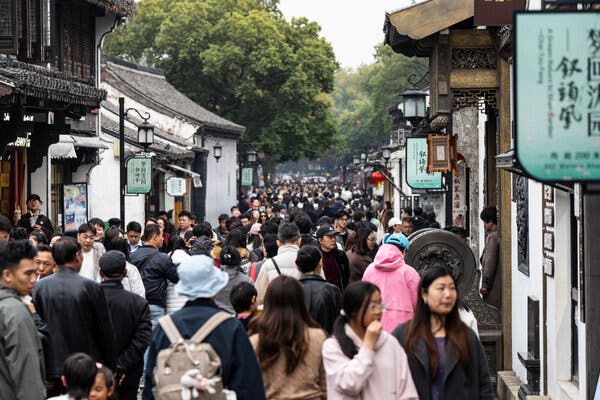
China is facing a slowdown in consumer spending, as shown by the unexpected drop in retail sales in May. According to the National Bureau of Statistics, sales fell 0.6 percent compared to the same month last year. This marks the first year-over-year decline since December 2022 when Covid restrictions affected consumer behavior.
The drop in retail sales surprised economists, given expectations that rising energy costs would boost sales. Gasoline sales saw an increase as fuel prices rose following the closure of the Strait of Hormuz. However, even with these factors, retail sales declined further after adjusting for inflation.
Domestic demand in China is weakening, pushing companies to focus more on international markets. In April, exports reached a record high, increasing further in May to $376.8 billion. Industrial production also grew, particularly in the high-tech sector including electric cars.
“China’s supply side remains relatively strong: exports are growing rapidly, industrial production is holding up well, and high-tech sectors continue to expand,” said Zhu Tian, an economics professor at the China Europe International Business School in Shanghai. “However, domestic demand remains weak.”
Investment in China dropped in May, especially notable when excluding the real estate sector. Companies in the private sector are finding limited opportunities for profitable expansion.