
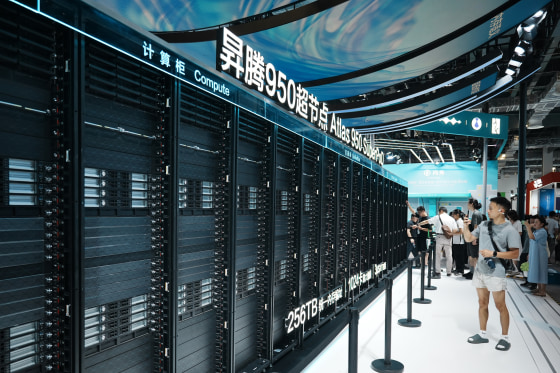
During the World AI Conference in Shanghai, Chinese chipmakers promoted their latest products to customers who cannot obtain Nvidia technology. The interest in these chips is growing, as restrictions imposed by the U.S. have limited access to high-performance AI technology from abroad.
Exhibitors at the conference showcased innovations in chip design and engineering. The attraction was the outcome of China’s push to develop homegrown AI hardware in response to international limitations. This surge in domestic technological advancements is attracting attention from regional government officials and potential customers alike.
The conference featured significant developments, including the Huawei Atlas 950 SuperPoD, known as the industry’s largest-scale AI supernode. With such innovations, Chinese companies aim to fill the gap left by restricted access to foreign technology. The interest among buyers underscores the growing demand for locally produced AI chips.
This shift is part of China’s broader strategy to achieve self-reliance in technology. By focusing on developing its own AI infrastructure, China seeks to maintain competitiveness in the global AI race.