
Chevron’s Expansion in Venezuela
Chevron has confirmed its plan to expand operations in Venezuela after a recent agreement announced by President Donald Trump. The deal aims to develop Venezuela’s oil reserves and include Pentagon participation in the profits. Chevron, the only major U.S. oil company in Venezuela, has been allocated more acreage in the Orinoco Belt where its operations are active. Over the next five years, Chevron plans to invest over $7 billion to double its production to approximately 600,000 barrels daily.
CEO Mike Wirth emphasized Chevron’s long history in Venezuela, with the company’s involvement dating back over a century. He expressed confidence in Venezuela’s potential for oil resources.
Venezuela’s Oil Industry
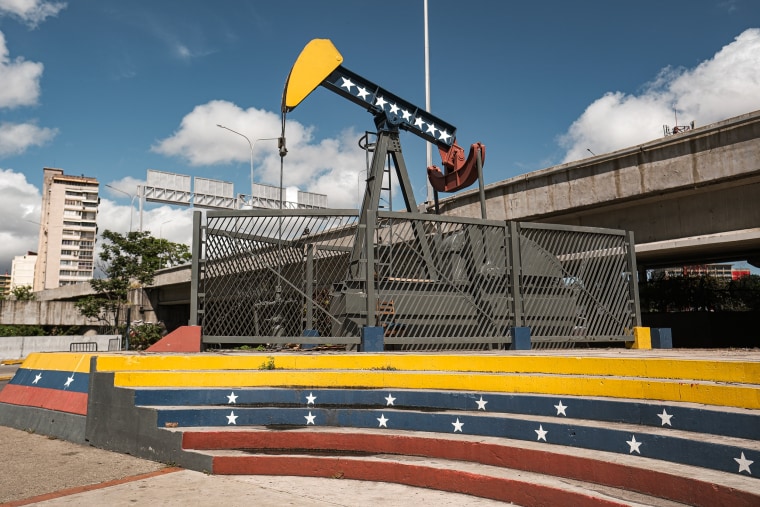
Venezuela holds the world’s largest proven oil reserves, estimated at over 303 billion barrels according to OPEC’s 2025 Annual Statistical Bulletin. Saudi Arabia follows with 267 billion barrels. Despite this, Venezuela’s energy infrastructure suffers severe degradation, producing just over 1 million barrels daily compared to Saudi Arabia’s 10 to 11 million and the U.S.’s 14 million barrels per day.
Image Source: Diko Betancourt / Anadolu via Getty Images
International Agreements and Skepticism
Chevron’s expansion results from a U.S. agreement with Venezuela, facilitated by various international energy companies. Energy Secretary Chris Wright participated in Caracas’ ceremony, where Chevron and other companies signed agreements with the Venezuelan government.
Wright stated that the investment deals could create thousands of jobs and help restore peace and prosperity to Venezuela. The U.S. aims to partner with North American Blue Energy Partners as part of Trump’s initiative to engage with Venezuela’s oil industry.
However, experts question the feasibility of reviving Venezuela’s oil industry, highlighting years of neglect. Doubts also arise regarding acting Venezuelan President Delcy Rodríguez’s authority to grant extensive rights over Venezuela’s oil fields. Concerns persist over whether future administrations would honor such agreements.
Constitutional Challenges
Venezuelan law mandates National Assembly approval for agreements like the one made with the U.S. Ian Vásquez from the Cato Institute criticized the deal’s legitimacy, citing actions by a dictatorship. He mentioned potential scrutiny by any future Venezuelan democracy, impacting confidence in the current arrangement.
The National Assembly expressed informal support but didn’t formally approve the agreement.
Washington’s Response
In response to criticism, Wright defended the deal as beneficial for Venezuela and the U.S., aiming to invest in neglected resources. He emphasized it would improve Venezuelans’ lives and better supply energy to Americans.
Since the capture of former President Nicolás Maduro, Trump has targeted Venezuela’s oil industry, facilitating U.S. business entry into the country. He hinted at other major U.S. oil companies preparing to re-enter Venezuela, but Exxon Mobil remains hesitant to invest, citing unappealing conditions.
Exxon Mobil has not participated in this expansion, underscoring the company’s previous issues with Venezuela’s nationalization actions.
Venezuela’s Nationalization and U.S. Oil Majors
The history of U.S. oil majors in Venezuela contributes to reluctance. Venezuela’s nationalization dated back to 1976, leading to the creation of Petróleos de Venezuela S.A. In 2007, President Hugo Chávez enforced foreign oil companies into joint ventures and seized assets of those refusing cooperation. Chevron caved, but Exxon and ConocoPhillips declined, losing their assets.
President Trump asserted the deal with Venezuela could significantly reduce U.S. gas prices. Analysts caution that Venezuela’s rundown infrastructure requires substantial time and investment for recovery.
Amy Jaffe from NYU noted the potential delay in bringing new facilities online in the Orinoco region, with estimates between two to four years. Regions lacking pipelines and support infrastructure could face further delays.
Despite efforts, AAA reports the national average price for regular gasoline has risen to $4.12 per gallon, a significant increase from the previous year.