
Joel Andre is a 17-year-old high school junior from the Democratic Republic of Congo, now residing near Portland, Maine. For Joel and his younger sister, Estafania, the excitement of the World Cup overshadows their homework, providing a much-needed distraction for a family in distress.
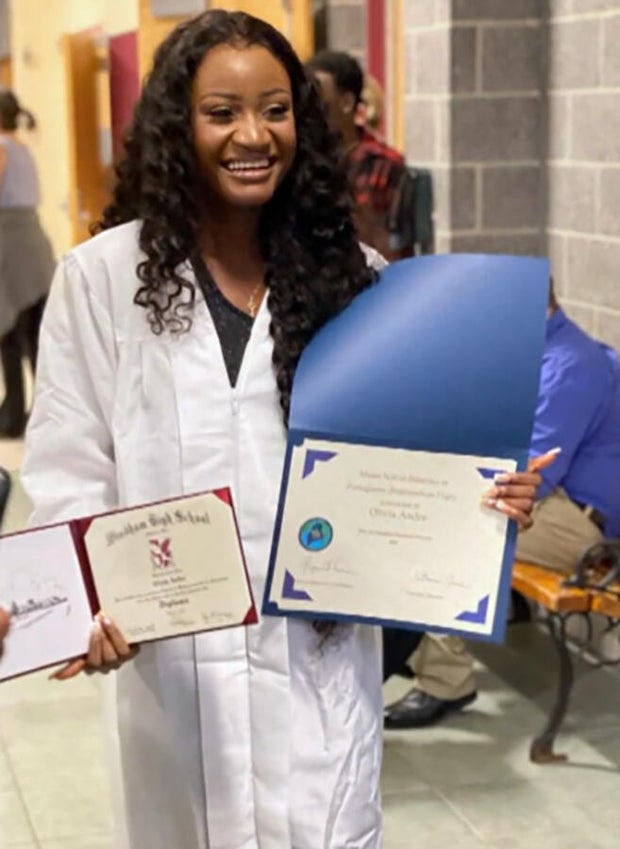
The siblings, along with their mother, Carine, have been deeply affected by the absence of their 19-year-old sister, Olivia. In November of last year, the entire family was detained at the South Texas Family Residential Center in Dilley, Texas. Joel describes the conditions at Dilley as extremely difficult, particularly regarding food and water quality, which he describes as “the worst.”
Their release in March brought relief to Joel, Estafania, and Carine, but Olivia, an asylum seeker, had to remain in detention. Olivia’s continued detainment lingered for more than five months, unresolved despite the family’s efforts to comply with all legal requirements.
Family’s Asylum Journey
The family had sought asylum in the United States after fleeing Congo, where Carine, an activist, had faced abuse for her opposition to the government. Under the guidance of their lawyer, Elora Mukherjee from Columbia University’s Immigrant Rights Clinic, the family was initially vetted and released in 2022.
Despite compliance with legal processes, a deportation order in February 2025 led the family to attempt entry to Canada, resulting in their re-detention in the U.S. at Dilley.
Conditions at Dilley
The family experienced difficult conditions at the detention center, a place described by Mukherjee as a collection of trailers lacking clean drinking water and adequate food. Reports of worms and mold in meals and challenging living conditions have been testified by many detainees.
Congressman Joaquin Castro has criticized the operation, emphasizing that children are treated as criminals despite being asylum seekers. Many of these children, Castro notes, have been detained at Dilley, where conditions are often heartbreaking for young families.
“It’s the only place I can think of in America where we imprison young children who have done absolutely nothing wrong,” said Congressman Castro.
Facility Operations and Response
Dilley, operational since 2014, has become a focal point for criticism. Opponents of the center stress the violation of the Flores Settlement, which prescribes the prompt release of children, typically within 20 days. Nonetheless, detention has extended far beyond this timeframe for many.
Despite legal challenges, including an unsuccessful attempt to terminate the Flores Settlement, the administration continues to justify detention practices. The Department of Homeland Security and CoreCivic, the facility’s operators, deny allegations of substandard care, claiming high standards of medical and dietary provisions.
Even as Joel, Estafania, and Carine celebrate Olivia’s eventual release, the broader systemic issues remain. Representative Castro advocates for transparency at Dilley and an end to practices he deems unnecessarily harsh and opaque.
Facing calls to shut down facilities like Dilley, questions linger about the treatment of individuals seeking asylum and the policies governing their detention and care within the U.S. immigration system.