
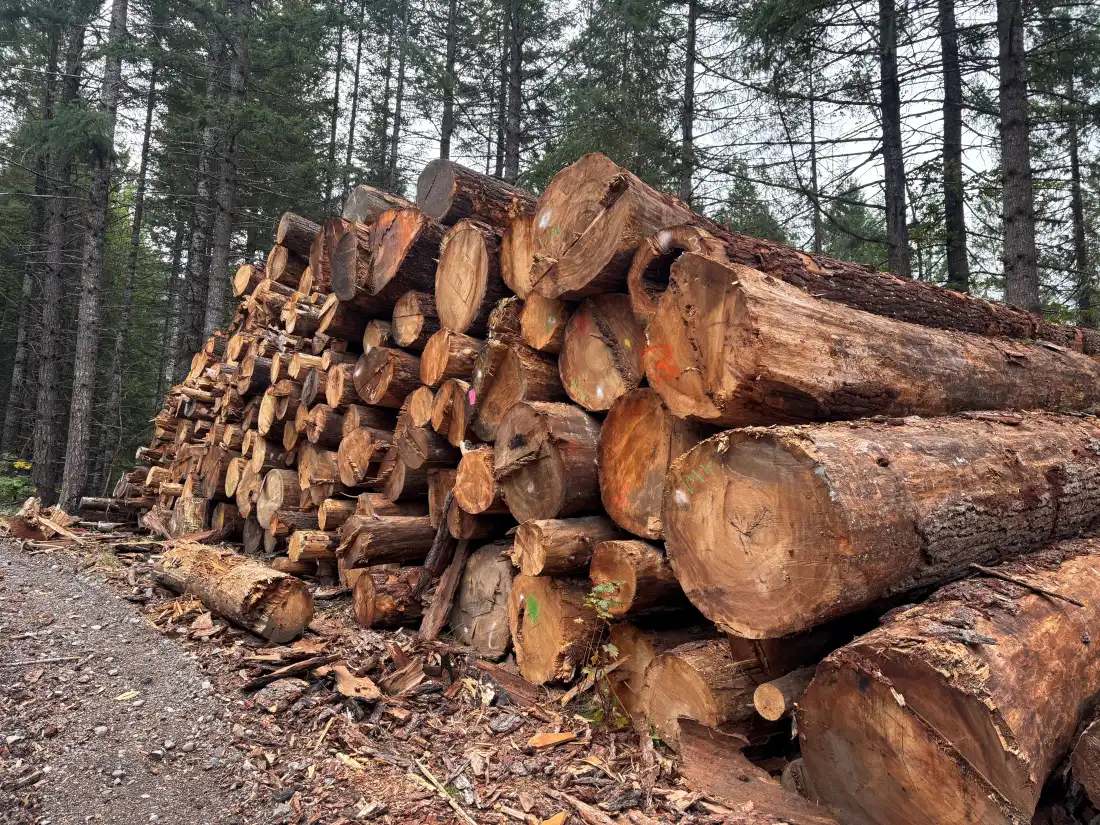
EUGENE, Ore. – President Trump plans to open about 44 million acres of the nation’s untouched national forests. He believes this will bring timber jobs back to struggling towns and help manage wildfires in overgrown areas. Trump’s move follows executive actions aimed at increasing timber sales on U.S. Forest Service land and overturning the 25-year-old Roadless Rule. This rule has restricted new logging on undeveloped national forests.
Timber industry leaders have mixed feelings about these changes. Sean Smith, CEO of Starfire Lumber in Oregon, sees issues beyond the Roadless Rule. Smith emphasizes that high diesel prices, partly due to geopolitical tensions, are a significant challenge. Inflation is also impacting costs for essential goods like steel and spare parts. Despite these hurdles, some industry experts believe reversing the Roadless Rule could create a more reliable local supply for mills.
Smith argues that overgrown forests, including the nearby Willamette National Forest, are prone to catastrophic fires. He believes responsible logging could help mitigate this risk. Although the administration and industry push for the repeal to facilitate wildfire prevention, longstanding challenges such as lawsuits and workforce shortages persist.
Jeff Brink, a second-generation logger near Eugene, mentions labor shortages and high diesel prices as obstacles. He notes the logging industry is much smaller now compared to when his father started their family business. Factors such as environmental laws and cheaper Canadian lumber result in a decline in U.S. timber sales. Since the 1990s, around 400 mills have closed across the Northwest.
Industry projections suggest that overturning the Roadless Rule might lead to a modest increase in federal timber sales. However, many industry professionals remain skeptical about its impact. Environmental groups are preparing to challenge the repeal legally, and there are concerns about reigniting conflicts similar to the Timber Wars of the past.
Timothy Ingalsbee, who once led protests against old-growth timber sales, worries that new roads will increase human-caused wildfires. He questions the true motivations behind recent policy changes, viewing them as ideologically driven rather than economically beneficial. Ingalsbee fears for the future of the forests and the potential environmental consequences of increased logging activities.
The ongoing policy shifts in federal forest management frustrate many in the Northwest. Sean Smith and others express dissatisfaction with Congress’s inability to provide consistent direction on forest land management. The administrative nature of the Roadless Rule has led to frequent changes in policy with each new presidential administration. This inconsistency complicates long-term planning for businesses like Starfire Lumber.