
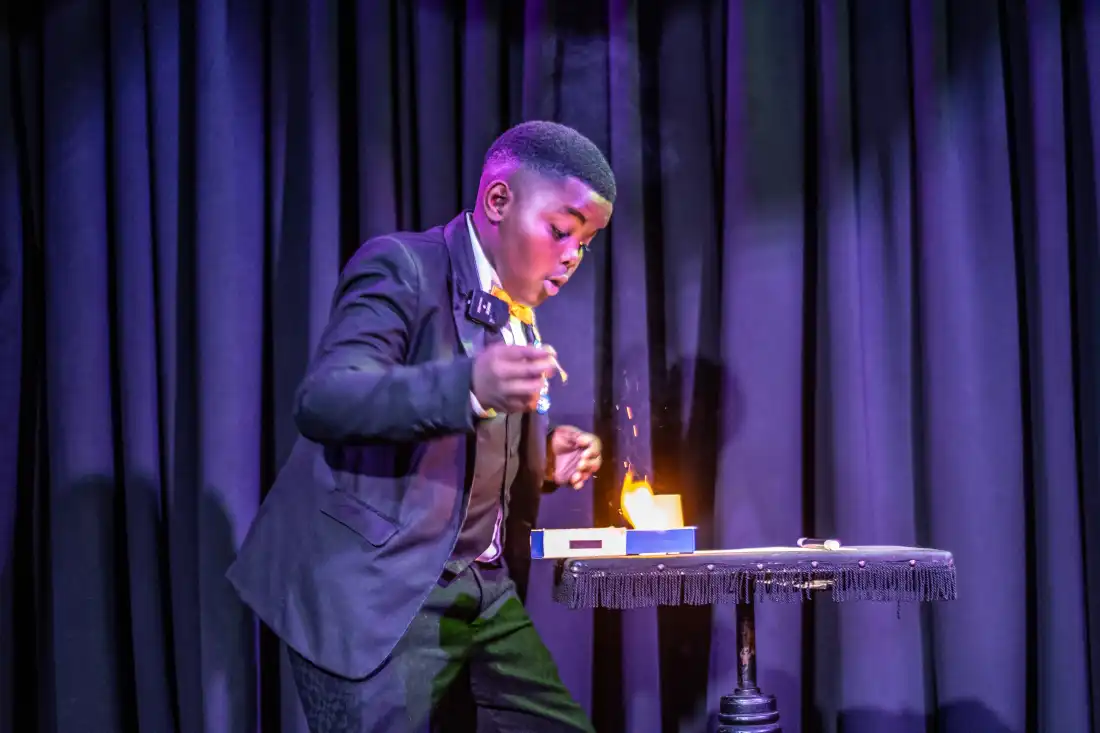
Dressed in a sleek black suit with a bright yellow bow tie, Lubelo Mthenjana, aged 11, stands alone on the dimly lit stage. He takes a moment, breathes deeply, and as his name echoes through the room, he opens his arms and smiles brightly. ‘Hello everyone! My name is Lubelo Mthenjana, and I will be performing … some magic!’
The audience, a group of about 30 children and parents, is captivated. They chuckle as Lubelo performs a disappearing act with paper clips and gasp when they reappear magically inside a matchbox. His grand finale, producing sweets from thin air and tossing them into the crowd, leaves the room in awe. As applause fills the air, his mother watches proudly from the audience.
The annual junior magic contest at Cape Town’s College of Magic creates a lively atmosphere. Students, clad in top hats and ties, hurry between classrooms. The corridors are adorned with vibrant posters while display cabinets overflow with wands, hats, scarves, and a collection of trophies won in various competitions.
Among these young magicians is Sibabalwe Sibaj, 17, who juggles as he deftly rides a unicycle. Outside, the scene is no less impressive. Teenagers ride unicycles, juggling balls, clubs, and diabolos on the porch of a charming red-brick Victorian mansion, known locally as the Hogwarts of Cape Town.
Nestled in a quiet suburb, this magical institution stands as Africa’s only school dedicated to nurturing young stage magicians and illusionists. Each Saturday, around 190 students aged between 10 and 18 attend lessons ranging from puppetry, mime, and clowning to card tricks, illusions, and more.
‘These are all the skills required to become a great magician,’ explains David Gore, the founder of the College.
Founded in 1980 amid the apartheid era, the College of Magic emerged as a beacon of multiracial education. Despite the segregated public school system of the time, Gore welcomed students of all backgrounds, offering an escape from the confines of racial and economic barriers.
Years later, the school maintains its commitment to equality with about 80% of its students attending on scholarships, often backed by private donations. Gore emphasizes that magic is a perfect companion for the youth, allowing them to bring entertainment to their communities without needing costly resources.
Research supports the benefits of learning magic, showing enhancements in self-esteem, creativity, and problem-solving skills among children who engage in magic activities. For example, a 2021 study by the Universities of Hertfordshire and Edinburgh found significant improvements in creative thinking in children who learned magic tricks.
Themba Van der Westhuizen, 12, shares similar sentiments, citing his growing confidence from performing magic tricks. Watching a magic trick can challenge our perceptions, fostering cognitive flexibility and creative thinking.
While not all graduates become magicians, they acquire a versatile skill set with creativity at its core. As Gore points out, ‘Magic teaches us that nothing is impossible.’
Lubelo, whose love for magic began after seeing a family friend perform, has embraced this idea wholeheartedly. He joined the college at 10 and now spends his time practicing tricks, with aspirations to make others smile.
Living in Makhaza township, the challenges are numerous. Yet Lubelo uses magic as a form of positive engagement, even encouraging friends to join the college, combating local misconceptions associating magic with witchcraft.
Amidst an environment plagued by high crime rates, including Cape Town’s townships, the college offers a sanctuary. Lubelo’s mother, Yandiswa, appreciates the impact magic has had on her son’s confidence, providing relief from external dangers.
Just weeks prior, the college mourned the loss of a talented former student, Duma Mgqoki, who fell victim to violence. This incident underscores the broader societal issues surrounding the students’ lives, yet Gore remains hopeful for a changing society driven by today’s youth.
Back at the contest, Lubelo finishes his act and joins his friends for jubilant celebrations. Despite the rain, young performers like Joshua Clyde continue to practice unicycle tricks, showcasing their passion and dedication.
Inside, a teacher captivates a crowd with a disappearing coin trick, exemplifying the magic that enthralls both students and instructors. Classes such as puppetry enhance the diverse curriculum further.
The excitement builds as performers rehearse, filled with both anticipation and nerves. Once all acts conclude, judges deliberate before announcing the winners. The anticipation peaks as Lubelo’s age group result is declared.
‘In first place, Lubelo Mthenjana!’ The announcement prompts cheers as he takes the stage to receive his award, later embracing his mother proudly.
Lubelo and his peers embody the essence of the College of Magic; they are hopeful magicians learning creativity and resilience, striving to transform both their lives and their communities.
For more stories on global social impacts and developments, you can follow the work of Julie Bourdin and Tommy Trenchard, freelance and independent journalists contributing to awareness on current African and international issues.