
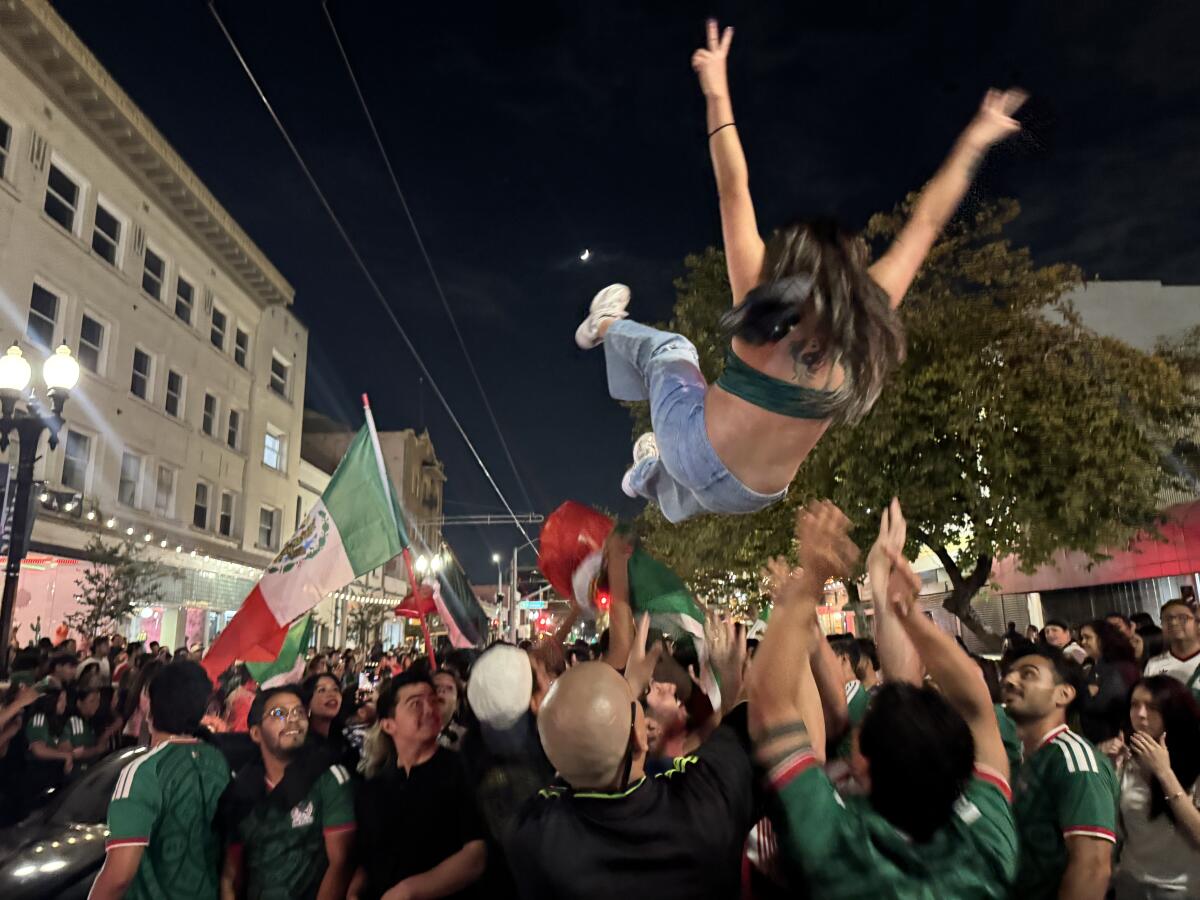
Brenda Jaimes waded through an ecstatic crowd in downtown Santa Ana, halting in the middle of Fourth Street. She shouted to grab attention: “Me! Me!” Earlier that evening, Mexico triumphed over South Korea, winning 1-0 in the World Cup. Jaimes, a 22-year-old from Santa Ana, was among the thousands who gathered in local bars and eateries to witness the thrilling victory and then flowed into the streets to celebrate.
The streets echoed with fans blowing horns and swinging noisemakers, chanting “México!” and “¡Sí se puede!” The Mexican flag was omnipresent — on banners, cheek-paint, and emblazoned on Jaimes’ tube top. Revellers danced on truck beds, creating a lively atmosphere. An Orange County Fire Authority truck blared its sirens, delighting the crowd. Drivers cruised along Fourth Street, the historical and economic heart of Latino Orange County, offering high-fives and shaking their vehicles like bounce houses.
Jaimes craved something more thrilling. She reclined in the arms of men donning green Mexico soccer jerseys. They counted down, launched her skyward, and caught her effortlessly amidst laughter. Scenes like these mirrored across Southern California, in areas like Koreatown and Pacoima. When Mexico wins big in soccer, celebrations follow, but the joy was particularly striking in Santa Ana.
A year prior, Fourth Street lay desolate. Federal immigration raids were rampant across the city, with the National Guard setting up blockades a block away from where Jaimes and others reveled. Fear gripped one of the country’s most Latino cities. But on this Thursday night, celebration replaced fear.
“This here is the antithesis of last year’s raids,” stated Sandra De Anda. She’s a director at the Orange County Rapid Response Network, wearing a Tigres Mexican soccer jersey and waving a South Korea flag. Last June, she joined many others marching down Fourth Street to demand ICE and the National Guard leave. Through the rest of 2025, the network combated immigration enforcement in courts and supported immigrant detainees.
“They tried to break our community, but they couldn’t,” De Anda said as her boyfriend joined the festivities. “We Mexicans often face setbacks, but we rise with pride. Tonight shows our resilience.” Jaimes agreed, emphasizing the importance of celebrating after the challenging past year. “We don’t care what Trump thinks,” she said. “This celebration is real.” She encouraged others to join the festivities.
The pride among Mexican soccer fans was palpable. Despite low chances against teams like France and Argentina, every victory for Mexico resonated as a triumph for underdogs worldwide. It offered a sense of community stronger than political divisions. Many Mexican Americans faced criticism for their support of El Tri, yet their passion underscored a deeper connection to their heritage.
Sydney Tran, in a Honda Civic, felt the spirited ambiance. “This is wonderful,” exclaimed Tran, a Vietnamese American. “Seeing my Mexican friends happy is heartwarming. It’s been tough for all immigrants.”
The lively scene continued into the night, with restaurants unusually open past hours and dance parties on sidewalks. Music from all genres filled the air, as police presence remained notably absent. However, cynicism lingered. Mexico faced tough competition in the coming World Cup stages, and immigration raids were still a threat. Yet, in that moment, the community reveled in joy, envisioning better days. Sí se puede, indeed.