
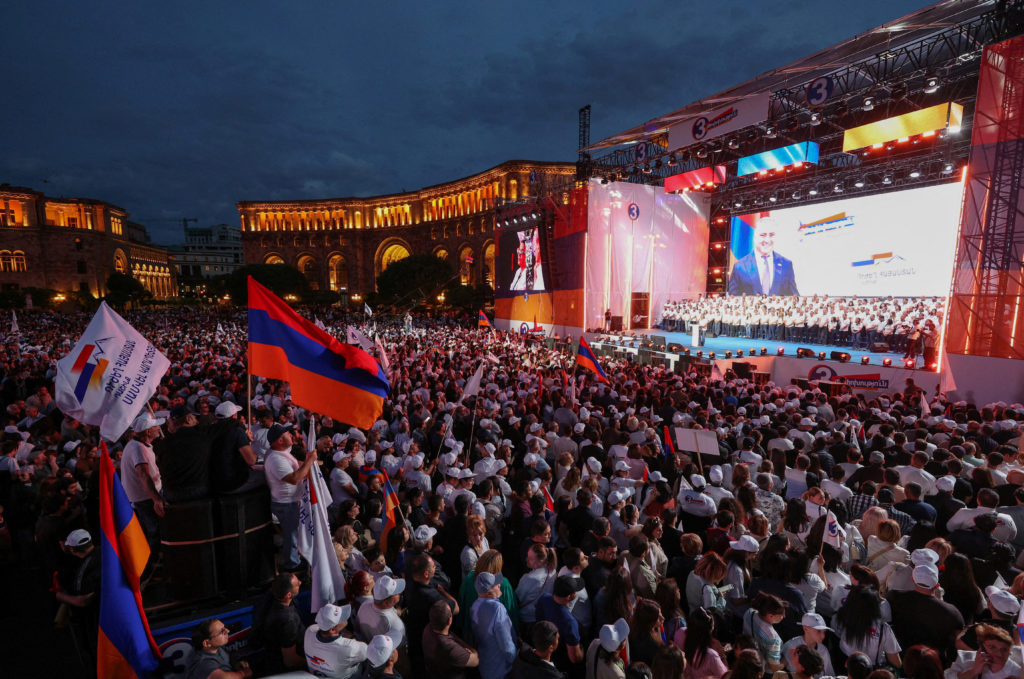
In Armenia, opposition figures faced arrest as a major pro-Russian party petitioned the Constitutional Court to annul the recent election results. They claimed electoral misconduct and suppression by Prime Minister Nikol Pashinyan’s ruling party. The opposition party, Strong Armenia, urged the court to nullify the outcomes or initiate a runoff election, condemning the arrests of its politicians as threats to democratic principles.
Other opposition groups echoed these allegations, accusing the authorities of coercion and voter bribery. The government denied these accusations and said opposition factions engaged in similar misconduct. The court will soon decide if it will consider the case.
The Central Election Commission’s final results from the June 7 election showed Pashinyan’s Civil Contract party securing 49.7% of the votes, allowing it to continue governing while seeking closer ties with Western nations.
Observers from the Organization for Security and Cooperation in Europe (OSCE) reported that voters faced a “genuine choice,” despite a highly adversarial campaign atmosphere marked by numerous allegations of election fraud. This led to various criminal cases involving opposition candidates, which created a perception of “selective justice.”
Samvel Karapetyan, a billionaire leading Strong Armenia, has rejected claims of plotting against the government as politically motivated. He faces house arrest while more party members were recently detained on bribery charges. Notable figures like Ruslan Barsegyan, Ashot Egiazaryan, and Ruben Akopyan have also been arrested, with some placed under house arrest.
Strong Armenia denounced these arrests as attempts to eradicate democracy, asserting that the government weaponizes judicial bodies against the opposition. They vowed to challenge this legally.
Mikayel Zolyan, a political analyst, viewed these actions as preventive measures against potential destabilization attempts by opposition factions. Pashinyan’s stance signals to pro-Russian forces to avoid unrest attempts.
Russia, maintaining a military presence in Armenia, issued warnings of adverse consequences if Armenia shifts toward the West. President Vladimir Putin likened Armenia’s trajectory to Ukraine’s past bid for EU association and suggested geopolitical tensions as a backdrop.
Prior to the election, Russia imposed trade sanctions, including import bans on key Armenian products. Monitors described these sanctions as “direct pressure” on the electoral process. Official statements linked these to agricultural rule violations.
Yuras Karmanau contributed from Tallinn, Estonia. Contributions to independent journalism remain crucial for safeguarding democracy and promoting civil discourse.