
Diplomatic efforts intensified on Friday to maintain a fragile accord between Iran and the United States after Israeli airstrikes in Lebanon prompted Iran to exit peace talks. Shortly afterward, Israel and Hezbollah agreed to cease hostilities in Lebanon.
The disruption came after Iran withdrew from negotiations, temporarily hampering a framework agreement signed this week by President Trump. Peace talks were slated to begin in Switzerland just hours later.
Though the truce with Iran remained fragile, it held momentarily, without indications of indefinite postponement. Maritime activity through the Strait of Hormuz increased, although it was still below pre-conflict levels.
Yechiel Leiter, Israel’s ambassador to the United States, affirmed Israel’s commitment to an immediate cease-fire. President Trump stated in an NBC News interview that he urged Israeli officials to agree to a Lebanese cease-fire, describing it as a “little icing on the cake,” but did not confirm direct communication with Prime Minister Benjamin Netanyahu. Hezbollah has yet to publicly confirm its agreement to the cease-fire.
The current events underscored the delicate nature of the U.S.-Iran accord reached this week, with Lebanon playing a key role. The agreement’s first point calls for an “immediate and permanent termination of military operations on all fronts, including in Lebanon.” Neither Israel, a combatant against Iran alongside the U.S., nor Iran-backed Hezbollah, signed the agreement.
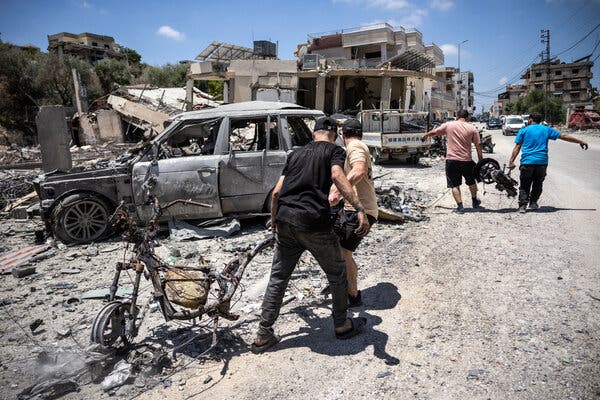
After the cease-fire took effect at 4 p.m. local time, Lebanon experienced calm following severe overnight Israeli bombings that left 47 dead and 97 injured, as reported by Lebanon’s health ministry. The ministry did not distinguish between civilian and combatant casualties. Officials from several countries confirmed the cease-fire, reportedly brokered by Qatar and the U.S. Those discussing the Iranian withdrawal from talks did so anonymously due to diplomatic sensitivity.