
As the Trump administration faces legal actions, the Kennedy Center’s fate remains uncertain. A recent court ruling has blocked its closure until 2028 and demanded a reassessment of programming plans. This decision, prompted by a lawsuit from Democratic Rep. Joyce Beatty, also halted efforts to rename the venue after former President Donald Trump.
Judge’s Ruling and Implications
U.S. District Judge Christopher Cooper ordered the administration to keep the Kennedy Center open. He asked for updates on renovation plans and ongoing activities. The judge emphasized that public access and ongoing operations must be maintained after July 5, which was the original date for the closure.
The center’s board, led by Executive Director Matt Floca, faces a crucial decision. They must choose between a total closure, allowing repairs, a partial closure with limited access, or phased closures with more programs. The board will meet in mid-July to make this decision.
Legal Tensions Over Programming and Closure
The Justice Department has asked for more time to respond to Beatty’s claims. They highlight that the court did not mandate rescheduling of canceled programs. However, Beatty’s legal team accuses the government of neglect by halting cultural activities. They argue this inaction violates the court’s preliminary injunction, urging the government to restore meaningful operations by July 5.
Additionally, Beatty’s attorneys demand weekly updates on efforts to resume programming. They propose a discovery schedule for further litigation.
Controversies Around Renaming
The Kennedy Center’s renaming has sparked criticism, particularly after Trump’s name was removed following Judge Cooper’s order. The decision to rename the institution had faced objections, with legal experts asserting congressional approval is necessary for any name change.
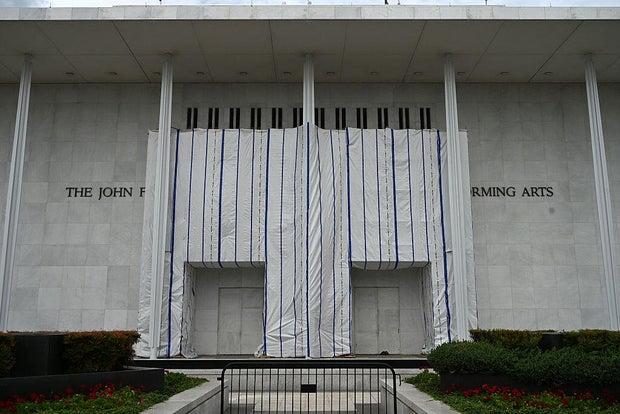
Amid this, signage bearing Trump’s name has been taken down, and the Kennedy Center’s website reflects these changes. The removal extends to email signatures and other communication materials. Despite this, a tarp remains on the facade, blocking the public’s view.
Beatty’s team criticizes this, suggesting it undermines the order. They argue it represents a breach of fiduciary duty to the institution.
Background and Ongoing Legal Actions
The controversy began when Trump assumed office for his second term. He appointed new board members, including advisers and family members. Subsequently, the board elected Trump as chair and voted to include his name in the center’s title.
Cooper’s ruling clarified that only Congress can change the center’s name. Trump initially expressed willingness to comply but later sought to delay the implementation of the name removal. His request was denied by the U.S. Court of Appeals, allowing the name removal process to proceed.