
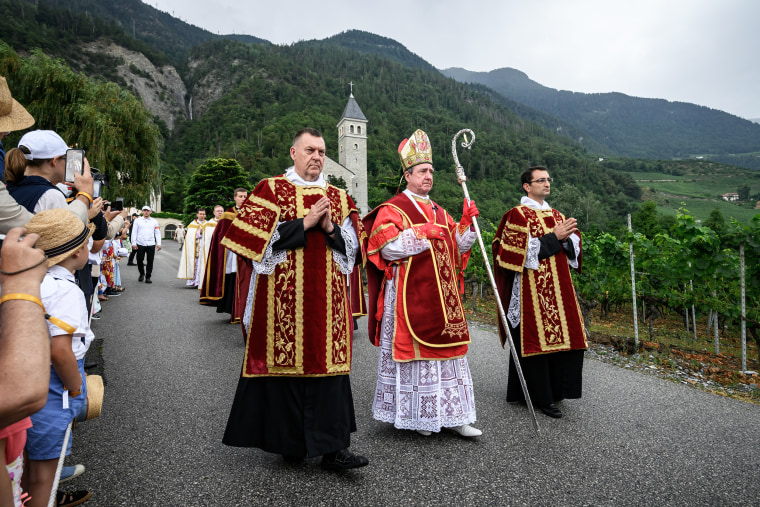
Rome, July 3, 2026 – A picturesque Swiss settlement, surrounded by vineyards and tall mountains, became the site of a significant event that stirred the Catholic Church this week.
An ultraconservative Catholic group consecrated four new bishops in a five-hour ceremony filled with rituals, which was broadcast globally. This act defied the church’s canon law and ignored appeals for unity from Pope Leo XIV. Following the ceremony attended by approximately 15,000 individuals, the Vatican excommunicated the Society of St. Pius X’s six bishops.
The Recent Ceremony
On Wednesday, the Society of St. Pius X (SSPX) consecrated Pascal Schreiber from Switzerland, Michael Goldade from the United States, and Michel Poinsinet de Sivry and Marc Hanappier from France as bishops. During the service, Bishop Alfonso de Galarreta, who had also been consecrated without papal consent in 1988, performed the ancient ritual of laying hands on the new prelates. This rite signifies the succession of bishops from Jesus Christ’s apostles.
In the Catholic Church, consecrating a bishop without a papal mandate is a severe breach of canon law, resulting in automatic excommunication. Pope Leo XIV had appealed to the Rev. Davide Pagliarani, SSPX’s superior, urging him to reconsider the ceremony to maintain church unity. In his letter, he emphasized the spiritual detriment and potential invalidity of sacraments received by the faithful due to this schismatic act.
I urge you to consider carefully the spiritual good of the faithful,Leo pleaded, highlighting the significant consequences of the SSPX’s actions.
The plea went unheeded. The ceremony proceeded, with many priests and congregation members favoring traditional Latin Mass. It was live-streamed on the group’s YouTube channel with translations into multiple languages.
Background of the SSPX
The Society of St. Pius X, named after Pope Pius X, was founded in 1970 by French Archbishop Marcel Lefebvre. It was a response against the modernizing reforms of the Second Vatican Council (Vatican II) meetings held from 1962 to 1965, which transformed the Church’s relationships with other faiths and permitted Mass in local languages.
The society staunchly opposed these changes, preferring the traditional Tridentine Latin Mass. Lefebvre rejected Vatican II’s reforms, seeing them as damaging to the Church. Despite sanctions from the Vatican, the SSPX continued to grow, operating various institutions in numerous countries. Now, it boasts six bishops, 751 priests, and several religious members worldwide.
In 1988, Lefebvre’s decision to consecrate bishops without papal approval resulted in his excommunication alongside those bishops. No bishops were consecrated by SSPX after that until this week.
Implications and Reactions
Gemma Simmonds, a director at the Margaret Beaufort Institute of Theology, explained that SSPX’s action was a deliberate challenge to the Church’s teachings. The group, by consecrating bishops, effectively excommunicated itself as they prefer older church rules over new ones.
Historically, several popes attempted reconciliation with SSPX, including Pope Benedict XVI. He lifted excommunications in 2009 but faced controversy over remarks by one of the bishops. Pope Francis later allowed SSPX priests to perform certain sacraments, but these privileges were revoked following the recent incident.
Pope Leo XIV, on coming to power, indicated a willingness to engage with SSPX but underscored the need for compliance with Church decisions. With SSPX choosing their path, Leo has emphasized that they must accept the consequences.
Context of Church Schisms
The Catholic Church has endured multiple divisions, most notably the East-West Schism in 1054, leading to a permanent split with the Eastern Orthodox Church. Similarly, in the 16th century, the Reformation, led by figures like Martin Luther, gave rise to Protestantism.
The SSPX incident reflects ongoing tensions within the Church, highlighting different interpretations and obligations.