
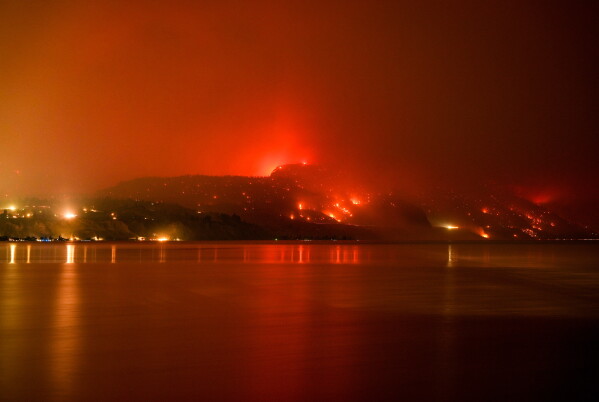
Canada has put its military on standby to aid in battling wildfires in British Columbia. This move comes after the mayor of an affected community warned about the destruction caused by one of the blazes. Tragically, a woman has died, and approximately 20,000 residents have evacuated their homes.
A multitude of wildfires are currently active across the province. Nearly half are unchecked due to hot, windy weather combined with prolonged drought. Thousands of evacuees have crowded roads as officials caution that more communities may be at risk.
Summerland Emergency
The mayor of Summerland, where around 12,000 residents live, reported that the areas affected remain hazardous. The danger level restricts entry and makes it difficult to assess the extent of the damage. Summerland, along with Peachland, faced mandatory evacuation orders last Saturday night due to the Bald Range wildfire. This blaze continues to surge toward various communities along Okanagan Lake.
“We need to brace ourselves for that bad news when it’s time to go back. Everybody will know somebody who has lost a home,” said Mayor Doug Holmes.
Military Prepared to Respond
Defense Minister David McGuinty announced Canadian Armed Forces are coordinating with provincial and federal authorities, prepared to act if requested. The federal government has already granted requests for assistance with shelter and accommodations.
Emergency personnel reported that the wildfire has expanded to approximately 60 square miles. Officials emphasized that clearer skies and intense sunlight could elevate fire activity.
An incident commander on the fire, Hugh Murdoch, detailed that teams comprised of 99 wildland firefighters, 120 structure protection personnel, and helpers from Mexico work on containing the blaze, with the support of heavy machinery and helicopters.
Despite assigning 19 helicopters to the Bald Range wildfire, its strength hindered effective containment efforts.
“We could have put a thousand more helicopters and a thousand more people on the ground, and it wouldn’t have made a difference,” remarked Ravi Parmer, the British Columbia forestry minister.
Nicole Bonnett from the British Columbia Wildfire Service stated that thick smoke over the fire impairs visibility, limiting aircraft use for tackling the blaze.
Evacuation Challenges
Summerland’s chief administrative officer, Graham Statt, noted phased neighborhood returns are planned, but timelines are unclear.
Mayor Holmes candidly stated returning residents would need to wait as fire control progresses.
One evacuated resident, Kyla Gaudiuso, believes her Faulder home was destroyed, based on flames seen in photos. Gaudiuso describes the evacuation as frantic, now residing with a friend in Penticton.
Canada’s recent wildfire seasons require evacuations and send smoke throughout parts of the country and the U.S.
Summerland is known for agriculture and vineyards, situated in a mountainous wildfire-prone region.
US Western Wildfires
In California, evacuations were imposed along the Big Sur coast due to a wildfire in adjacent mountainous areas. The Timber Fire in Monterey County expanded to about 2 square miles.
In contrast, Reno, Nevada’s wildfire spread to nearly 27 square miles, prompting 5,500 evacuations.
Washington fire personnel enhanced containment around several destructive fires, enabling some residents to return. Governor Bob Ferguson advocated for community rebuilding.
Meanwhile, Oregon has recorded its most severe year of wildfire activity, surpassing previous records with 3,671 square miles affected.