
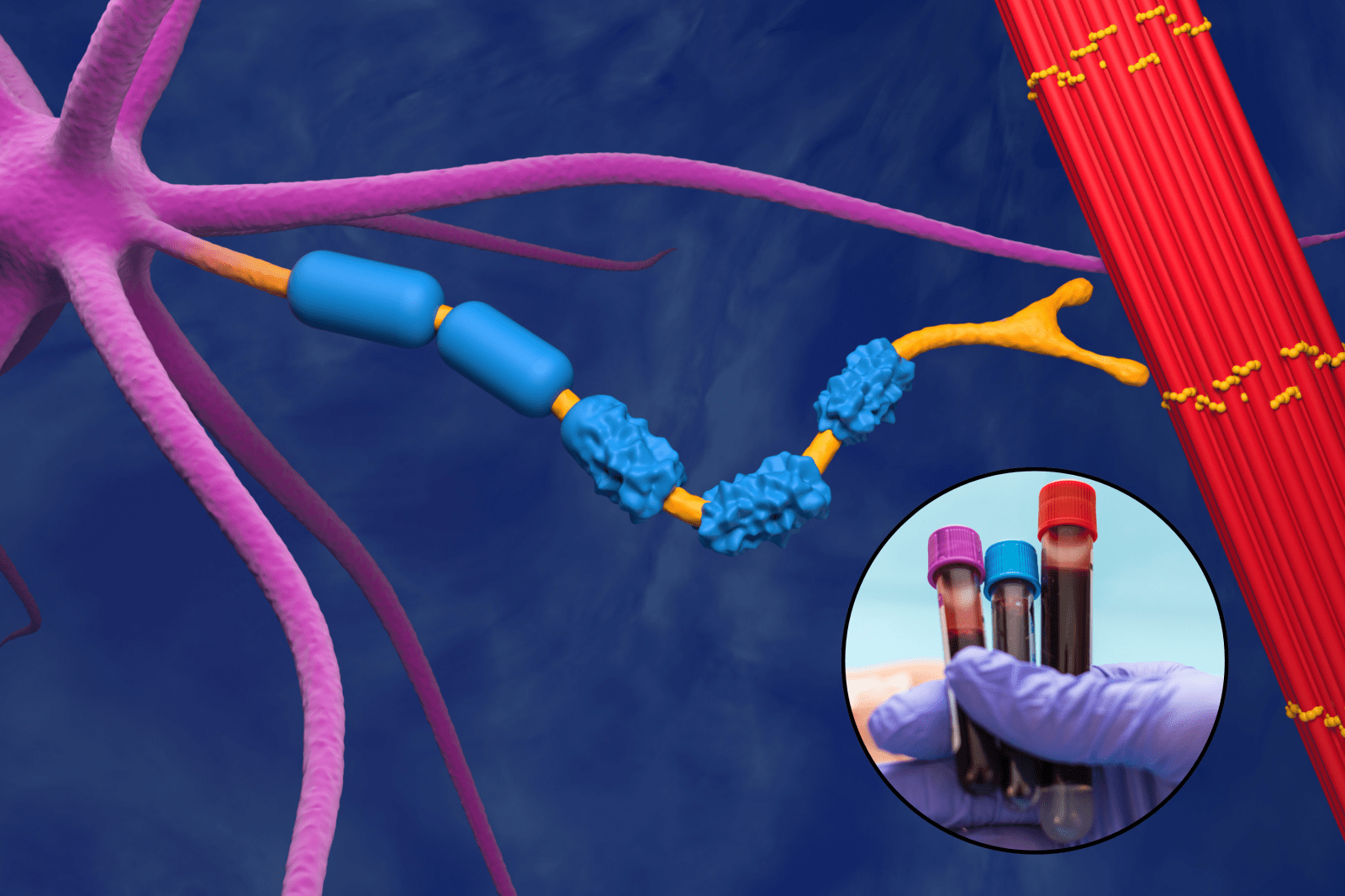
Recent findings in blood proteins could significantly impact amyotrophic lateral sclerosis (ALS) research. Scientists discovered proteins that change months or years before ALS symptoms emerge, potentially allowing early intervention.
ALS, known as Lou Gehrig’s disease, is a debilitating motor neuron condition. The Centers for Disease Control and Prevention (CDC) notes that around 5,000 Americans receive an ALS diagnosis annually. This disease begins subtly, with muscle weakness and speech changes, and progressively worsens.
Blood Protein Change Precedes ALS Symptoms
This discovery stems from the National Institutes of Health-funded Pre-symptomatic Familial ALS (Pre-fALS) study, which has tracked high-genetic-risk individuals for two decades. Researchers analyzed plasma samples from 137 study participants, 33 of whom later developed ALS or frontotemporal dementia.
Using proteomic analysis by Olink, they measured levels of over 5,000 blood proteins, identifying 92 with altered levels before symptoms appeared. Machine-learning models further refined this to 19 proteins, including neurofilament light chain (NfL), a known precursor to ALS symptoms.
These biomarkers enabled researchers to predict symptom onset within 18 months on average, usable within 6 months to 5 years prior to symptoms.
Opportunity for Early Treatment
Dr. Michael Benatar, from the University of Miami, emphasized the importance of these findings. He stated that these biomarkers provide a more accurate estimate for symptom onset, critical for those with ALS-linked genetics.
The predictive capability is invaluable for developing therapies aimed at delaying or preventing ALS progression. Replication of the study using UK Biobank data suggests a broader application beyond inherited ALS cases.
Significance of the Findings
According to Amy Bany Adams of the NIH, the research coincides with emerging gene-targeting treatments, heightening the need for reliable biomarkers for individuals at risk.
Tofersen, a drug for symptomatic ALS, is under trial in ATLAS to assess its preventative potential if administered pre-symptomatically.
Dr. Benatar acknowledged the dedication of study participants, expressing gratitude for their contribution to ALS prevention research.
Reference: Ran, X., Wuu, J., Qin, Z.S. et al. Longitudinal plasma proteomics predict phenoconversion to clinically manifest ALS. Nat Med (2026). https://doi.org/10.1038/s41591-026-04528-x