
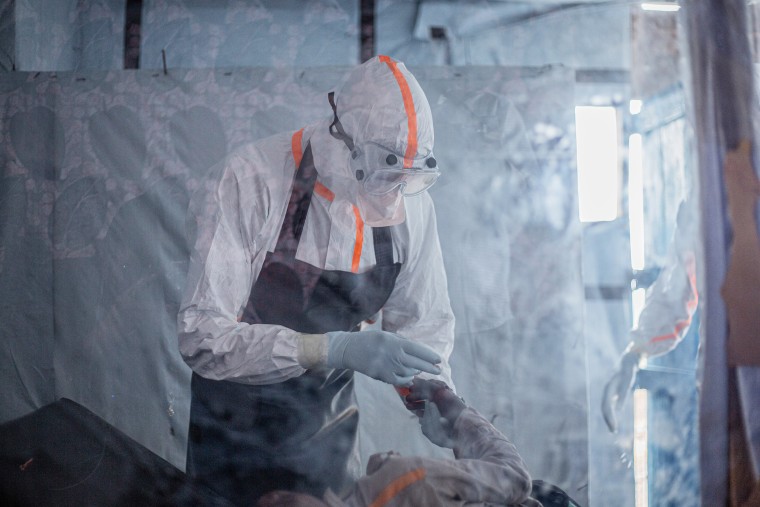
Authorities in Uganda announced the country is free of Ebola following the discharge of its last patient in mid-June. This development is significant as neighboring Congo continues to grapple with the virus.
Uganda traced its cases back to the larger outbreak in Congo’s Ituri province. Initial cases in Uganda involved Congolese residents who crossed the border for treatment. They were later confirmed to have Ebola, according to health officials.
The Democratic Republic of Congo declared its outbreak on May 15, coinciding with Uganda’s confirmation of two Ebola cases, including one death. A total of 20 cases were reported in Uganda, but authorities indicate no further spread within the country.
The last patient was released on June 16, and Uganda observed a 42-day waiting period, as recommended by the World Health Organization, before declaring the country Ebola-free.
Uganda’s 2026 Ebola outbreak arose from a fully documented importation event, according to a statement from Uganda’s Health Ministry.
The Bundibugyo type of Ebola virus, responsible for the outbreak, has no approved vaccine or treatment. The outbreak in the region has been declared a global health emergency.
Ugandan health authorities acted swiftly to manage the outbreak. President urged citizens to avoid shaking hands and postponed an annual religious event that draws thousands of pilgrims from Congo and beyond. Measures also included halting public transportation and flights between Uganda and Congo, where concerns persist.
In Congo, confirmed cases have reached 3,262, with 1,437 deaths recorded, making it one of the fastest outbreaks of Ebola on record. The case count could soon surpass Congo’s previous highest toll. Concerns remain regarding reaching many communities due to safety issues arising from resident protests and rebel activity.
Effective contact tracing and isolation are crucial to curbing the disease, which typically presents as hemorrhagic fever.