
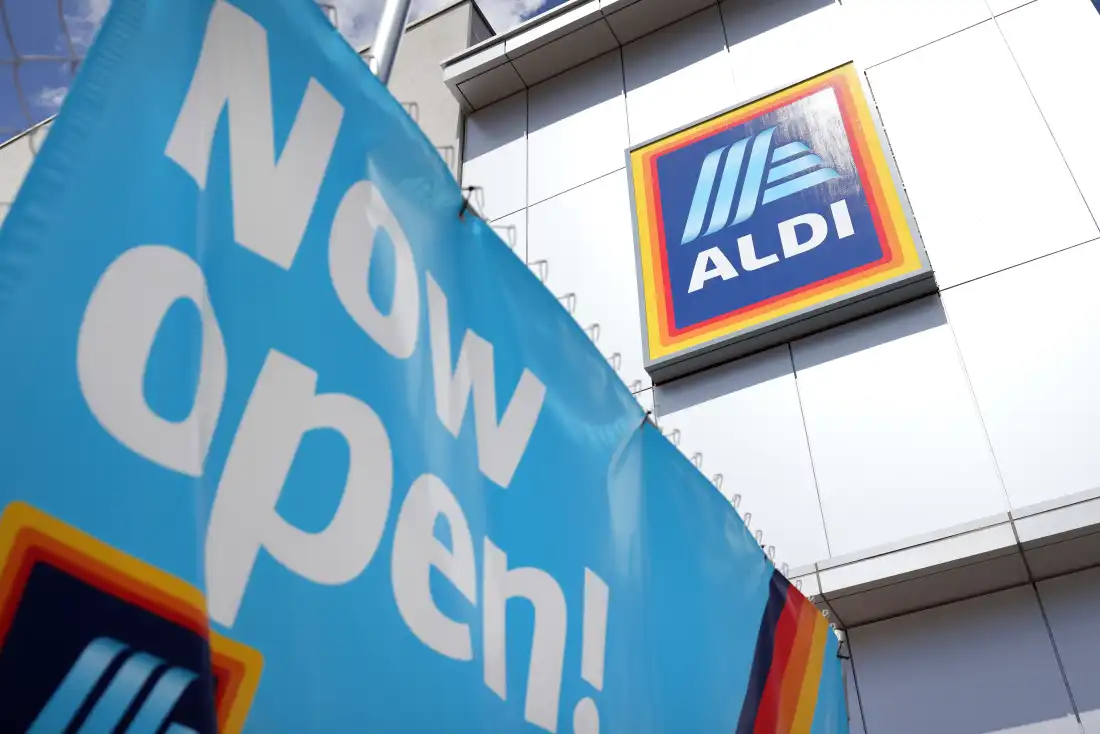
Aldi, a German grocery chain, plans to expand in the U.S. with over 225 new stores in 2025, as part of reaching 800 new locations by 2028. This expansion will position Aldi as the second-largest grocery chain in America, behind Walmart.
In 2024, Aldi’s U.S. sales reached $29 billion, surpassing Trader Joe’s. Aldi is renowned for low prices, often matching or beating Walmart. Its affordable pricing stems from efficient operations and a penchant for cost-cutting. For instance, Aldi doesn’t play music in stores to save on equipment and licensing fees. Products are displayed in their delivery boxes to reduce labor costs.
Unlike other grocers, Aldi relies heavily on private-label products and a limited selection. More than 80% of Aldi’s offerings are store-brand products. This strategy allows for bulk purchasing and reduced spoilage, keeping prices low. While this may require shoppers to visit other stores for certain items, the cost savings make Aldi attractive during economic downturns.
Aldi’s appeal extends beyond low prices. The middle aisle, known for rotating unique buys, adds an element of fun to the shopping experience. The chain has adjusted its offerings, including premium wines and honey crisp apples, to attract a wider customer base.
Aldi’s growth has influenced competitors. Grocers like Wegmans and Kroger have slashed prices in areas where Aldi and similar stores, like Lidl, operate. This competitive environment suggests that grocery stores alone aren’t responsible for rising food costs. Aldi’s success underscores the dynamic nature of the grocery market; companies must adapt to changing consumer expectations and economic conditions.
Aldi’s strategy can be seen as “unbundling” the grocery business. Historically, supermarkets consolidated various shopping experiences under one roof. Aldi simplifies the offering, focusing on affordable essentials and positioning stores near competitors to complement other grocery shopping.
Aldi represents a classic business approach: doing one thing exceptionally well. Its expansion challenges suggest that American markets can continue to offer affordable food, even if grocery prices fluctuate. Aldi’s market presence pushes competitors to maintain competitive pricing, playing a crucial role in the grocery retail sector.