
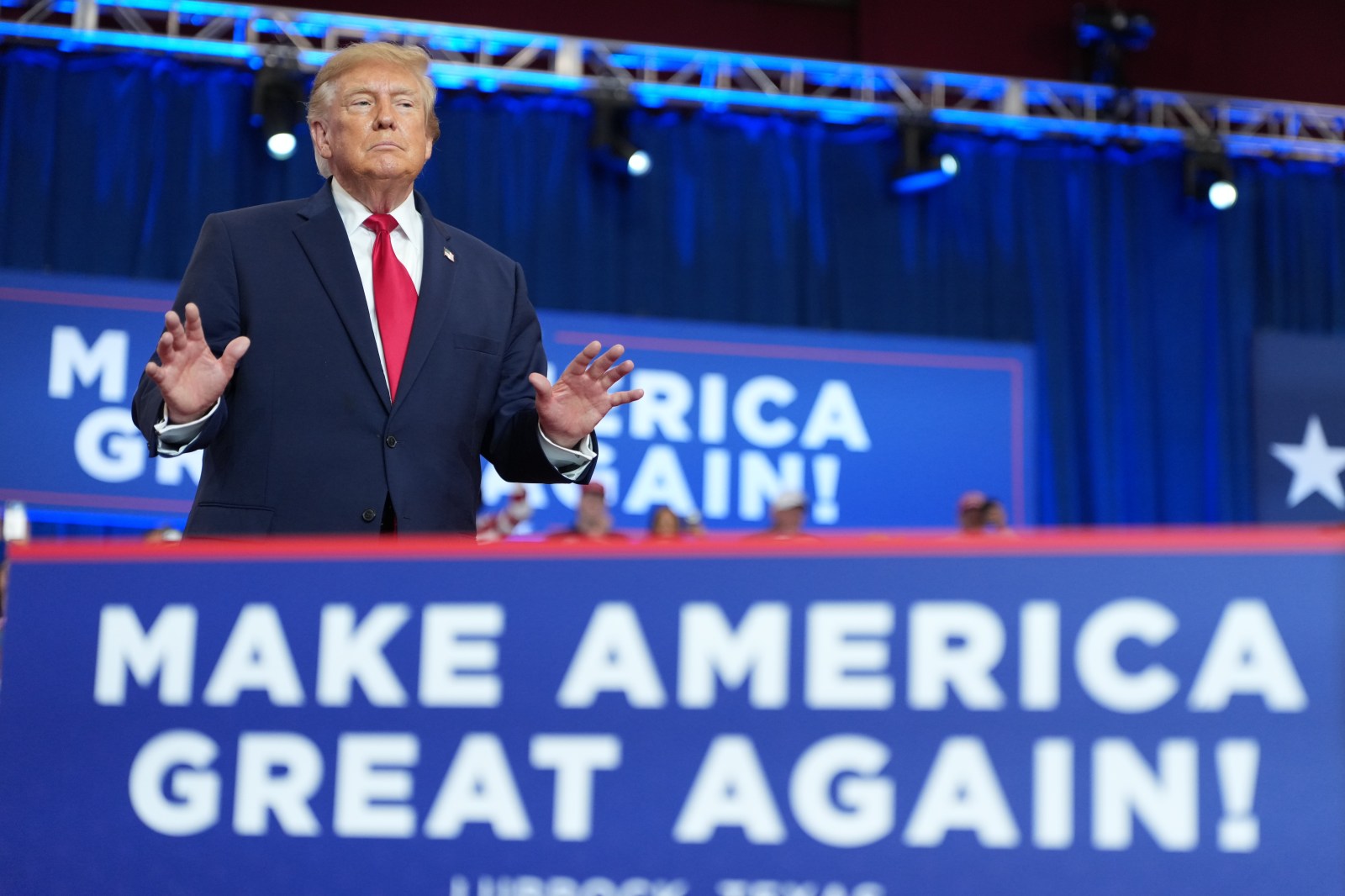
During a recent rally in Texas, President Donald Trump made light-hearted remarks about his promise of $5,000 payments if Republicans win control of both the House and Senate in the November midterms. He playfully mentioned that the amount wouldn’t go far at his Mar-a-Lago club. Jokingly, he said guests might only be able to afford a hamburger and a small dessert with the money, and suggested that Mar-a-Lago isn’t a suitable destination for those concerned about costs, prompting laughter from the audience.
This exchange has garnered attention amid ongoing discussions about affordability as a key issue in the midterm campaign. Affordability is a central theme with polls indicating its significance for voters. According to a recent NPR/PBS News/Marist poll, 34 percent of likely voters identified the cost of living as their primary concern. Additionally, an October AP-NORC poll found 84 percent considered it crucial in their voting decisions. While the surveys varied in approach, both underscored household expenses as a significant concern leading up to Election Day.
Trump’s proposed $5,000 per adult payment, termed the “Trump Dividend,” is part of his economic strategy. He argues that his policies are revitalizing the economy and aims to return money to Americans. This pledge, however, hinges on Republicans securing both chambers of Congress and has yet to receive formal authorization.
Details on the Proposed $5,000 Distribution
The Trump administration has communicated plans for the “Trump Dividend” to encompass a $5,000 payment to each adult U.S. citizen. Yet, there is no formal plan detailing application procedures, distribution timelines, or potential income caps related to the payment. The estimated financial impact of this proposal is approximately $1.2 trillion, based on around 240 million eligible adults. This proposed expenditure eclipses the $1,776 “warrior dividend” issued to military service members in 2025, which derived from a congressionally approved housing supplement.
As the story progresses, further insights and updates are anticipated.