
Seeing fans with their phones out during a tennis match would have seemed odd a decade ago. Now, at the U.S. Open, digital technology is deeply integrated into the game as AI tools enhance the tournament experience.
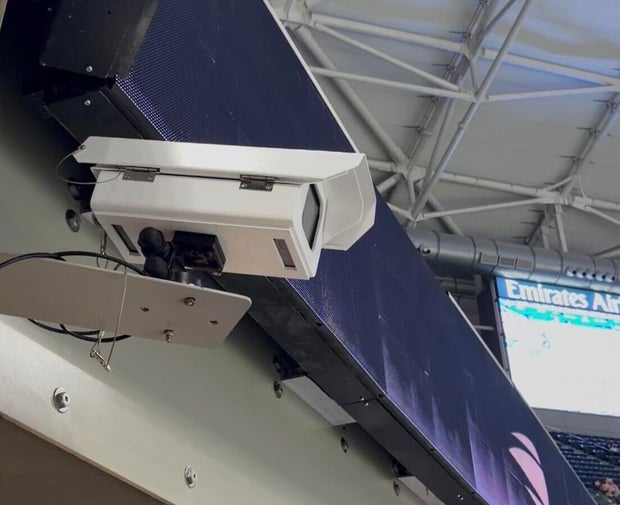
During the match between Coco Gauff and Zeynep Sönmez, AI provided insights via the U.S. Open app. It tracked key moments, players’ chances of winning, and a new metric called ‘serve quality.’ Cameras around Arthur Ashe Stadium gather data on players’ movements. This includes details like elbow and knee flexion and wrist velocity.
IBM’s software platform, Watsonx, processes the collected data to assess the efficiency and accuracy of a player’s serve. It generates a score out of 100, viewable in the U.S. Open app after the match. Gauff’s serves were noted for having ‘controlled racket preparation and deep knee bend.’
“There will be over a billion data points produced by the end of the tournament,” said Tyler Sidell, IBM’s technical program director for sports and entertainment partnerships. “We want to provide an insight, but still, let’s watch the matches play out.”
AI insights extend beyond fans. Players also use them as tools. Jessica Pegula, who progressed to the fourth round, uses AI to spot patterns in her opponents’ serves.
“Tennis involves a lot of problem-solving. Serve patterns are important since the serve is a controllable shot,” she explained. Though strategies may change on the court, Pegula finds the data beneficial. “The analytics prepare you mentally before a match.”
The ‘likelihood to win’ feature has been part of the U.S. Open digital experience for six years. This is the second year fans can track these odds in real-time. These predictions are based on media sources and recent player performances. Before her match, Gauff had a 72% chance of winning, which increased during the first set.
Another feature, ‘key moments,’ highlights analysis snippets during matches. “Gauff has three opportunities to win the match, with Sonmez needing a heroic response,” described a moment in the second set.
In a different match, a high fluctuation in win likelihood occurred. Alexander Zverev started with an 87% chance against Lorenzo Sonego, but it shifted to Sonego’s favor by 93% before Zverev’s comeback.
The app also includes ‘Match Chat,’ an AI assistant answering queries about players, matches, and the venue. When inquired about acquiring a Honey Deuce, the assistant promptly provided bar locations, even asking, ‘Do you want the nearest Honey Deuce bar to your gate?’