
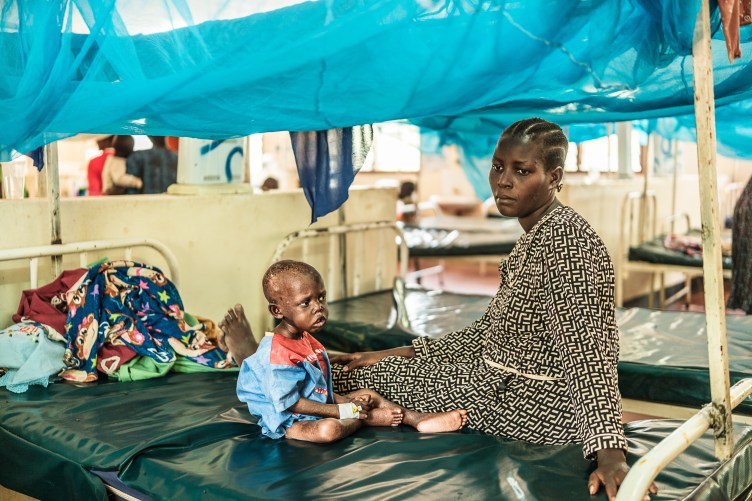
Rose Natabo faced an agonizing decision as she left one of her starving sons behind. At dawn, she bid farewell to her firstborn and carried her youngest, Santo, tied to her back. Holding her middle child’s hand, she set off towards hope, her sandals slapping against the dry dirt as they hurried to find help.
Hours later, the trio were in an ambulance speeding past the landscape of Kakuma, a sprawling refugee camp in Kenya’s northern desert. They arrived at the only hospital in the camp. It’s where Rose joined a crowd of mothers checking into the pediatric malnutrition ward. It was July 8, and Rose was out of food after the World Food Program (WFP) cut rations due to lost funding from the U.S. Despite warnings from aid workers about the consequences, nothing changed.
The WFP announced that of the 300,000 refugees in Kakuma, only about half would receive minimal food portions the following month. The rest would remain in uncertainty. Rose didn’t know which group she belonged to, nor did she know if her sons would survive until then.
Under hospital lights, nurses struggled to find a vein to administer an IV to Santo due to his severe edema from protein deficiency. They carefully fed him milk, knowing that rapid feeding could be fatal. Nurses spoke of how these children’s bodies had adapted to hunger. Santo’s condition began to improve slightly over days, but his recovery was far from certain.
“Their bodies have adapted to starvation,” a nurse explained.
Despite these hardships, life continued. By July 16, James, her older son, had recovered from malaria and was discharged. Despite the danger, she sent him home to stay with relatives. Rose remained in the hospital with Santo, who still needed her care.
Throughout August, Rose maintained her presence at the clinic, doing chores and praying for better days. She frequently asked about Santo’s discharge but worried about her sons at home. She considered leaving, anxious about her children’s welfare.
Adding to her challenges, Rose was pregnant. Her condition worsened with anemia, risking further complications. The hospital’s nutrition counselor advised her to address her iron deficiency, but Rose masked her struggles with untruths about how often she ate.
“The best thing for you to do is eat,” the counselor urged.
On August 4, after nearly a month in the hospital, medical staff allowed Rose and Santo to leave. They feared she might not follow recommendations if she left against advice. Together, they collected their belongings and walked back over dry land.
Returning home, Rose’s sons, Lino and James, eagerly greeted and cared for Santo. Despite their joyful reunion, hunger lingered. Rose worried about their survival.
Challenges didn’t stop there. On August 11, Rose sought food aid for her children once more. Yet the clinic’s supply ran low due to supply chain disruptions, echoing wider funding issues. Days turned into weeks, and by October, Rose gave birth to a daughter she named Sunday.
Even with resumed rations, her family continued to struggle. The health of her boys deteriorated again, and Santo’s condition worsened over time. Terrified by Santo’s decline, Rose returned to the hospital in November, only to face the devastation of Santo’s death later that month.