
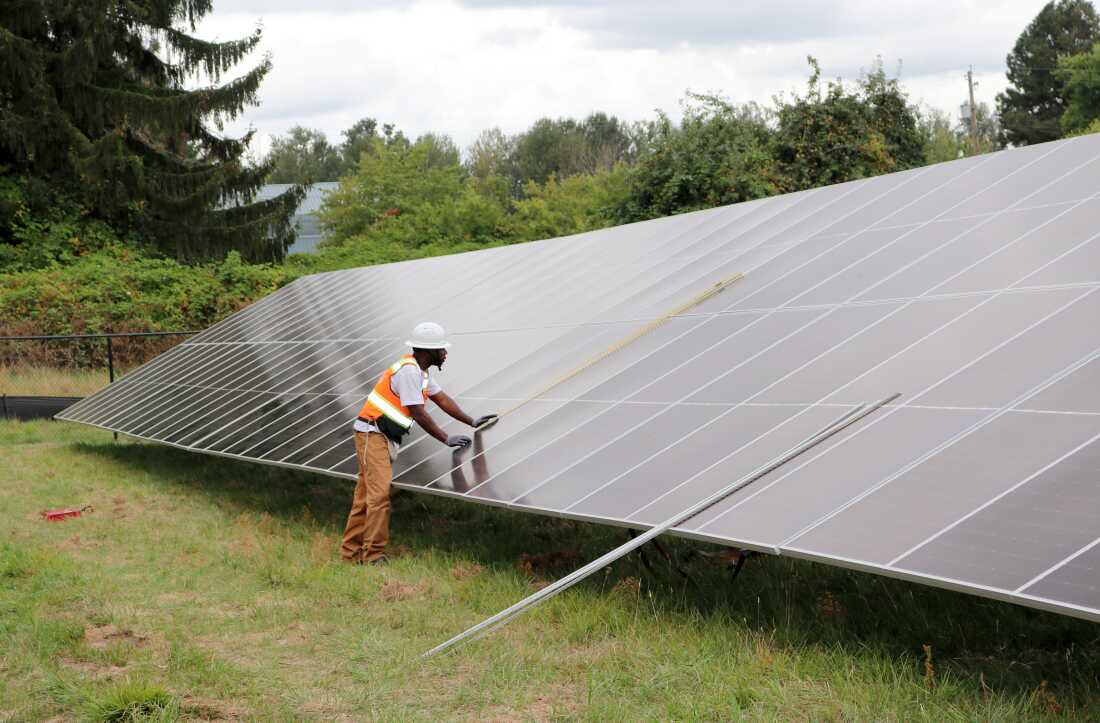
The Portland Clean Energy Fund has allocated over $4 million to the PDX Community Solar project, which supplies power to low-income residents in the Cully neighborhood of Portland, Oregon. This project is part of a larger focus on climate solutions, supported despite political challenges. The initiative aims to bridge the gap left by halted federal plans by addressing climate pollution and extreme weather adaptation.
Climate Solutions in Portland
Over the past seven years, Portland has implemented a community solar project to cut emissions and reduce energy bills for 150 low-income families. The city distributed over 20,000 free air conditioning units to assist vulnerable households in preparing for heat waves. Energy efficiency upgrades have been funded for 3,100 homes, and 2,000 individuals have been trained in renewable energy and construction sectors. These efforts are fueled by an innovative billion-dollar climate fund.
Establishment of the Portland Clean Energy Fund
The Portland Clean Energy Fund is designed to support climate, racial, and social justice, particularly for the city’s most vulnerable residents. Approved by 65% of voters in 2018, the fund collects money from a 1% retail sales tax levied on large corporations like Target, Walmart, and REI within Portland’s city limits. Unlike a consumer-paid sales tax, corporations pay the tax. For example, a $100 purchase generates $1 for the city. Since its launch, the fund has amassed approximately $1 billion, with projections to reach $1.6 billion by mid-2029.
“It’s a fund that’s intended to scale up local, community-based climate solutions,” stated Sam Baraso, program manager of the Portland Clean Energy Fund.
Origin and Development
Nearly a decade ago, nonprofit leaders from communities of color conceptualized the fund. Faced with limited funding and experiencing climate impact challenges like heat waves and wildfires, they devised a method to tax large corporations. This approach aimed to generate money for climate action centered on severely affected communities.
“The fund was born out of the experience of front-line communities who have been hit first and worse by the climate crisis,” remarked Baraso.
The fund’s question was simple: What if those most impacted by climate change were empowered to design solutions?
Climate Achievements
Several projects are underway thanks to this fund:
- Providing over 20,000 free portable air conditioning units to vulnerable households since 2022.
- Constructing a community solar project to lower emissions and save energy bills for 150 low-income households, primarily in Latino neighborhoods.
- Planting 15,000 trees in urban heat zones over five years.
- Transforming six concrete parking lots into urban gardens and community spaces, covering an area equal to eight NBA basketball courts.
Since 2021, four rounds of grants totaling $262 million have been awarded to community-based nonprofits. Grants range from $8,000 to $10.3 million, helping to cut greenhouse gas emissions. Completed projects from the first three rounds have helped reduce about 25,500 metric tons of carbon emissions, equal to removing 6,000 gas-powered vehicles for one year.
Challenges and Debates
The fund’s substantial financial generation has sparked debates on spending allocation.
- Portland Mayor Keith Wilson proposed a $75 million plan to renovate the Moda Center with green technology. Critics argue this doesn’t align with the fund’s focus on aiding vulnerable community members first.
- The Portland Police Association suggested diverting 25% of the fund’s yearly revenue to hire 400 additional police officers. Supporters highlight staffing needs while opponents stress maintaining the fund’s original climate focus.
These proposals may be presented to voters later this year.
Blueprint for Other Cities
Several cities, including Ann Arbor, Mich.; Denver, Colo.; and Seattle, Wash., have established similar funds, inspired by Portland.
“We did look to Portland for some significant dollars going towards investments,” noted Elizabeth Babcock, executive director of Denver’s Office of Climate Action, Sustainability and Resiliency.
While Denver sought to implement a retail tax like Portland’s, they opted for a 0.25% sales tax instead following community input. This generated $41 million in its first year. Ann Arbor increased property taxes to fund climate action rather than replicating Portland’s approach.
Smaller towns might struggle to replicate such tax systems due to fewer retailers or reluctance to raise property taxes. Professor Amruta Nori-Sarma emphasized the need for community input to ensure fund success and identify effective funding methods.
“Community input is critical,” she stated. “That’s why Portland’s fund is unique, given its robust funding mechanism.”
The Portland Clean Energy Fund aims to complete its first five-year plan by mid-2029, investing $1.6 billion back into the city.