
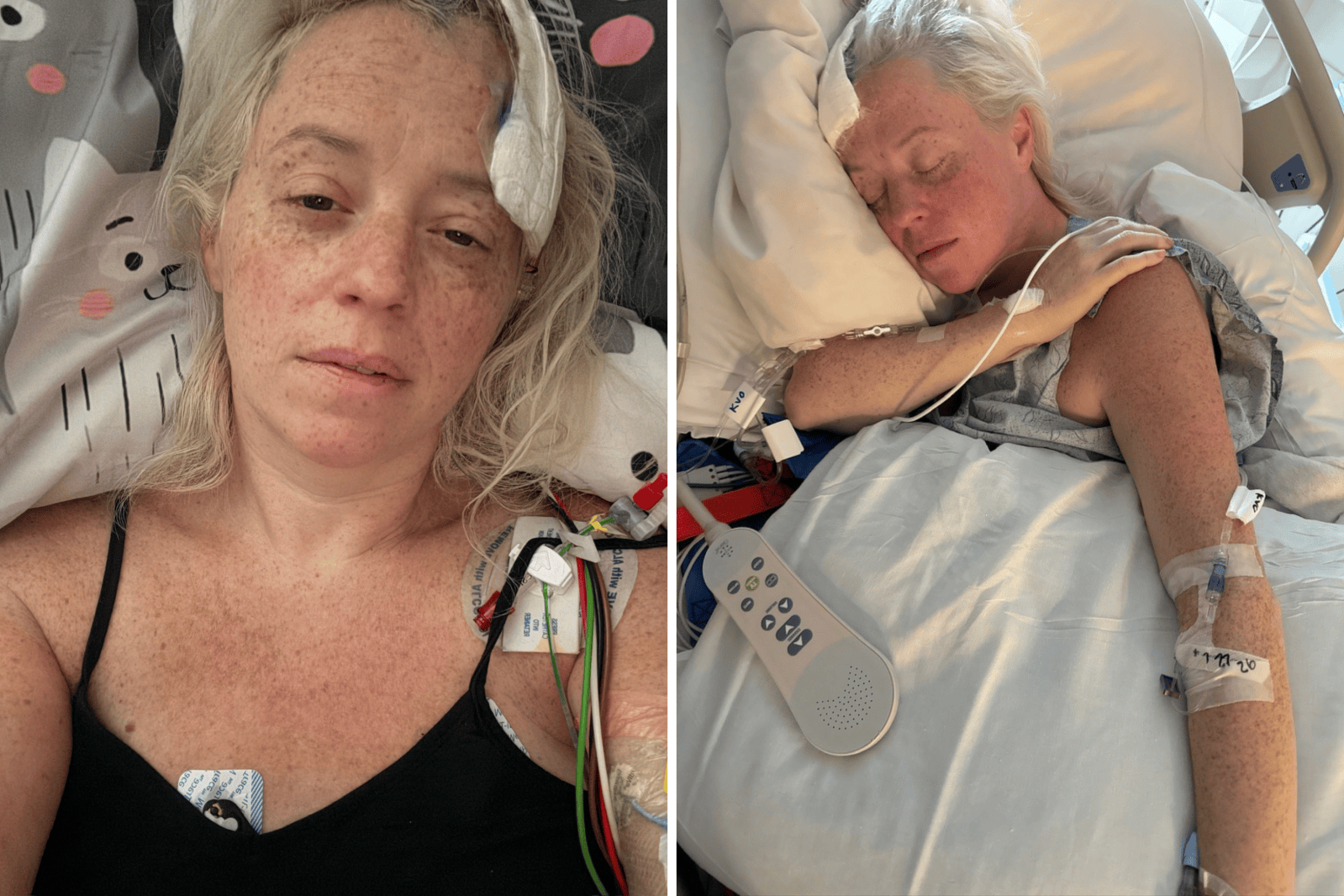
Julie Nashawaty, aged 46, faced an unexpected life-threatening event on what began as a typical workday. On July 27, during her lunch break at home in Boston, she experienced a sudden, severe headache and a spike in body temperature. “Out of nowhere, it felt like my brain was exploding,” Nashawaty recounted. Her husband quickly called 911 as her condition deteriorated and she became incoherent. Within 30 minutes, she was in the emergency room, beginning what would be a 25-day stay in intensive care.
Understanding Brain Aneurysms
Doctors found a 3-millimeter brain aneurysm in Nashawaty that had ruptured. A brain aneurysm is a weakened and bulging area in a brain blood vessel. The Brain Aneurysm Foundation (BAF) states that around 6.8 million people in the U.S. have unruptured brain aneurysms. Approximately eight per 100,000 people will have a ruptured aneurysm annually.
“I knew something was wrong because it felt like nothing I had ever experienced,” Nashawaty said. “I didn’t know it was an aneurysm, but the sudden pounding, feeling so hot, and needing to lie on the floor were completely out of the ordinary.”
Symptoms of a Ruptured Brain Aneurysm
A ruptured brain aneurysm requires urgent medical care. According to the BAF, symptoms may include:
- A sudden, severe headache, often called “the worst headache of my life”
- Nausea and vomiting
- Stiff neck
- Blurred or double vision
- Sensitivity to light
- Seizures
- Confusion
- Loss of consciousness
- Weakness or numbness
- Eye symptoms, such as a drooping eyelid, dilated pupil, or pain behind the eye
Causes and Risk Factors
Brain aneurysms can develop without prior symptoms. While some inherit a predisposition to weaker blood vessels, many aneurysms emerge over time due to arterial wear and tear. Risk factors identified by the BAF include:
- Smoking
- High blood pressure
- A strong family history of aneurysms
- Age over 40
- Certain genetic disorders
- Drug or excessive alcohol use
- Infection
- Severe head trauma
Brain Aneurysm Treatments
To address the ruptured aneurysm, Nashawaty underwent an endovascular procedure. This involves inserting a catheter through an artery in the arm or groin to place tiny coils inside the aneurysm or insert a stent to redirect blood flow.
Recovery from Brain Aneurysm
Nashawaty’s treatment was just the start. She experienced significant vasospasms, where her brain’s blood vessels narrowed. Doctors used a drain in her head to administer medication and entered her arteries three times to deliver medication directly. She spent 25 days in the hospital.
Post-discharge, Nashawaty engaged in physical and occupational therapy while nurses made home visits. The initial two weeks were challenging, as she coped with post-intensive care syndrome, muscle weakness, brain fog, emotional stress, and difficulty sleeping. “It felt like my brain was trying to figure everything out again while my body was trying to get stronger. Being home didn’t mean I was suddenly better,” she explained.
Three months later, Nashawaty reports gaining strength daily. “Doctors also found a second aneurysm that hasn’t ruptured. The plan discussed at my follow-up was to do more scans and likely treat it with a flow diverter, a small device placed inside the artery to redirect blood away from the aneurysm. So recovery is still an ongoing process,” she said.
Contact Newsweek editors on this story: Sirena Bergman and Tony Phillips.