
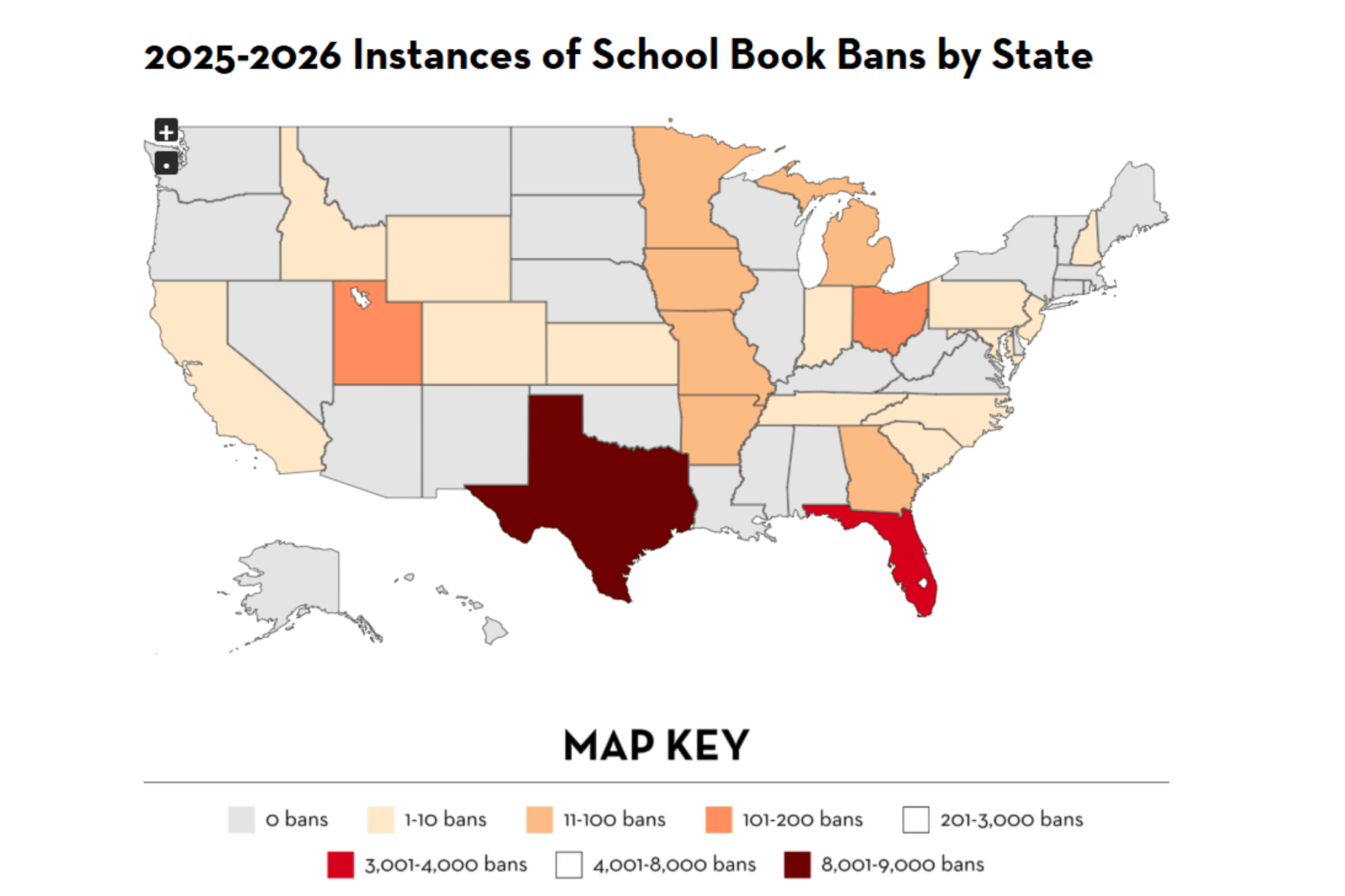
Nearly 12,000 books were removed from U.S. public schools during the 2025-26 school year, a recent PEN America report reveals. This marks the highest number of recorded bans since the organization began tracking the issue in 2021. Public schools banned 11,982 books, including 7,370 unique titles. Among those banned are classic and contemporary works such as Charlotte Brontë’s Jane Eyre, Bonnie Garmus’ Lessons in Chemistry, and the Japanese manga series Tokyo Ghoul by Sui Ishida.
Major States Involved in Book Bans
Texas and Florida topped the lists with the most bans. Texas reported over 8,000 bans during the 2025-2026 school year, while Florida had over 3,000. Supporters of these bans deny censorship accusations, asserting that communities and parents should influence the selection of educational materials available to children. They focus especially on books with sexual themes, graphic content, or mature subject matter, claiming it is about age suitability.
Trends in Banned Books
PEN America highlights that more than half of the banned books were young-adult titles, with over 80% being fiction. The report found 114 school districts enforced bans, the highest number recorded. State legislation, advocacy groups, and political figures significantly influence these bans. A review over five years shows a pattern of targeting books depicting LGBTQ+ characters, people of color, race discussions, and sexual content.
Manga and graphic novels also face increased scrutiny. Critics often target specific illustrations for their depiction of sex, violence, or gender identity, leading to the removal of works from authors like Hajime Isayama (Attack on Titan) and Rumiko Takahashi (InuYasha).
AI in Book-Banning Processes
A controversial finding from the report is the growing use of AI in reviewing books for bans. Some school districts use AI tools to align with state laws. However, AI systems sometimes recommend bans if books have been removed elsewhere rather than assessing the content objectively. This practice could spread bans across districts without individualized review.
Supporters of Book Restrictions Speak Out
Proponents of book removals argue for the necessity of reviewing school materials for sexually explicit or inappropriate content. For example, Texas’ SB 13 mandates district reviews for indecent content, a move PEN America contests. The organization argues that bans limit student access to varied literature and viewpoints.
PEN America states: “Book bans impede the freedom to read, cutting students’ access to a diversity of views, voices, perspectives, and literature they deserve to encounter.”
The National Debate
The rise in book bans has ignited a national debate on censorship, parental rights, and free expression. Notable opponents include Illinois Governor JB Pritzker, who in 2023 led efforts to prevent public library bans, framing it as a defense of free expression. Authors like Margaret Atwood and Judy Blume have vocalized opposition, emphasizing the dangers of book bans as a form of censorship.
Pritzker recently stated: “Banning books from schools and public libraries isn’t about age-appropriate material. Democracies don’t ban books. Regimes do.” Authors express concern over growing intolerance toward topics like gender and racism, drawing parallels to historical censorship.
With record levels of book bans, disputes between free-speech advocates and supporters of increased oversight of school libraries continue to heighten American educational conflicts.
Newsweek has reached out to PEN America and Moms for Liberty, an advocacy group for parental oversight in school libraries, to comment on this issue.