
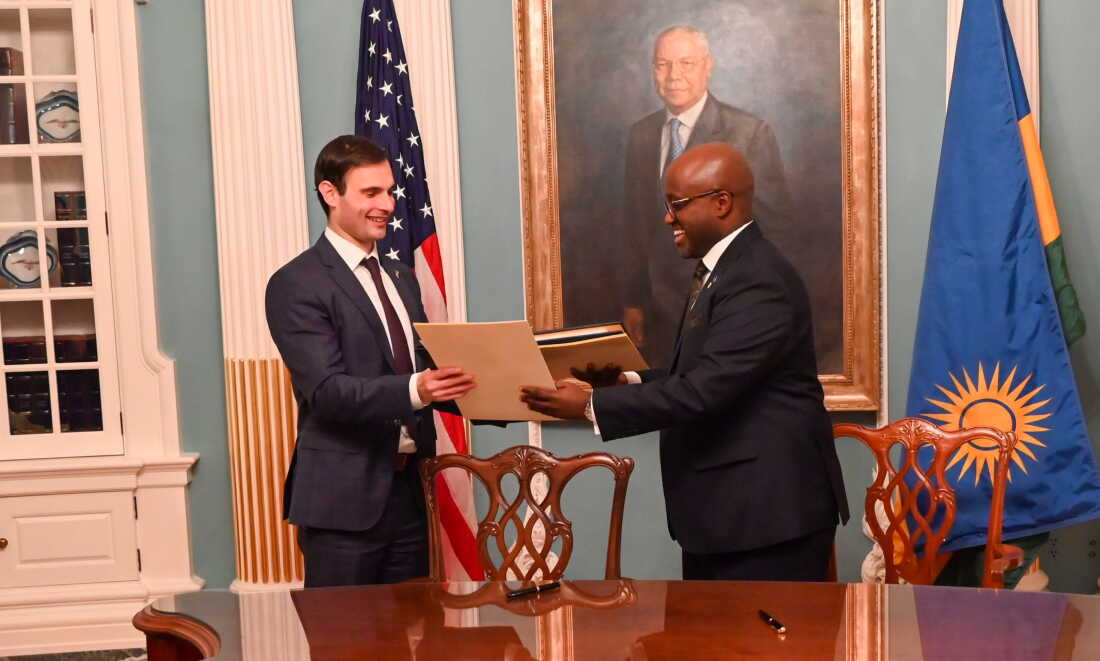
In December, U.S. State Department official Jeremy Lewin and Rwanda’s Foreign Minister Olivier J.P. Nduhungirehe formalized a multi-year Memorandum of Understanding (MOU) on global health cooperation. This aligns with the Trump administration’s ‘America First Global Health Strategy,’ which requires reforms in funding international healthcare, emphasizing mutual benefits.
The New Strategy’s Framework
The U.S. seeks to redefine how it supports health programs in low- and middle-income countries. Central to this is the expectation that recipient countries will share the financial load and provide tangible returns, such as access to local resources. The U.S. expects countries to sign MOUs detailing mutual investments, fostering self-reliance.
Jocilyn Estes from the Center for Global Development views the concept as sensible but hastily implemented. The initiative has sparked varied reactions among nations involved.
U.S. Strategy: Objectives and Stipulations
The U.S. is the largest donor for global health, despite cuts to funding over recent years. Prior administrations used health aid to build alliances, but the Trump approach focuses on clear returns for U.S. investments, such as access to critical minerals or data.
The State Department claims these changes will prevent disease outbreaks, foster bilateral relationships, and encourage American health innovations. However, the controversial requirement for countries to share private health data raises concerns.
Global Participation and Challenges
By now, the U.S. has MOUs with 35 countries, including Nigeria, Rwanda, and the Philippines, totaling $14 billion in health investments over five years. Some countries, like Ghana and Zimbabwe, refused, citing sovereignty conflicts.
The consequences of not signing include cessation of U.S. health aid, as seen when the U.S. halted funding to Zimbabwe. Many countries face pressure to comply with these agreements despite concerns.
Experts Weigh In
Global health experts see the strategy as pragmatic for ensuring self-reliant health systems. Estes points out the unprecedented scope and rapid pace of this transition. Initial implementation was delayed, yet uncertainty remains about the timely flow of funds.
Stephen Morrison of the Center for Strategic and International Studies notes the significant drop in U.S. baseline funding. He highlights the dilemma faced by countries with significant health challenges, forced to navigate stark funding reductions from the U.S.
Countries must also meet their pledged commitments and expand healthcare funding amidst financial constraints. Many, like Rwanda, confront economic pressures exacerbated by global uncertainties.
The quick rollout of the strategy complicates countries’ ability to adapt and meet new expectations. A stable environment for nations to address their health needs remains challenging.
The State Department defended its approach, emphasizing partnership and self-reliance. It stated its commitment to supporting nations in building resilient health systems, declining to revert to what it calls ‘forever aid.’