
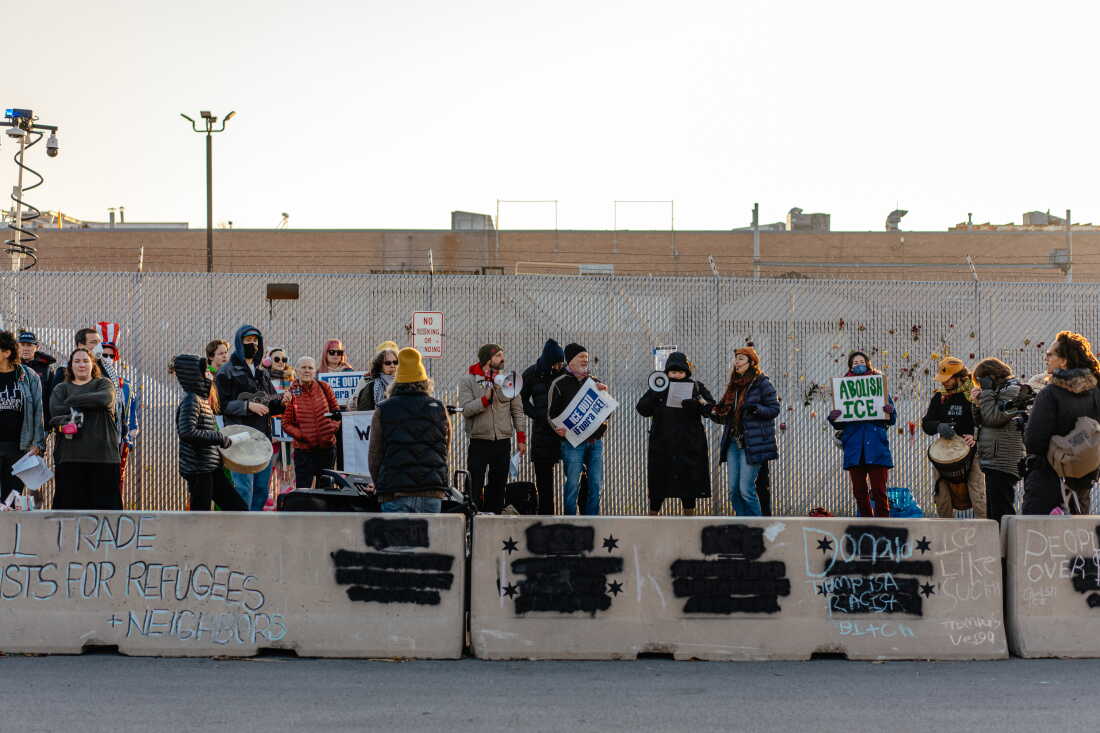
On October 31, 2025, protesters gathered in the designated “free speech zone” near an Immigration and Customs Enforcement (ICE) processing and detention facility in Broadview, Illinois. Among those demonstrators, a group is now suing media figure Benny Johnson for defamation, accusing him of labeling them as “left-wing terrorists.” The lawsuit highlights the tension between media portrayal and the reality of the protesters’ actions.
One of the plaintiffs, Kyle Frankovich, only became aware of Johnson after the influencer shared a video depicting Frankovich and other protesters detained outside the ICE facility. The footage falsely claimed these individuals assaulted ICE officers. This, according to the lawsuit filed on Friday by Frankovich and another protester, is a baseless accusation.
Frankovich was documenting the actions of ICE agents from the designated area when detained. He was arrested without charges, along with co-plaintiff Maureen Foody. Images showing Frankovich zip-tied with visible tattoos were later utilized in ICE recruiting material. Frankovich works as a data scientist at Harvard University, while Foody is employed as a court reporter. Both plaintiffs express concerns about violent retaliations and career repercussions due to being labeled as terrorists in Johnson’s videos.
The lawsuit notes, “[Frankovich] and his partner do not take walks alone anymore. He has made his social media private and uses a Google service to flag whenever his address is made available online.” Johnson, who has a substantial social media following, saw his content featured on Fox News. He did not provide immediate comment.
Benny Johnson had been filming alongside then-Secretary of Homeland Security Kristi Noem and then Border Patrol Commander-at-Large Gregory Bovino. Rachel Goodman, from Protect Democracy, a legal non-profit aware of similar defamation cases but not involved here, commented on the situation. She suggested the claims against Johnson reflect a broader tactic used by the Trump administration to manipulate information and discredit political opponents.
According to Goodman, federal government officials usually have immunity from defamation suits. However, the strategy of influencing media narratives involves collaborating with politically aligned influencers to create content favorable to an administration’s image.