
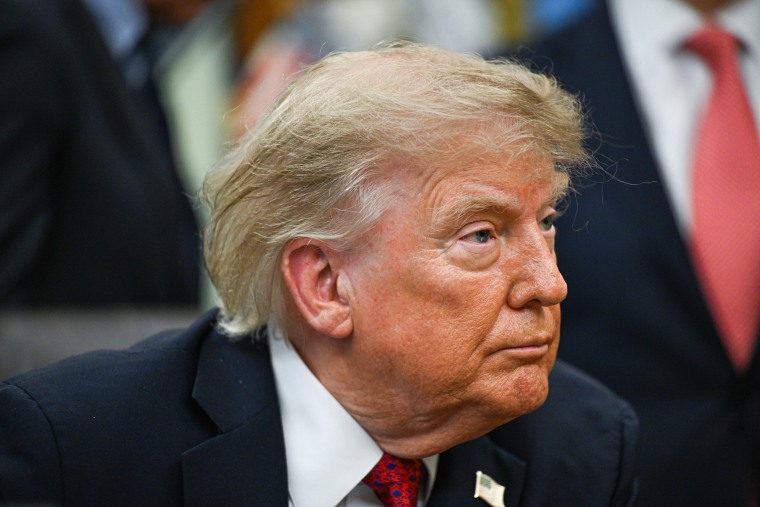
President Donald Trump has proposed bipartisan tax incentives aimed at supporting the domestic TV and movie industry, which has been losing business overseas in recent years. On Truth Social, Trump announced plans for meetings with leaders from both parties to address this issue.
“It should be Bipartisan, especially since so much money is being lost in California, and other largely Blue States,” Trump stated. “I am going to suggest that Republicans and Democrats get together and immediately craft Legislation to save the Movie, Television, and Entertainment Business in America.”
Trump’s decision to assist Hollywood, often criticized by Republicans and located predominantly in California, is partly influenced by actor Jon Voight. Voight, a campaign surrogate for Trump in the 2024 elections, has played a role in shaping Trump’s entertainment policy during his second term. Notably, Trump met with Voight in May 2025 before suggesting tariffs on overseas-produced films.
Voight has yet to comment on Trump’s recent call for incentives. Trump’s announcement generated immediate backing from some Democrats, typically critical of his policies. Senator Adam Schiff, D-Calif., expressed strong agreement with Trump’s proposal.
“Congress should immediately take up and pass a federal film tax incentive to bring back these good-paying jobs that we’ve lost to other countries,” Schiff wrote on X. “Let’s work together—Republicans and Democrats—to get this done and bring the movie magic back to America.”
Representative Laura Friedman, D-Calif., also supported the measure and urged for prompt enactment. She highlighted her efforts over the past year alongside Voight and others to advocate for a national film and television tax credit.
“There’s no reason Canada, the UK, or Australia should be taking our jobs. We still have the best crews on the planet. It’s time we made it possible for them to stay where they belong: in America,” Friedman emphasized.
Last September, Friedman noted that the proposed tariffs on foreign films were Trump’s acknowledgment of the industry’s challenges. However, she argued that a tax credit, not tariffs, was the solution.
The industry welcomed Trump’s announcement. Charles Rivkin, CEO of the Motion Picture Association, representing major U.S. film studios, commended Trump’s support for tax incentives.
“For over a century, American studios, casts, and crews have produced the films and series that the world wants to see. A federal incentive would be a landmark step toward bringing more production to local communities in all 50 states, strengthening our nation’s economy, and making our country a more competitive place to produce, create, and tell great stories,” Rivkin remarked.
Although Trump did not specify financial details in his post, he anticipated that the tax incentives would generate significant revenue. He predicted the incentives would pay for themselves through increased contributions to the Treasury.