
As President Donald Trump intensifies his economic campaign against Iran, tensions are mounting between Israel and Turkey, introducing significant challenges for the United States. The conflict took a turn last week when Israel conducted an airstrike on a Syrian airbase, reportedly visited earlier by a Turkish defense delegation. Israel accused Syria of violating security arrangements by allowing Turkey’s military presence, while Turkey criticized Israel’s actions as a breach of Syria’s sovereignty and called for the arrest of the Israeli leader on charges of genocide.
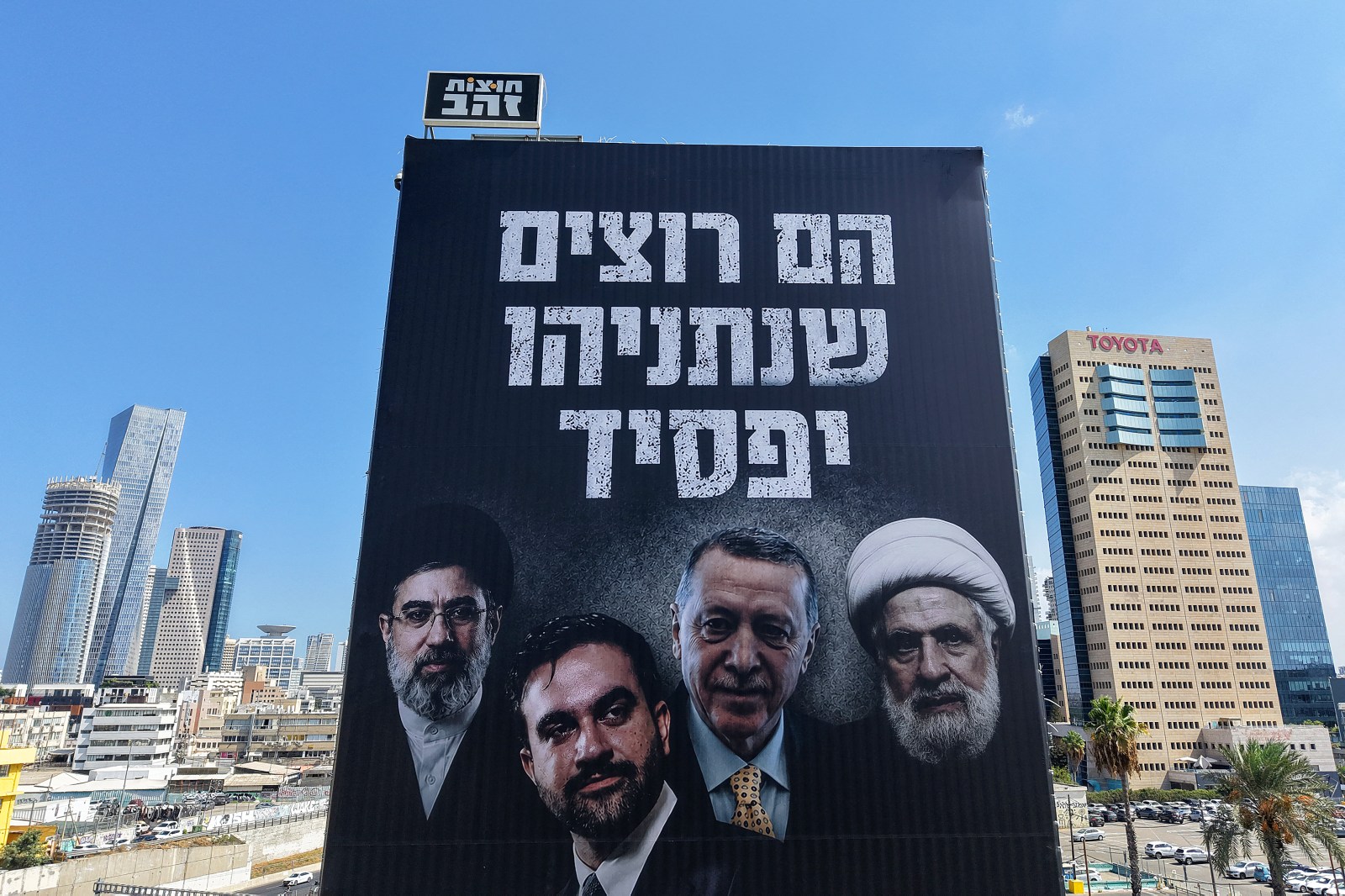
The verbal confrontations grew on Friday, with Israeli Prime Minister Benjamin Netanyahu’s office calling Turkish President Recep Tayyip Erdogan an “antisemitic dictator” with “pathetic attempts to intimidate the leaders and soldiers of Israel.” Erdogan’s communications office responded by condemning Netanyahu’s “petty political tactics” and efforts to portray Turkey as a new threat. These tensions show no signs of easing as an important election looms for Netanyahu. Billboards featuring Erdogan’s image alongside other leaders with the message “They want Netanyahu to lose. Don’t let them win” have appeared near Tel Aviv.
Analysts caution against ignoring the possibility of direct conflict. Ismail Numan Telci, director of Ibn Haldun University’s Center for Gulf Studies, suggests that while a military confrontation is not expected, ruling it out would be premature. Telci highlighted the complexity of the Syrian theater, where numerous actors operate with limited room for error.
Roots of the Israel-Turkey Rivalry
The Turkey-Israel relationship has deteriorated significantly over the years. Turkey was the first Muslim nation to recognize Israel in 1949, following the Arab-Israeli War. During the Cold War, Turkey aligned with the West through NATO membership, while supporting Palestinian self-determination. Erdogan initially sought engagement with Israel upon gaining power in 2002. However, relations soured after a series of events, including a heated exchange between Erdogan and then-Israeli President Shimon Peres in 2009, and Israel’s war in Gaza.
Efforts at reconciliation have been thwarted by ongoing accusations. Recent tensions have escalated following Hamas’ attack on Israel in October 2023. Israeli officials, such as Consul General in New York Ofir Akunis, have criticized Erdogan for his support of flotillas attempting to break Gaza’s blockade and for allegedly aiding Israel’s adversaries. Akunis expressed hope that Turkey’s political landscape might change.
Turkish officials criticize Israel’s actions as violations of international norms. The situation in Syria adds a volatile element, where both Erdogan and Netanyahu initially opposed President Bashar al-Assad, but Syria’s new leader Ahmad al-Sharaa cultivated strong ties with Turkey, prompting Israeli intervention in Syria.
If Israel continues to target Turkish interests in Syria, Telci warns that Türkiye could deepen its involvement with Damascus or bolster its air defenses. Ankara’s current strategy of strong rhetoric over military retaliation demonstrates restraint, often overlooked by Israeli discourse.
Assaf Orion, a former head of Israel Defense Forces Strategic Division, remarked Assad’s fall benefited Israel by disrupting Iranian elements. However, the resulting power void allows Sunni actors backed by Turkey to potentially challenge Israeli security.
Trump’s Role
Erdogan’s embrace of Sharaa’s leadership in Syria aligns with Trump’s vision of U.S. relations in the region. The U.S. administration recognizes Turkey’s role in resetting U.S.-Syria relations, demonstrated by meetings between Trump and Sharaa and the lifting of U.S. sanctions on Syria. These developments have complicated Netanyahu’s attempts to frame Syria as part of Turkey’s expansionist agenda.
The U.S., while engaging with Ankaran-Damascus rapprochement, has shown signs of strain in its ties with Israel amidst the ongoing conflict with Iran. U.S. officials have criticized Israeli actions in Syria, despite President Trump’s previous decisions.
Broader Implications
The evolving regional order extends beyond Ankara and Damascus, involving deeper ties between Turkey, Saudi Arabia, and Pakistan—an alignment Trump praised, but Israel observed cautiously. Post-announcement discussions between Netanyahu and India’s Prime Minister Modi highlight Israel’s counter-strategic moves, seeking alliances with Greece and Cyprus amid regional disputes with Turkey.
The new “Mecca Agreement” between Sunni powers poses potential challenges to Israel’s vision for regional stability based on the Abraham Accords and other alliances. Turkey’s position at the center of a Sunni bloc could affect Israel’s regional influence.
Orion warns that proactive military measures by Israel against Turkey and Syria might bolster perceptions of Israel as a common adversary, potentially fostering an anti-Israel coalition.
Potential for Conflict
Former State Department adviser Rich Outzen underscores heightened conflict risks, especially if Israel continues preemptive strikes. Such actions may escalate tensions with Turkey and complicate regional cooperation.
The U.S. might avoid conflict through diplomatic mediation and economic collaboration, although current political sentiments in the U.S. show reluctance for direct Middle Eastern management. The formation of regional adversarial blocs due to misaligned alliances poses a significant concern for U.S. interests.