
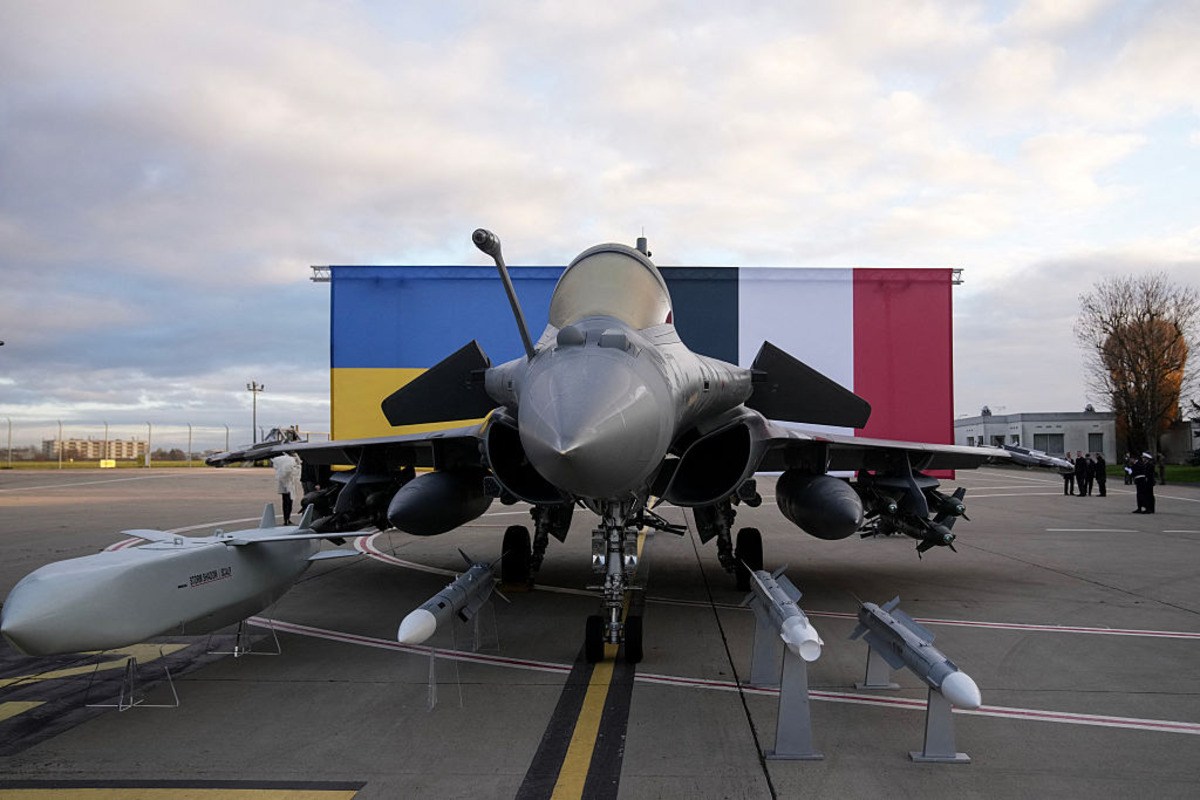
Ukraine is set to receive classified information on the European-made long-range weapons, despite Russia’s objections. This move facilitates Kyiv’s efforts to develop its own versions of the SCALP missile using British and French technology. British Prime Minister Andy Burnham’s office confirmed that London will allow MBDA, the European defense giant manufacturing these missiles, to share certain details on British-made components. This support aims to help Ukraine build its own production lines.
In 2023, the United Kingdom initially supplied Ukraine with Storm Shadow missiles, its version of the SCALP. France followed by donating its equivalent. Sharing previously secret materials may eventually enhance Ukraine’s arsenal, providing the capability to target Russian territory. Yet, it might take years before Kyiv deploys its domestically produced SCALP missiles.
Recently, Ukraine intensified its long-range drone strikes on Russian sites, such as commercial warehouses. Meanwhile, Russia continues its missile and drone attacks on Ukrainian cities. Experts suggest Moscow is capitalizing on Kyiv’s shortage of air defense interceptors, like those fired by the U.S.-made Patriot system.
The demand for advanced missiles poses challenges. The ongoing conflict in Ukraine, along with the U.S. tensions with Iran, has drained global stocks of Western-manufactured weapons. Factories in the U.S. and Europe are gearing up to expand production lines to meet the rising demand.
Russia criticized the decision as inflammatory and claimed it equated to the U.K.’s participation in the war. During a visit to Kyiv for Ukraine’s independence day, Burnham asserted the U.K.’s commitment to support Ukraine, despite Russian threats.
U.S. President Donald Trump frustrated Kyiv by retracting his promise to provide details for making Patriot interceptor missiles. This technology is “hard to give away,” Trump stated, citing concerns about potential misuse. Despite previously offering a “license” for Ukraine to produce Patriots, Trump highlighted the risks of sharing such technology.
Ukraine prioritizes securing licenses for domestic production of Patriot missiles, according to a statement from President Volodymyr Zelensky’s office.
SCALP Missiles Explained
The Anglo-French cruise missiles feature a publicly stated range of about 155 miles, but analysts believe they can travel up to 250 miles. Weighing 1,300 kilograms, they are designed to strike “hardened” targets like bunkers. Current drone strikes on Russian warehouses and oil refineries may struggle against such fortified structures.
SCALP missiles can be launched from various jets, including the French Rafale, Eurofighter Typhoon, or Mirage 2000s. Ukraine’s Soviet-era Su-24s have previously fired SCALP missiles. Paris has supplied Kyiv with Mirage fighter jets.
Recently, Ukraine deployed Storm Shadow missiles to target a Russian submarine in Sevastopol, Crimea. They have also been used against Russian sites, including weapon production facilities. France developed a SCALP variant deployable from ships and submarines.
Comparison to Russian Missiles
Experts often compare Russia’s Kh-69 to the SCALP and Storm Shadow. According to the International Institute for Strategic Studies, the Kh-69 is “likely akin” to the Storm Shadow, although still in testing phase as of September 2023. Ukrainian media reported its initial use in early 2024.
Manufactured by Raduga, the Russian Kh-69 has a range of 290 kilometers, around 180 miles. Russian officials claimed it was used against the Trypilska thermal power plant in Kyiv in April 2024. The Kh-69 is commonly used in conjunction with other weapons, but Ukrainian military reports sometimes merge its identity with the Kh-59 due to visual similarities.
Both SCALP and Kh-69 are subsonic missiles, meaning they fly slower than sound speed. While not as fast as supersonic or hypersonic missiles, which travel faster than sound, they fly low to avoid radar detection, a crucial element for air defenses.
The Kh-69 is smaller than the Storm Shadow, featuring a lighter warhead and a limited range, according to William Alberque, a former NATO nuclear non-proliferation expert now with Pacific Forum. He cited inferior accuracy and inability to strike moving targets. Alberque expressed preference for Storm Shadow’s range and precision.