
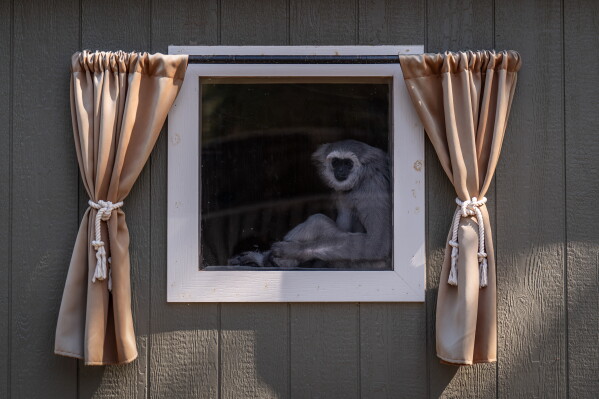
Located in the hot hills of the Santa Clarita Valley, the Gibbon Conservation Center has been a refuge for gibbons for over 50 years. Known for their unique singing, the center houses about 40 gibbons across five species. These primates are among the most endangered on Earth, and the center is dedicated to their care and well-being.
Foundation and Evolution
Alan Mootnick founded the center, transforming a small animal collection into a globally recognized sanctuary. Mootnick, a self-taught primatologist, was also involved in various scientific studies and helped identify gibbon species for other researchers. Director Gabi Skollar, who came from Hungary in 2005 to work alongside Mootnick, took over after his unexpected death in 2011. She decided to stay, driven by her commitment to the gibbons.
Skollar along with another caretaker resides at the center, waking up to the gibbons’ morning calls. She emphasizes their role in global gibbon research through her studies at the University of California, Los Angeles. Each gibbon has a distinct personality, from Pepper who leads group singing to Violet who joins a chorus with Truman.
Challenges and Contributions
Gibbons face threats due to habitat destruction in Southeast Asia and illegal wildlife trade. The center helps by breeding gibbons and maintaining species diversity. It was the first to breed Javan gibbons, only native to Java, Indonesia. It plans to transfer northern white-cheeked gibbons to the Pittsburgh Zoo as part of conservation efforts.
Daily Life and Community Engagement
Caretaker Jodi Kleier started at the center as a volunteer and now actively looks after gibbons like Rocky, who she hand-reared. She has been with the center for a decade, managing daily feedings to replicate natural foraging behaviors. Known favorites include the Javans, whose songs are part of Javanese folklore.
The center opens to visitors for guided tours on weekends, attracting students and tourists alike. Collaborations with local institutions like The Teaching Zoo at Moorpark College offer students practical animal care experience. Mara Rodriguez, a development coordinator at the zoo, has raised four gibbons, highlighting the center’s impact on individuals and awareness.
Future Goals
Skollar aims to fundraise for larger gibbon enclosures and an education center. Her goal is to continue Alan Mootnick’s legacy, ensuring the survival and care of these rare primates. In her words, his spirit aids their ongoing mission.