
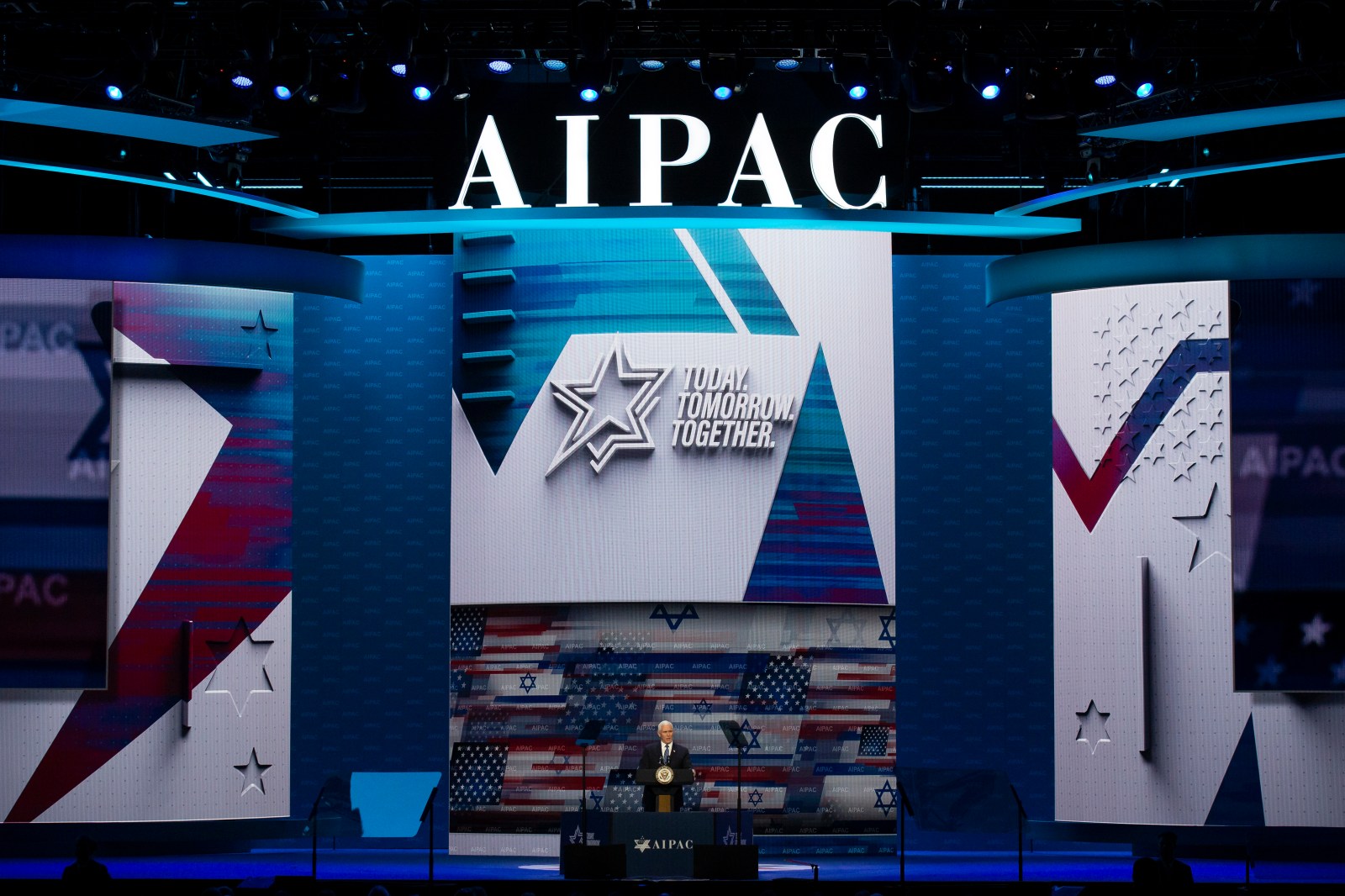
The campaign of Mike Rogers, the Republican Senate nominee, has urged the American Israel Public Affairs Committee (AIPAC) not to run ads against his Democratic opponent, Abdul El-Sayed. This was reported by Axios on Saturday. AIPAC and its affiliated political action committees are influential, spending millions to support candidates, and sometimes face criticism from some Democrats and progressive candidates.
This election cycle, Democratic primary voters have opposed a major political organization in Washington in several primary races. These results have been favorable to candidates running against contenders supported by AIPAC and its affiliates. A case in point is Michigan’s Democratic primary, where El-Sayed, a progressive Democrat critical of Israel’s actions in Gaza, won against Representative Haley Stevens. The race saw about $30 million from AIPAC and groups like United Democracy Project (UDP).
Rogers, who supports Israel and has President Donald Trump’s endorsement, will face El-Sayed in a November race that could affect Senate control. Newsweek has contacted AIPAC, as well as both campaigns, for comments via email.
What to Know
According to Axios, Rogers’ campaign asked AIPAC not to intervene on his behalf. The report states that after Rogers talked with AIPAC Chair Michael Tuchin, the organization decided not to proceed with an ad against El-Sayed. AIPAC officials reportedly expressed disappointment, as they were ready to invest more to ensure El-Sayed’s defeat.
This decision underscores the political delicacy of AIPAC’s involvement in campaigns while the organization spends heavily on preferred candidates. Rogers, a former congressman, has been a consistent supporter of Israel, which makes his decision to distance from direct AIPAC assistance noteworthy. In Michigan’s Democratic Senate primary, UDP spent nearly $15 million, with most funds supporting Stevens and some aimed at defeating El-Sayed.
Rogers’ team thinks the AIPAC-backed ads against El-Sayed had a negative effect in the primary, per Axios. El-Sayed has described Israel’s Gaza actions as genocide, claims Israel denies. He has also advocated for ending unconditional U.S. military aid to Israel. El-Sayed has been critical of AIPAC’s political spending and pledges to reject corporate PAC funds.
After winning the primary, El-Sayed addressed antisemitism claims, stating, “To my Jewish American sisters and brothers… I want you to know that my commitment to your safety, my commitment to Jewish safety, is the same commitment that I have to the safety of my own daughters.” Talks between Rogers and AIPAC have ceased, according to the outlet.
Rogers told Axios, “I welcome support from the pro-Israel community and am proud of their involvement.” Meanwhile, AIPAC spokesperson Deryn Sousa stated, “We appreciate former Rep. Mike Rogers’ welcoming of pro-Israel support. Our members are motivated to engage in this race, exploring options to argue that El-Sayed’s policies are bad for Michigan and America.”
From Michigan and Minnesota Senate primaries to New York, Illinois, and California congressional races, several Democratic nominees triumphed despite significant AIPAC spending in support of their opponents. The primary successes occur amid an ongoing debate in the Democratic Party about its course, with progressives pushing for a left-leaning agenda while some moderates contend such candidates may not be as competitive in swing districts and statewide races.
Some analysts observe AIPAC’s scrutiny in Democratic primaries, where U.S. policy toward Israel has exposed party divisions, compared to general elections with broader issues between Republican and Democratic candidates.
Doug Gordon, a Democratic strategist at Upshift Strategies, stated before the Democratic primary that an El-Sayed victory would be a setback for AIPAC. “There is no question that an El-Sayed win signifies a huge defeat for AIPAC and another indication of their brand’s decline within Democratic politics,” Gordon said to Newsweek.
Earlier in July, Senator Bernie Sanders, who supported El-Sayed, noted the primary wasn’t merely between Abdul and Stevens but rather “Abdul vs. AIPAC.” Jim Kessler, Third Way’s executive vice president for policy, remarked that the state’s demographics matter concerning AIPAC spending. “It’s crucial to remember Michigan has the highest percentage of Arab-American residents in the U.S.,” Kessler stated, noting that “the Jewish population is less than half that of the Arab-American population there.”
Michigan Political Landscape
The race draws national attention as El-Sayed and Rogers vie for the open Senate seat following Democrat Gary Peters’ retirement. Democrats have held the seat for decades, but Michigan’s elections are usually competitive with narrow margins.
Several forecasters, including The Cook Political Report and Sabato’s Crystal Ball, rate the race as a “toss-up.” In past elections, Trump narrowly won Michigan in 2016 and 2024, while Biden secured it in 2020. The state has alternated between Democratic and Republican presidential preferences, maintaining its battleground status.
Democrats face a challenging map this year, needing to gain four seats while protecting their own. They see voter concerns about the economy, Iran war, and Trump’s waning approval as opportunities to flip the Senate. Currently, Republicans hold a 53-47 majority in the Senate.
El-Sayed vs. Rogers Polls
The race is tightly contested in public polls, with most showing Rogers and El-Sayed close and within the margin of error. An AARP poll found El-Sayed ahead by a point, 48-47, based on a survey of 877 likely voters. The TechnoMetrica Institute poll showed El-Sayed at 45 percent to Rogers’ 42 percent.
In a Fox News poll, Rogers led 51-47, and a Susquehanna Polling and Research survey showed El-Sayed with a 46-39 lead. Prediction markets currently give El-Sayed a slight edge in the race.
Shifting Public Opinion on Israel
U.S. public opinion on Israel has changed following Hamas’ October 7, 2023, attack on Israel. Israel countered with a military campaign in Gaza, causing significant casualties and displacement. More recently, Israel and the U.S. held coordinated strikes on Iran.
Polling reveals divided views on U.S. support for Israel, which used to enjoy substantial backing. A June AP-NORC poll found 58 percent of Democrats believed the U.S. is too supportive of Israel, while most Republicans think the current U.S. support level is appropriate.
The survey also found increased Democratic support for Palestinians, with 62 percent saying the U.S. is not supportive enough. A subset of AP-NORC poll data highlighted a significant unfavorable view of Israeli Prime Minister Benjamin Netanyahu among Jewish adults.
Other polls, including Pew Research and Reuters/Ipsos, show declining favorability towards Israel, particularly among Democrats. These trends reveal changing American attitudes and ongoing debates over U.S. foreign policy.