
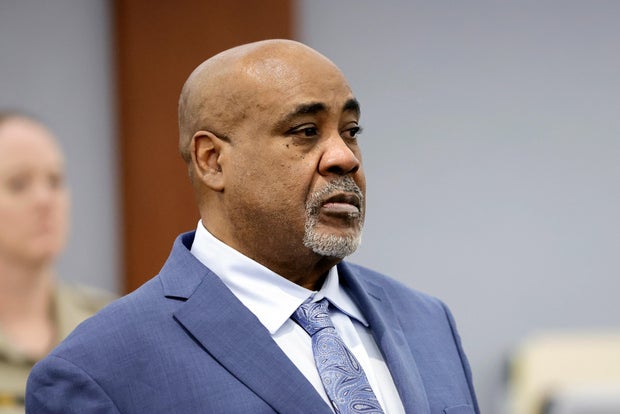
Opening statements began in Las Vegas for the trial of Duane “Keffe D” Davis, accused of orchestrating the murder of rapper Tupac Shakur. The case revisits the events of a night nearly three decades ago. Davis, aged 63, faces charges of murder with a deadly weapon and promoting a criminal gang. He pleaded not guilty, risking life imprisonment if convicted.
Courtroom Proceedings
Davis appeared in court wearing a blue suit. Before the jury was seated, he scanned the audience. Shakur’s family, including his stepbrother Maurice “Mopreme” Shakur, were present. Chief Deputy District Attorney Binu Palal presented evidence showing video footage of Shakur’s entourage attacking Davis’ nephew, Orlando “Baby Lane” Anderson. Palal suggests the attack led to Shakur’s murder in an act of revenge two and a half hours later.
“Duane Davis did not pull the trigger, but he planned the shooting in retaliation,” Palal asserted.
Defense attorney Michael Sanft questioned the delay in charges against Davis. “No one corroborates any of this,” he said, challenging the evidence presented.
Background and Cultural Impact
The unsolved shooting, which happened in 1996, left a deep impact. Shakur, despite his early death at 25, remains a prominent figure in hip-hop. Nominated for six Grammy Awards, he was inducted into the Rock & Roll Hall of Fame in 2017. Posthumously, he received a star on the Hollywood Walk of Fame and had a street named after him in Oakland.
Fans attended the trial, with some like Din Malone traveling from Denver. “As a brother and a fan, his music spoke to me,” Malone shared, wearing a Tupac shirt and playing Shakur’s music on his phone outside the courthouse.
Trial Developments
The prosecution plans to call 35 to 45 witnesses. Conversely, the defense will summon only a handful. Maurice Shakur expressed the trial’s emotional toll on their family but emphasized their dedication to supporting Tupac.
Several of Shakur’s friends and fans, including producer Darryl Harper, traveled for the trial. Harper recalled his close collaboration with Shakur in his final days, underscoring the loss felt by those who worked with him.
Prosecutors’ Narrative
Davis rode in the vehicle from which Shakur was shot. In a 2008 investigation, he provided statements under an agreement that protected him legally. However, details published later in a book and given to the media led to renewed scrutiny and became pivotal evidence.
Prosecutor Marc DiGiacomo remarked, “Had he not written the book, he might not have been prosecuted for the crime.”
Defense Strategy
The defense argues the book “Compton Street Legend” is fictionalized. Sanft claims Davis authored it to earn money, not to reveal facts. Co-author Yusuf Jah may testify. He reportedly doubted Davis’s full engagement with the content.
Davis recently denied involvement in interviews, contradicting his book’s narrative, which detailed his journey and presence on the night of the shooting. The book describes his travels from Los Angeles to Las Vegas for the boxing match attended by Shakur.