
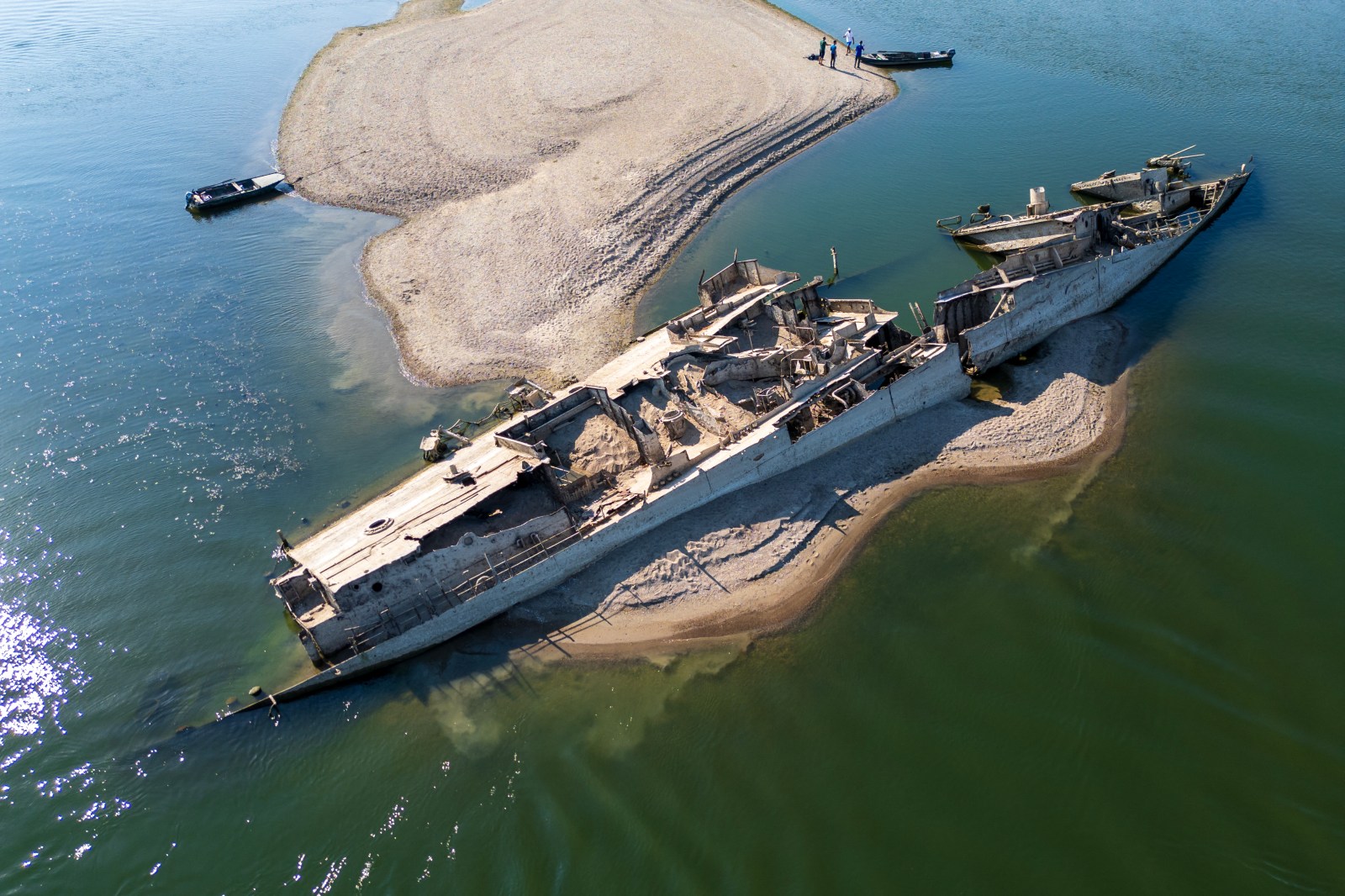
War Remnants on the Danube
The Danube River, near Serbia’s Prahovo port, has unveiled German warships from a bygone era. Drought has exposed these relics, scuttled in 1944 during the German retreat. Today, the Danube holds fresh importance in European conflicts, serving as a crucial export route for Ukraine amid disruptions in the Black Sea.
Current Strains on Ukrainian Exports
The Danube is pivotal when Russian threats close Ukraine’s Black Sea ports. However, reduced river flow in Romania is disrupting shipping and power generation. Russia’s intensified assault on Ukraine’s Black Sea city of Odesa adds pressure, with numerous attacks reported on vessels and port facilities. Infrastructure leading to alternative export routes, like the Mayaki bridge, has also been targeted to hinder Ukraine’s logistics.
Climatic Pressures on Ukrainian Solutions
Ukraine’s success lies in building redundancy, finding alternative routes when one is compromised. However, heat and drought strain these adaptations. Anatoly Tikhonov’s essay from the Russian Presidential Academy suggests Europe’s need for grain amidst weather-induced scarcity. He argues that Russia, despite its challenges, can leverage this situation economically and politically.
The Grain Export Challenge
Russia’s full-scale invasion in 2022 forced Ukraine to reroute its grain exports. The Danube ports, like Izmail and Reni, became key. Yet, drought has diminished Danube’s capacity, complicating logistics further. Ukrainian Agriculture Minister Taras Vysotskyi warns that disruptions might block over 30 million tons of grain from reaching markets.
Energy Supply and Demand Impacts
The energy sector is experiencing similar stresses. Reduced power capacity combined with a heatwave led to electricity shortages in Ukraine. The country’s reliance on the European grid highlights the interdependence amidst infrastructure challenges.
Romania’s nuclear plants on the Danube, like Cernavodă, face low water levels affecting their operations. Similar issues affect Hungary’s Paks plant, demonstrating how weather impacts energy stability across borders.
Fire Hazards and Water Scarcity
Ukraine’s fire season of 2024 exemplified how climate exacerbates war damage. The front lines, with hot and dry conditions, suffered extensive fires, worsened by conflict-related obstacles to firefighting efforts.
Water scarcity is another critical issue. The destruction of the Kakhovka dam has left large agricultural areas without irrigation, threatening food production.
Implications for Russia
Russia faces its own climatic challenges. Droughts and extreme weather have impacted agriculture in regions like Rostov. Tikhonov points to the need for Moscow to become adept at mitigating climatic impacts, thereby positioning itself advantageously.
Overall, this summer’s events on the Danube reveal not Ukraine’s lack of alternatives, but the mounting pressures on these contingency plans. As Europe confronts drier conditions, the strategic importance of these waterways in geopolitical conflicts becomes clearer.