
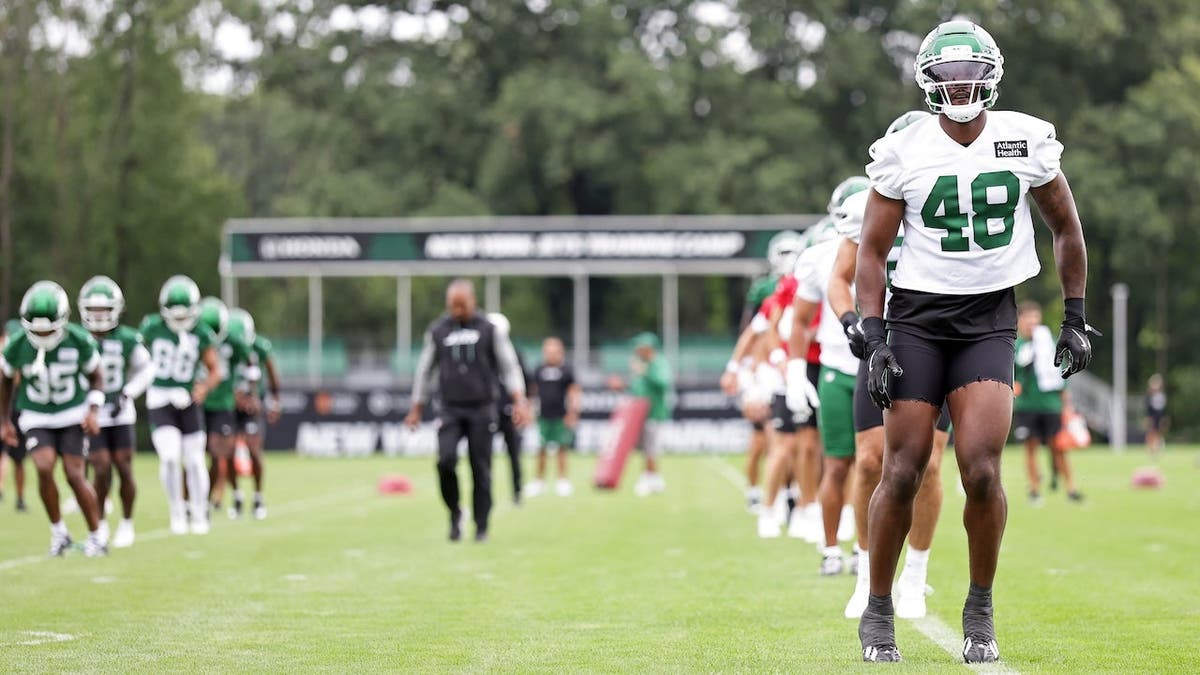
The New York Jets’ upcoming Player Performance Center will stand out because it isn’t defined by a single feature. Owner Woody Johnson has decided to significantly expand the facilities for the 2026 season. He explained that the investment reflects the team’s commitment to dynamic training and innovative performance systems.
Johnson stated, “We are investing in an exceptionally dynamic, innovative training staff with experience designing and utilizing advanced performance systems to support our players. Our new facilities will be 250% larger, allowing us to increase training capacity and centralize strength and conditioning, recovery, and nutrition.” The improvements will leverage advanced equipment to provide some of the best training resources available.
Key technological upgrades include vibroacoustic recovery pods, wellness chambers, pneumatic resistance equipment, computer-vision tracking, and an AI-powered player performance app. This expansion is central to the Jets’ Phase 2 renovation at the Atlantic Health Jets Training Center. It seeks to redesign player routines involving assessment, training, practice, fueling, and recovery within a collaborative environment.
“We’re building a holistic health and human performance ecosystem,” said Erik Korem, the director of player performance.
The new two-story facility will expand the former area by 250%, focusing on player performance, recovery, efficient daily routines, and technology integration. The center will feature dedicated zones for strength, speed, and mobility while enhancing nutrition and recovery programs. The interim training structure is already benefiting from the expanded workspace and new equipment.
Korem praised Johnson for not compromising short-term team preparation during the renovation, translating investments into improved on-field results for 2026. Individualized programs take center stage at the new facility, considering the distinct demands of players of different sizes and roles. The app will organize data to provide tailored recommendations, ensuring personalized athlete training.
A comprehensive embrace of analytics is underway, with AI utilized to streamline processes. This aligns with the performance app’s goal of enhancing decision-making by easing access to critical data. As Korem explained, training and recovery remain essential, with the facility providing additional resources to sharpen judgments rather than replacing the role of coaches.
Recovery and nutrition remain integral to their approach. Tools like the TERSA SAVA Sound Pod promote relaxation, while the Ammortal Chamber offers combined therapy sessions. Still, foundational limits include proper training load, rest, and nutrition, underpinning the recovery strategy.
Under director of performance nutrition Carmen Spencer, the nutrition program emphasizes personalized plans, offering meals that players find acceptable and achieve performance goals. Despite the Jets’ previous low rankings in certain areas, the renovation aims to raise standards in all aspects, evident in upgrades to the locker room, sauna, and other amenities in Phase 1.
As practice remains the core of player development, Korem emphasized its importance in preparing athletes for game situations. The weight room’s role is supportive, complementing on-field training to foster essential qualities.
The Player Performance Center seeks to improve decision-making with better information, rapidly shared and applied to individual athletes’ daily decisions. Woody Johnson’s support is crucial, ensuring both investment in technology and a focus on capable personnel.