
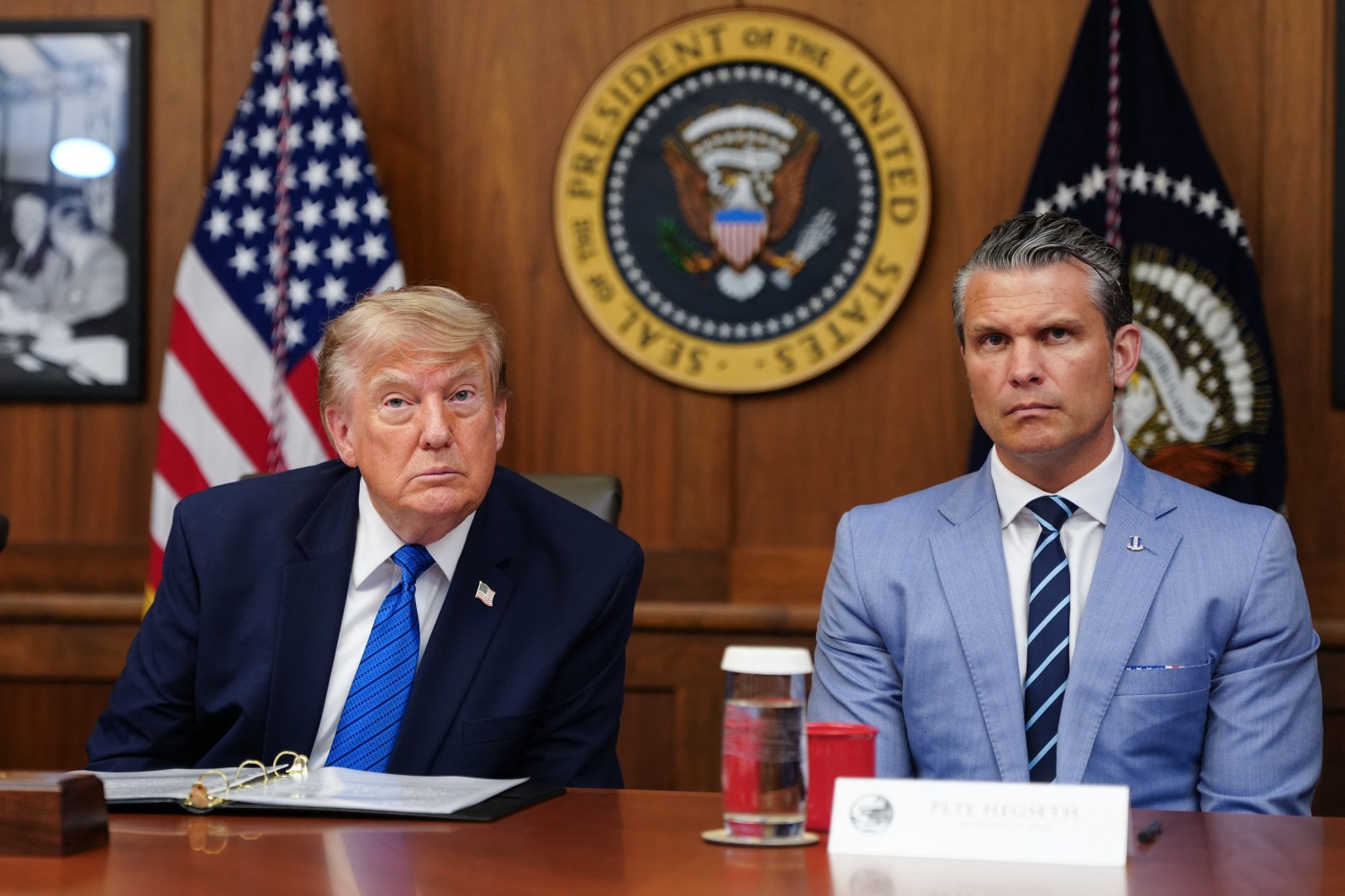
Defense Secretary Pete Hegseth is under increasing criticism from Republicans in Congress. His public support is weakening, according to a new Marquette Law School poll that shows a decline in his favorability among U.S. adults. The criticism is due to concerns over his management of the Iran war.
Senators Voice Concerns
Senator Thom Tillis from North Carolina voiced his disapproval, stating that Hegseth has “lost my confidence.” Tillis criticized the forced retirement of senior military leaders and Hegseth’s micromanagement at the Pentagon. Similarly, Senator Susan Collins from Maine, who leads the Appropriations Committee, mentioned her worries over the departure of senior military officials. Senators Shelley Moore Capito from West Virginia and Joni Ernst from Iowa also warned that public patience with the unresolved conflict is diminishing.
Poll Results and Favorability
Public polling indicates a decline in Hegseth’s standing. A survey conducted by Marquette Law School from July 22-29 found that Hegseth had the lowest net favorability among administration figures tested, tied with Trump at minus 22 points. His favorable rating was 23 percent, while his unfavorable rating was 45 percent. Additionally, 32 percent of respondents had not heard enough about him to form an opinion, despite his leading role at the Pentagon during the Iran conflict.
Previous polling in May presented a more positive image among Republicans, with Hegseth receiving a net favorability of plus 36 points. At that time, 55 percent viewed him favorably, while 19 percent had an unfavorable opinion. No updated Republican-only breakdown has been released since then.
A gap in enthusiasm among Republican voters is also apparent. The July poll showed 30 percent of Republicans were very enthusiastic about voting in November, down from 36 percent in May. Democrats surpassed Republicans in voting certainty, with 70 percent to 65 percent.
Munitions Shortages Raise Questions
The shift in polling followed a report from the Washington Post. It stated that Trump’s frustration over the war surfaced at Camp David when he asked Hegseth to explain why he was misled about severe munitions shortages. These shortages are limiting U.S. military options against Iran.
Hegseth reportedly blamed Deputy Defense Secretary Stephen Feinberg for these shortages and for failing to keep Trump fully informed. The reported lack of long-range guided missiles and air-defense interceptors is one reason for holding off on more large-scale strikes on Iran, according to sources familiar with the issue.
The White House and Pentagon denied the account. White House press secretary Karoline Leavitt called the report “100% fake news,” asserting Trump’s confidence in Hegseth. Pentagon spokesman Sean Parnell stated that Hegseth “did not mislead anyone about our munitions posture” and did not blame Feinberg.
Trump, on Truth Social, contradicted the report. He claimed the U.S. has “massive amounts” of munitions, with more being produced and shipped as necessary. He stated that those leaking the report were being “hunted down.” Newsweek reached out to the White House and Pentagon for comments.
Defensive Stance
This tension marks a shift for Hegseth, whose position had seemed stable after a successful operation to capture former Venezuelan leader Nicolas Maduro. Hegseth has survived earlier controversies, like the “Signalgate,” without losing support from Trump. Pentagon spokesperson Parnell mentioned that Hegseth “isn’t going anywhere” and will continue collaborating with Feinberg.
Republican Complaints Persist
The dispute follows weeks of increasing Republican criticism about Hegseth’s management of the Iran war, now in its sixth month. Before declaring he had lost confidence in Hegseth, Tillis had voiced concerns about Hegseth’s leadership style and treatment of senior military leaders.
In May, after reports that General Chris Donahue might be sidelined as part of a Pentagon restructuring, Tillis accused Hegseth of impulsive decisions. He urged Hegseth to consult experienced military professionals instead of “yes-men.”
The military has used a significant portion of its munitions inventory since the conflict began on February 28. The Washington Post reported that the U.S. fired over 850 Tomahawk cruise missiles and more than 1,000 Patriot and THAAD interceptors in the first month alone. Over 1,300 Army tactical ballistic missiles have also been used, nearly depleting the stockpile.
Hegseth, along with Feinberg and Joint Chiefs Chairman General Dan Caine, requested $67 billion in additional funding to replenish munitions. Senate Republicans have not taken action on this request yet.