
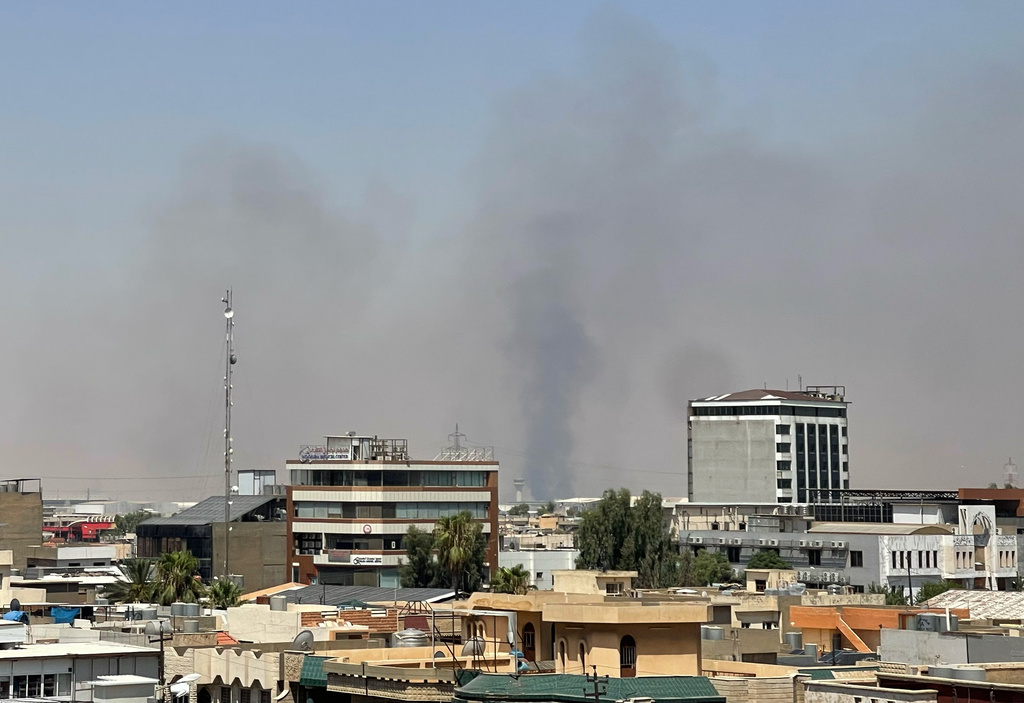
In the northern Iraqi city of Irbil, black smoke rose after explosions near a military base hosting U.S. forces on Friday, July 24, 2026. This incident highlights ongoing tensions in the region. According to recent reports, some Republican lawmakers and foreign-policy analysts have proposed that President Trump end the Iran war by declaring victory and halting military operations. This suggestion, although gaining attention, comes despite the ongoing existence of the war’s initial goal: ending Iran’s nuclear program.
This idea isn’t new. It would mark the fifth attempt at this strategy. On March 24, Trump claimed that Iran was ‘totally defeated’ and declared that the war was won. Fighting did not cease. On April 1, during a primetime address, he stated that the U.S. was close to achieving all military objectives, claiming that the Islamic Revolutionary Guard Corps was weakened and the Strait of Hormuz would soon reopen. Yet hours later, Iran launched missiles at Israel.
On April 7, after a short-lived ceasefire, Trump announced a ‘total and complete victory.’ This ceasefire failed. By June 15, on his 80th birthday, Trump tweeted that a deal with Iran was completed, leading to assurances about Hormuz reopening and the arrival of ‘peace and security.’ Strikes resumed shortly thereafter. After the funeral of Iran’s Supreme Leader Ali Khamenei, narrative shifted from victory to a steadfast resolve. On July 6, Trump stated, ‘We’re gonna win one way or the other.’ Three weeks later, joint strikes by the U.S. and Saudi Arabia took place following an Iranian attempt to attack U.S. forces.
There have been four past declarations with differing metrics: total defeat, completion of military objectives, ceasefire success, and a ‘complete’ deal. Each time, events overtook these declarations within days or weeks. Now, a fifth version circulates, where the unfulfilled goal is acknowledged from the start. The structural instability of these declarations reflects repeated adjustments by the Trump administration as victory metrics shift.
Officials have varied objectives from preventing Iranian nuclear capabilities to reopening Hormuz, dismantling Iran’s missile programs, or weakening its proxy networks. These goals often shift quickly. As a U.S. official told NBC News, the lack of a clear objective complicates planning an endgame. This ambiguity results in selective acknowledgment of successes and masking failures, redefining victory based on convenient definitions. Thus, the current ‘declare victory’ proposal differs significantly from a genuine strategy to end conflict. It aims to make a fifth declaration impactful not by meeting original goals, but by lowering standards until success is declared.
Iran’s nuclear program, the primary reason for the conflict, remains unresolved. Simply declaring victory disregarding the central objective is a rebranding effort rather than a resolution. Congress must focus on understanding what would ensure a fifth declaration’s success where previous ones failed. They should seek clarification from the administration on record prior to any additional declaration.
Charbel A. Antoun is a journalist based in Washington, specializing in U.S. foreign policy with a concentration on the Middle East and North Africa.