
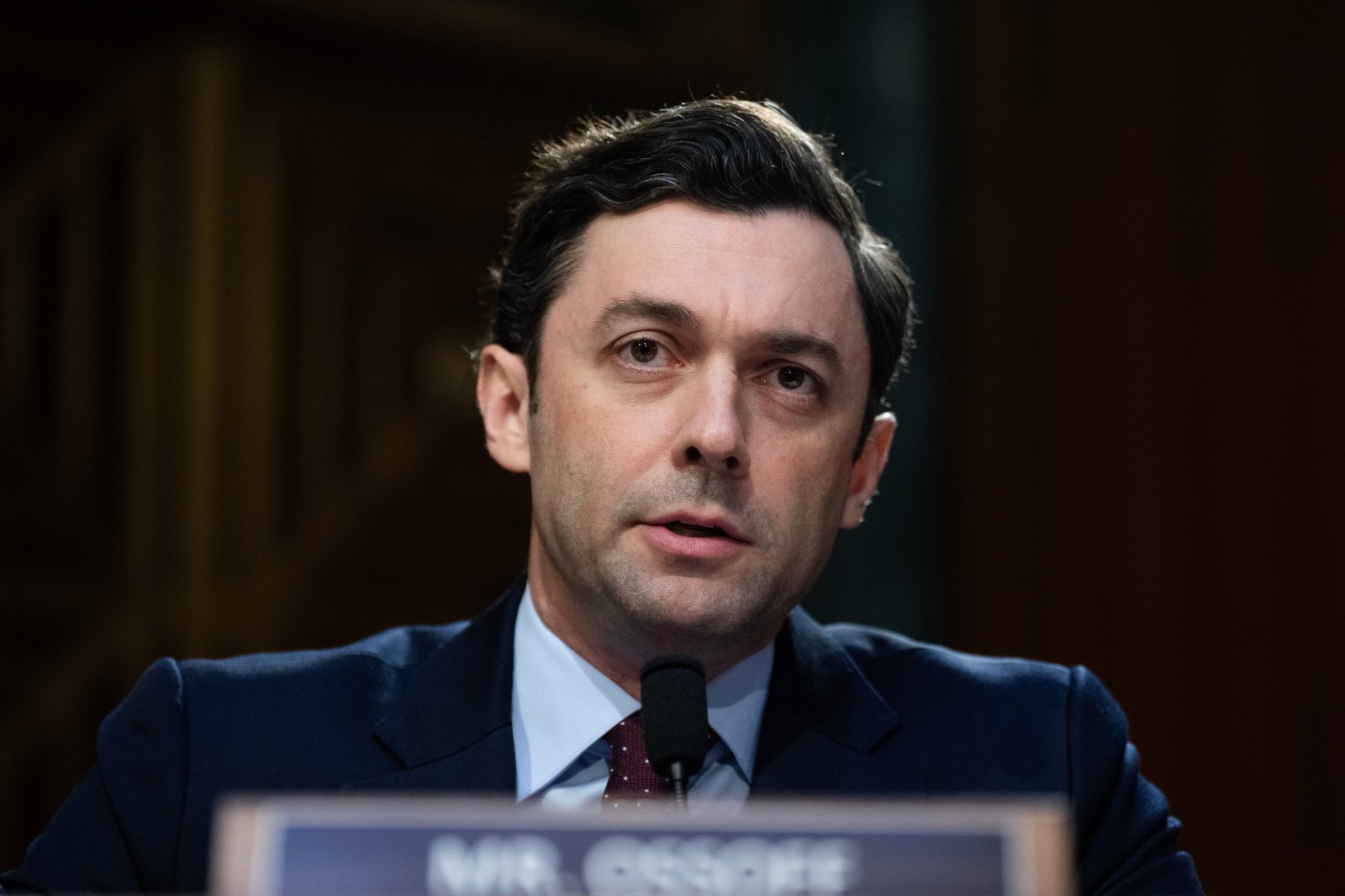
Senator Jon Ossoff, a Democrat from Georgia, has emerged as a formidable fundraiser during this election cycle. Recent Federal Election Commission (FEC) filings reveal that Ossoff has approximately $42 million in cash on hand. This amount is nearly 20 times what his Republican opponent, Mike Collins, reported. Despite this sizable financial advantage, Ossoff’s campaign continues to request donations, highlighting the high cost of advertising in one of the nation’s most expensive media markets.
Campaign appeals for small-dollar donations are commonplace, even for candidates with large cash reserves. These appeals keep donors engaged and prepare campaigns for heavy spending in the months leading up to Election Day. The race between Ossoff and Collins is closely watched as Democrats aim to retain a Senate seat in a state previously won by Donald Trump in 2024. The University of Virginia’s Center for Politics recently updated its Crystal Ball ratings, moving Georgia’s Senate race from ‘lean Democratic’ to ‘likely Democratic.’
The state’s political scene remains competitive, with Trump winning Georgia in 2024 after Joe Biden’s narrow victory in 2020—the first Democratic presidential win there since 1992.
Both parties recognize Georgia as a crucial battleground. Republicans control the governor’s office, while Democrats hold both U.S. Senate seats. Newsweek contacted both campaigns for comments.
Ossoff’s Fundraising Advantage
Georgia senators have become prolific fundraisers as the state gains prominence in national elections. Democrat Raphael Warnock raised over $206 million across two election cycles, while Ossoff has accumulated one of the largest campaign funds among Senate candidates. By July 15, his FEC filing showed over $81 million raised during this election cycle, including $14.6 million in the second quarter alone, leaving him with $42.58 million available.
The Newsweek analysis shows significant out-of-state contributions, with California donations totaling $7.35 million surpassing the $6.86 million from Georgia. Major Senate races often draw national attention and funds from party activists. Google advertising records indicate that Ossoff’s campaign spent nearly $5 million on digital ads last year.
Following his opponent’s Republican runoff victory, Ossoff’s email solicited further contributions, emphasizing aggressive Republican spending against him. This includes an initial $44 million from a prominent Republican Super PAC and expected substantial amounts from dark money groups.
Collins’ Campaign and Challenges
Mike Collins lags behind financially, with his FEC filings showing $4.2 million in net contributions and about $2 million in cash on hand. Despite the fundraising gap, Collins’ campaign claims grassroots support within Georgia and criticizes Ossoff’s reliance on nationwide donors.
Collins’ campaign argues that Ossoff’s donors represent a broader agenda not tied to Georgia’s interests.
Controversies have plagued Collins’ campaign. Reports about his son-in-law’s controversial social media posts have surfaced, although Collins has condemned antisemitism. In May, he dismissed an adviser following a social media incident.
Georgia’s seat is vital for Democrats to reclaim a Senate majority, especially given the current 53-47 Republican control. Flipping four seats is necessary to regain control.
Polls and Predictions
Recent polls consistently indicate Ossoff’s lead over Collins, typically showing a mid-to-high single-digit advantage. An AARP poll reflected strong support for Ossoff among younger voters, while Collins performed better among older citizens. Party affiliation and independent voter support also play crucial roles in shaping these numbers.
Fox News polling results extend Ossoff’s lead, showing a 13-point margin. Prediction markets place his chances of victory at 90 percent.
With over three months to Election Day, campaign spending is expected to rise sharply. Candidates and outside entities will heavily invest in various forms of advertising, seeking to sway undecided voters and solidify support.