
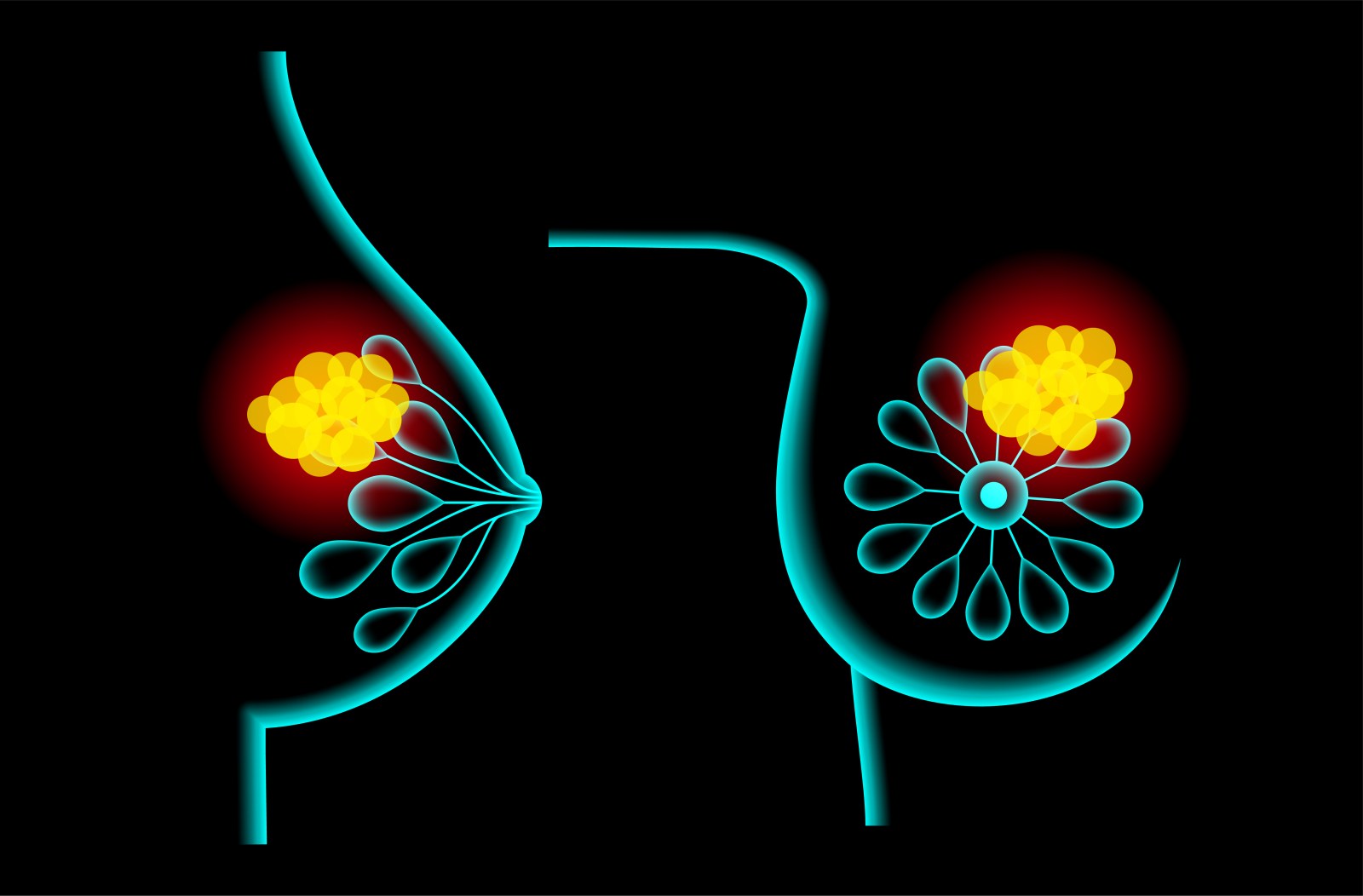
Women with a family history of breast cancer may still face a higher risk of the disease even if they test negative for BRCA1 and BRCA2 gene mutations. A new study conducted by Cedars-Sinai Health Sciences University has found that women with such a history have a significant risk of developing breast cancer compared to the general population.
BRCA1 and BRCA2 gene testing is usually recommended for women with a personal or family history of certain cancers. According to the American Cancer Society, up to 10 percent of breast cancer cases are hereditary, linked to genetic changes passed through families. Women who have alterations in the BRCA1 or BRCA2 genes face a higher lifetime cancer risk. They are more prone to develop cancer at a younger age and in both breasts, with an elevated risk of other cancers like ovarian cancer.
Despite a negative test result for gene mutations, women with a strong family cancer history remain at an increased risk. Fahima Dossa, a surgical oncologist at Cedars-Sinai Cancer, highlighted that while many women test negative or carry a variant of unknown significance (VUS), having a family history of cancer does not eliminate the risk.
The study analyzed health records from nearly 16,000 women who underwent BRCA testing in Ontario, Canada, from 2007 to 2016. Results showed women testing negative for the mutation still had a 25 percent lifetime risk of breast cancer. In contrast, those with a VUS faced a 30 percent risk, compared to the 13 percent average risk in the general population. Positive BRCA tests can raise this risk to between 30 percent and 70 percent.
The study, published in JAMA Network Open, emphasized that a patient’s breast cancer risk is strongly influenced by family history. Women who tested positive for BRCA mutations showed a 56 to 86 percent likelihood of developing breast cancer, depending on family cancer occurrences.
Dossa noted that their findings should serve as a starting point for discussions about risk-reducing strategies, including high-risk screening, chemoprevention, and surgery, tailored to personal and family cancer histories.
Future research will explore cancer risk over time based on age and development of cancer. The study also aims to investigate the links between BRCA genes and heart health, especially how cancer treatments may influence cardiovascular risk.
Kotryna Temcinaite, senior research and impact communications lead at Breast Cancer Now, stated that identifying women at increased risk allows for earlier detection and prevention of breast cancer. While family history is crucial for assessing risk, most breast cancers are not linked to inherited gene changes. Regular self-checks, doctor consultations for any changes, and participation in screening programs are essential. Lifestyle changes, like moderate alcohol consumption, maintaining a healthy weight, and regular physical activity, can also help reduce breast cancer risk.
Reference: Dossa F, Metcalfe K, Ante Z, et al. Breast and Ovarian Cancer Among Individuals Undergoing BRCA1 and BRCA2 Testing. JAMA Netw Open. 2026;9(7):e2626334. doi:10.1001/jamanetworkopen.2026.26334