
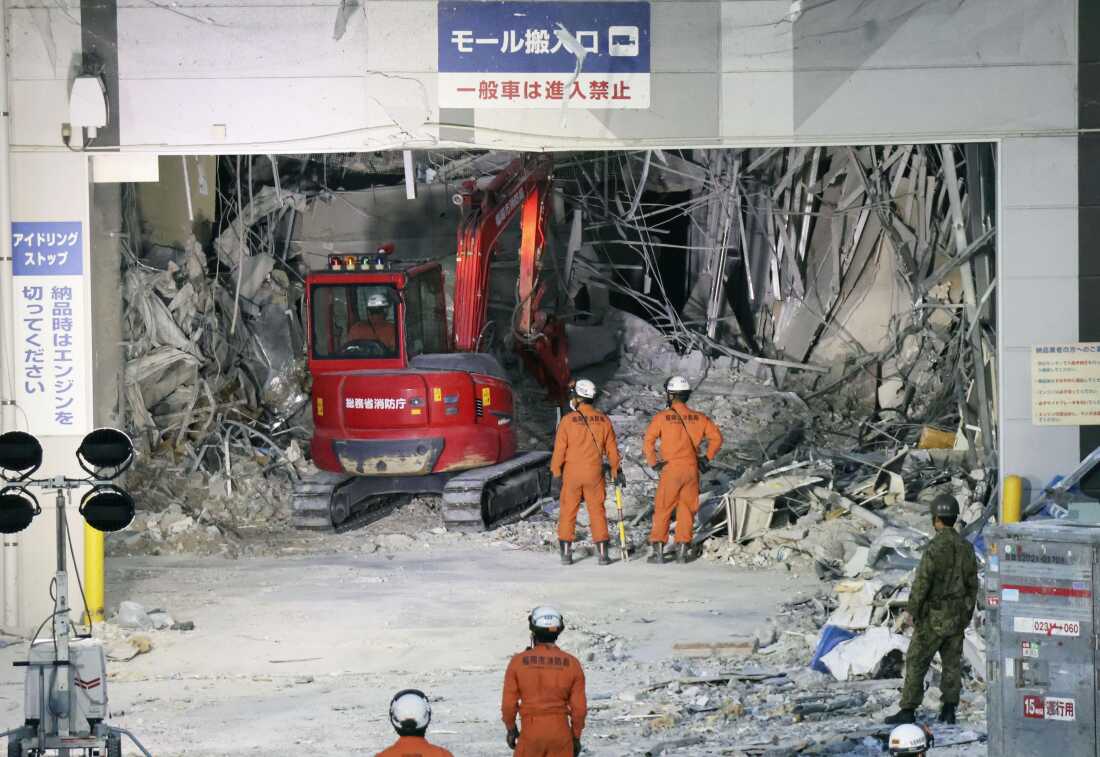
Heavy machinery is actively removing debris at AEON Mall in Kashima, Kumamoto Prefecture, following a destructive explosion triggered by an earthquake. The incident occurred in southern Japan on Friday, July 31, 2026.
According to the Kumamoto prefectural government, the powerful earthquake has claimed 34 lives. The 7.1 magnitude quake struck Japan’s southern main island of Kyushu on Tuesday. Search operations have persisted into the fourth day without a clear count of missing individuals or the full extent of the destruction to homes.
Authorities have confirmed 34 deaths linked to this disaster, with one more case pending investigation, while several others are injured.
Water and Power Shortages Amid Soaring Heat
On Friday, over 79,000 homes lacked water access, and 3,500 were without electricity. More than 9,000 people sought refuge in shelters equipped with added power sources for air conditioning. Temperatures on Friday were forecasted to rise to 36°C (97°F) in Kumamoto City, posing additional health risks amid high heat.
Continuing Search Efforts
In Kashima, the site of the collapsed AEON Mall endured significant damage. Thousands were present when the earthquake struck. Approximately 3,000 shoppers were evacuated to a parking lot before an explosion occurred within the mall, where some staff remained. The mall’s second floor collapsed, trapping individuals.
Japanese Chief Cabinet Secretary Minoru Kihara confirmed the deaths of seven people at the site and the rescue of 11. The number of people still unaccounted for is unknown.
A search operation concluded at a Nippon Paper Industries factory in Yatsushiro, where a chimney collapsed in the quake. Eleven people were rescued there, nine were confirmed dead.
Smaller searches continued on Friday for missing persons in towns throughout southern Kumamoto.
Transportation Impact
Shinkansen bullet trains resumed operations between Kumamoto and Fukuoka, offering reduced services while routes south to Kagoshima remained suspended. Local train services in affected areas, primarily in southern Kumamoto, also were suspended due to damage.
Impact on Communities
In the town of Hikawa, officials reported that over 800 of the town’s 4,500 homes suffered damage or were destroyed. Many residents opted to sleep in their vehicles, in parks, or at the town hall parking lot, fearing further tremors. Some residents experienced water and electricity outages.
Among those affected, Ayako Sudo, in her 70s, opted to sleep in her car with her husband due to fear of aftershocks in their wooden house. Sudo recounted a similar experience in 2016, describing the exhaustion and sleep deprivation from weeks spent living in their car.