
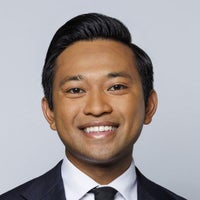
In Southfield, Michigan, Democratic Senate candidates Abdul El-Sayed and Representative Haley Stevens faced off in the final televised debate before a crucial primary election. The contest aims to fill the seat vacated by Democratic Senator Gary Peters and has sparked discussion within the party over progressive versus moderate policies.
Outside Funding Controversy
El-Sayed criticized Stevens for substantial outside funding, particularly over $19.9 million from the American Israel Public Affairs Committee (AIPAC)-affiliated groups supporting her. He condemned ongoing military aid to Israel as misuse of taxpayer money. Stevens, opposing the influence of external contributions on policy decisions, affirmed her support for a two-state solution in the Middle East conflict and pointed out her critique of Israeli Prime Minister Benjamin Netanyahu.
Although Stevens highlighted a super PAC boosting El-Sayed with $300,000 from his father-in-law, El-Sayed stressed transparency issues inherent in campaign finance reform. The super PAC backing Stevens has expended $61 million while El-Sayed’s supporters spent approximately $15.3 million.
Debate Over Electability
The victor of the Democratic primary will likely face former Republican Representative Mike Rogers, who allies with President Trump. Michigan has not seen a Republican Senator in 25 years, making electability a focal point in the Democratic discussion. El-Sayed, endorsed by progressive figures like Senators Bernie Sanders and Elizabeth Warren, does not identify as a socialist but stresses the dangers of monopolies over government regulation in capitalism.
Stevens, supported by moderates such as Governor Gretchen Whitmer, argues El-Sayed poses a risk to winning in Michigan due to divergent strategic views between progressive and moderate wings of the party. She calls for dedication to stable, substantial work over celebrity status in political leadership.
Rogers expressed indifference towards his opponent, criticizing both candidates for similar rhetoric and political actions.
Rhetoric and Campaign Tone
El-Sayed faced scrutiny over aggressive rhetoric during fundraising, drawing comparison to his stance on ousting incumbents like Senator John Fetterman. While he rejected targeting Stevens personally, he accused pro-Stevens ads of undermining character debates in the race.
Additionally, allegations concerning El-Sayed’s attitude towards women surfaced, highlighting past critiques of Michelle Obama and Governor Whitmer. El-Sayed defended his upbringing by strong women and dismissed the accusations as inconsistent with his record.
Financial Transparency
El-Sayed disclosed properties in Bangalore and Dubai, raising questions about transparency. Stevens accused him of opacity concerning $300,000 labeled as ‘other’ business income related to previous podcast endeavors.
El-Sayed clarified the involvement of inherited family properties in his financial disclosures and criticized the focus on his name’s foreign associations, suggesting it perpetuates outdated stereotypes.