
The Trump administration is undertaking two different legal strategies toward Venezuela’s leaders. A federal judge has scheduled a trial for former Venezuelan President Nicolás Maduro and his wife, Cilia Flores, set for June 1, 2027, on drug trafficking charges. Authorities have detained the couple in a Brooklyn jail following a U.S. raid on their Caracas residence in January. Both have pleaded not guilty.
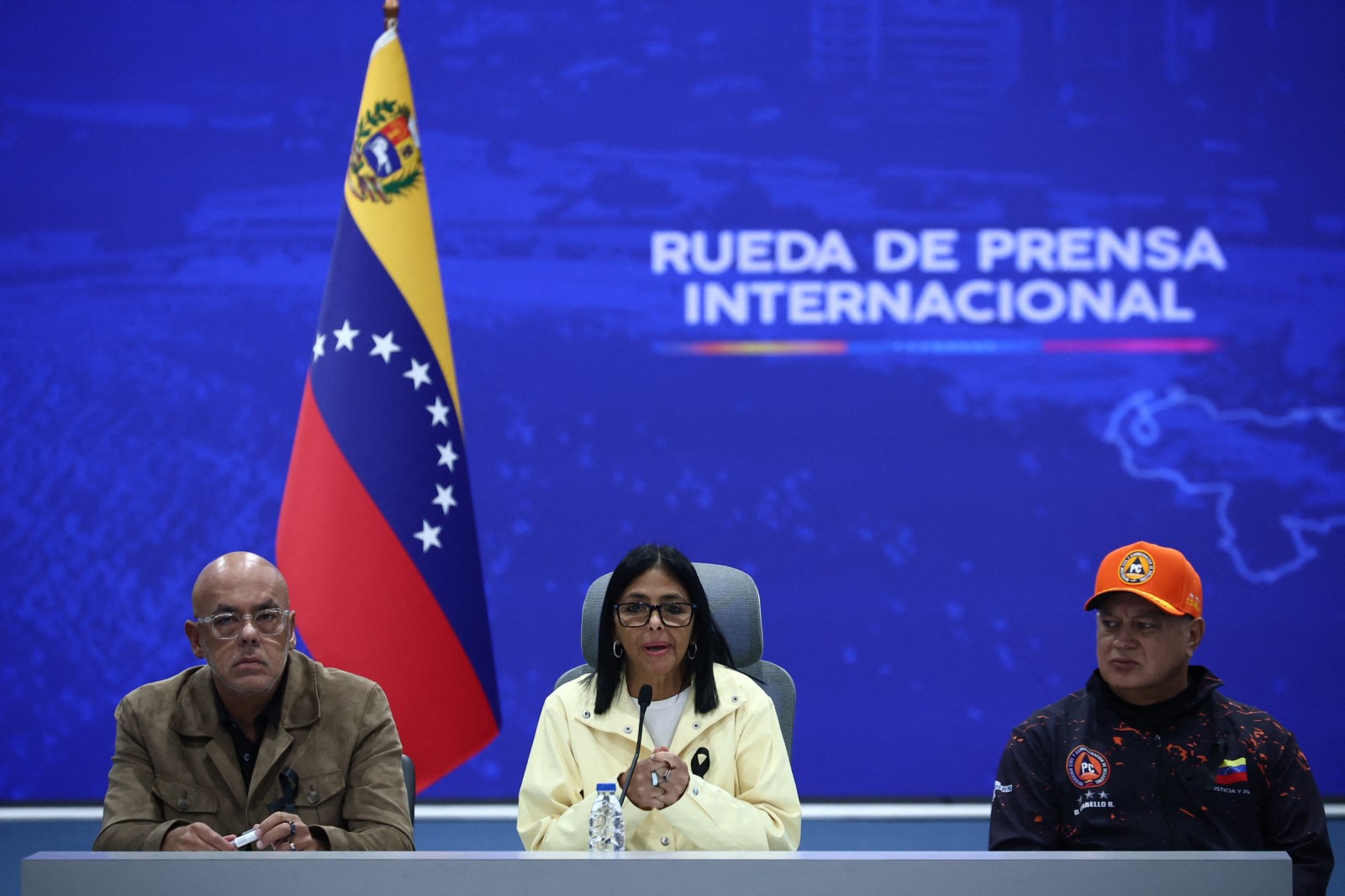
Conversely, the administration informed a Florida federal court that Delcy Rodríguez, recognized by Washington as Venezuela’s acting president, is immune from a $314 million civil judgment concerning the torture of three Americans once held in Venezuela. The U.S. Justice Department cited Rodríguez’s recognition as Venezuela’s head of state as grounds for her legal immunity while she maintains her position.
Policy Divergence
The policy reflects an administration balancing different interests. While celebrating Maduro’s removal as a foreign policy victory, the U.S. shields the successor government, whose officials face similar accusations of repression. Benjamin Gedan, a senior fellow at the Stimson Center, attributes this to differing agendas within the administration. Trump supports Rodríguez due to rising oil production and opportunities for U.S. businesses in Venezuela. Meanwhile, Secretary of State Marco Rubio favors a political transition and supports negotiations between the regime and the democratic opposition.
Rubio’s Efforts and the Political Opposition
The opposition leader, María Corina Machado, who won the 2025 Nobel Peace Prize, has faced discouragement from the Trump administration regarding her return to Venezuela. Analysts suggest concerns over disrupting delicate arrangements with Rodríguez. Laura Dib from the Washington Office on Latin America views the legal basis for the administration’s stance as unstable, with Venezuela’s Supreme Court declaring a ‘forced absence’ after Maduro’s capture without constitutional backing.
Dib notes that elections were expected by July 2, yet have not occurred, raising concerns about mixed signals from the U.S. administration. She argues that recognizing Rodríguez may not aid Maduro’s legal defense, as the U.S. never officially recognized Maduro as president.
Venezuela as a Model?
Trump has likened Venezuela’s situation to regime change efforts in Iran. While he praises the rapid change in Venezuela, analysts like Ronal Rodríguez from the Venezuela Observatory criticize the narrative as prioritizing perception over actual results. They question the success claimed by the administration while noting continued human rights violations by the supported regime.
Recent earthquakes in Venezuela, with a reported death toll exceeding 5,000, have further complicated the administration’s narrative. The disaster has heightened migration pressures and dissatisfaction with how Venezuela has managed the aftermath.
Economic Considerations
The administration sees economic potential in Venezuela’s oil wealth. Energy Secretary Chris Wright and Interior Secretary Doug Burgum have spearheaded engagements in Venezuela. However, Dib cautions that bureaucratic challenges and systemic corruption hinder economic progress. Recent earthquakes exacerbate these challenges, complicating the narrative of success portrayed by the administration.
The situation prompts concerns about diminishing goodwill from Venezuelans, who hold expectations of U.S. involvement improving daily life. Analysts warn that if the perceived benefits of increased oil revenue do not materialize for ordinary citizens, the administration’s policies may face scrutiny.