
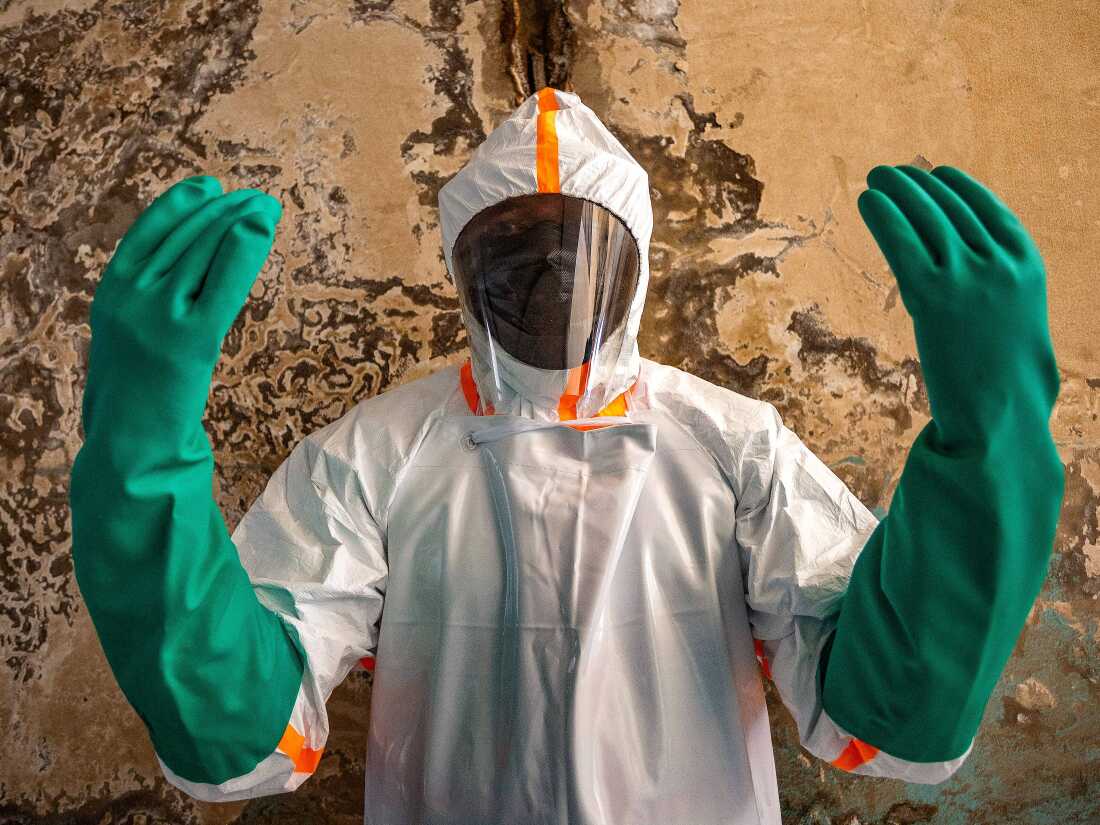
Nurses and other healthcare providers face immense challenges in Bunia, eastern Congo. On June 13, 2026, health workers at the Clinique Universelle undergo disinfection due to the constant threat of Ebola. Attacks on healthcare professionals during the Ebola crisis in DRC have led some to withhold their names. Arséne Mpiana for NPR highlights the tension faced daily.
Moise Bulabantu, a community nurse, lives with the fear of contracting Ebola. Serving in the Ebola-hit area of eastern Democratic Republic of Congo, his risks are significant. Since the outbreak announcement on May 15, Bulabantu interacts with Ebola patients daily. He reveals the dire circumstances: “We don’t have protective equipment,” speaking from his modest clinic in Bunia, the Ituri province capital. His concern is profound.
Bulabantu is the sole state health worker for a population of about 40,000, embodying the courage of many frontline health workers in Ituri. Ebola’s impact is severe in Congo, one of the world’s poorest nations. Health infrastructure is notably lacking. Bulabantu’s clinic is rudimentary, a clapboard structure with scarce resources. Patients cannot be isolated due to limited facilities.
Every day, around 15 cases with potential Ebola symptoms are flagged to Bulabantu, like fever or vomiting. Normally, two to three of these are confirmed positive. “We’ve really had a lot of cases,” Bulabantu shares, visibly exhausted. While CARE, an international NGO, provides some support, protective equipment remains insufficient for Bulabantu and his colleagues. Health workers across Ituri face similar struggles.
Ituri is at the epicenter of the outbreak. The majority of confirmed cases are here according to the Congolese health ministry. By June 30, they recorded over 1,307 confirmed Ebola infections and 377 fatalities. The local conflict with armed groups complicates health efforts. This ongoing violence, despite aid from the United Nations and others, has caused logistical issues.
Hygiene workers at the Rwampara Ebola Treatment Centre show the need for a constant and safe environment. Personal protective equipment (PPE) demands are high, as used gear must be cleaned or disposed of regularly. Arséne Mpiana for NPR captures these moments.
The virus’s wide spread over 22 of 36 health zones in the province makes logistics daunting. Neighboring provinces North Kivu and South Kivu have cases, and Uganda reports 19 instances. PPE shortages also occur because disposable items, like gloves, require continuous restocking.
Aid workers, under anonymity, disclosed that collaboration with Congolese authorities is challenging. This has contributed to fatalities among health workers. The World Health Organization states 17 health workers have died from Ebola, out of 75 infected.
Shannon Hamilton from Samaritan’s Purse expressed how the disease’s transmission through touch endangers family members and health workers. “That’s what makes this disease so terrible,” she said. The disease spreads rapidly among caregivers, turning those who help into new patients.
At Nyankunde hospital, southeast of Bunia, inadequate PPE remains a serious issue. Désiré Duabu, head doctor, emphasizes that the hospital requires comprehensive decontamination for safety. Patients visiting for other ailments risk Ebola exposure due to failure in effective isolation of cases.
Duabu revealed that eight medical staff at the hospital contracted Ebola, with one fatality, a medical student. “It takes a lot of courage to care for the sick,” he remarks. “But of course, we do it.” The commitment of healthcare workers in such trying conditions remains steadfast.