
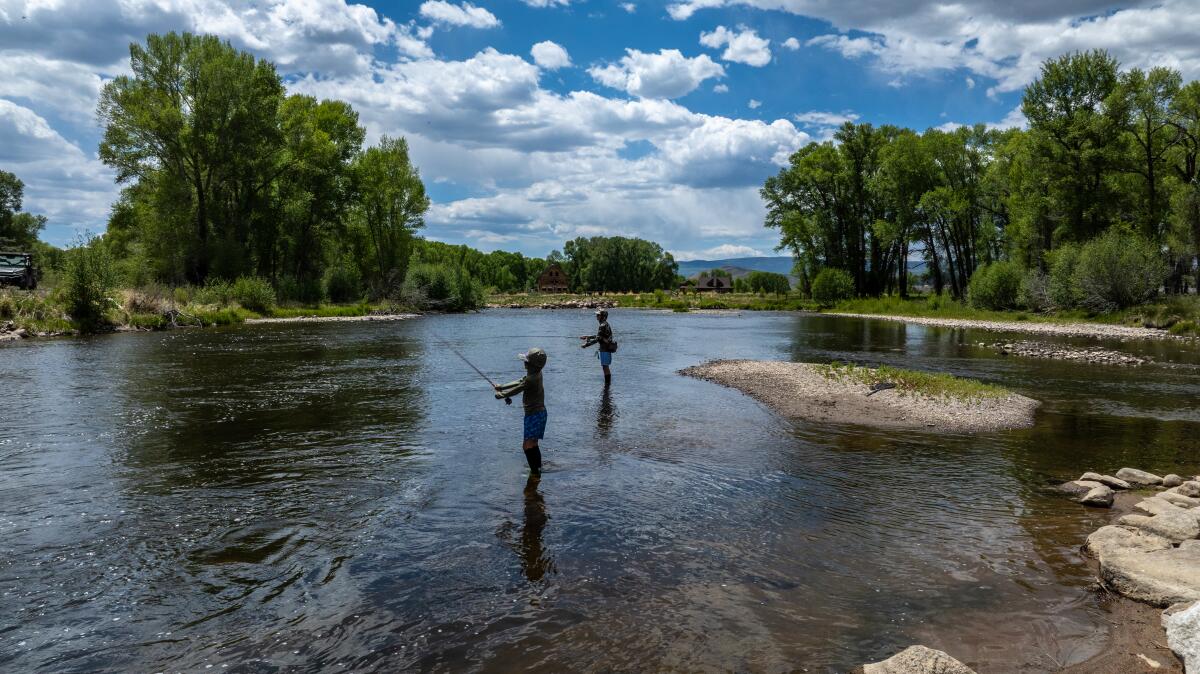
The Colorado River, known for shaping the Grand Canyon and being the site of the Hoover Dam, faces a severe crisis. This vital water source for millions in California and six other states has significantly diminished since 2000. This decline is due to a major drought in the western U.S., considered the most severe in over 1,200 years, worsened by climate change.
Journalists Ian James and photographer Robert Gauthier of the Los Angeles Times explored the river’s headwaters in the Rocky Mountains. Their observations highlighted the area’s sparse snow and dry landscapes, which two long-time ranchers described as ‘terrifying.’ The coverage included discussions with ranchers and farmers directly witnessing drying streams and depleted snowpacks.
California’s Reliance on Colorado River
The river acts as a crucial water source for Southern California, supplying nearly a quarter of urban water. It travels via the 242-mile Colorado River Aqueduct, which includes a 13-mile tunnel through Mt. San Jacinto. The river solely supports the Imperial Valley and other agricultural zones in Southern California.
California consumes more river water than any other state. Although efforts to reduce usage exist, the rapidly shrinking reservoirs put additional pressure on all states to reduce consumption further. Farmers in Colorado’s Uncompahgre Valley have seen substantial cutbacks, receiving only about half of their usual water supply.
The Agricultural Impact
The agriculture industry heavily utilizes the river, with about three-quarters of diverted water dedicated to this sector. Nearly half is used for cultivating alfalfa and other crops to feed cattle. Innovations in irrigation methods and crop selection aim to improve water efficiency.
Additionally, farmers in California and Arizona have agreed to leave some fields dry in return for federal compensation. There are ongoing discussions about the government purchasing farmland to keep it fallow.
Challenges in Water Negotiations
Discussions between seven states over water allocations have reached an impasse. While California, Arizona, and Nevada proposed a two-year water-saving plan, the Trump administration considered imposing more substantial cuts. Any federal intervention could spur legal issues between the downstream states—California, Arizona, Nevada—and the upstream states—Colorado, Wyoming, Utah, New Mexico.
Understanding and addressing these challenges is essential for everyone relying on the Colorado River, as shortages are escalating.