
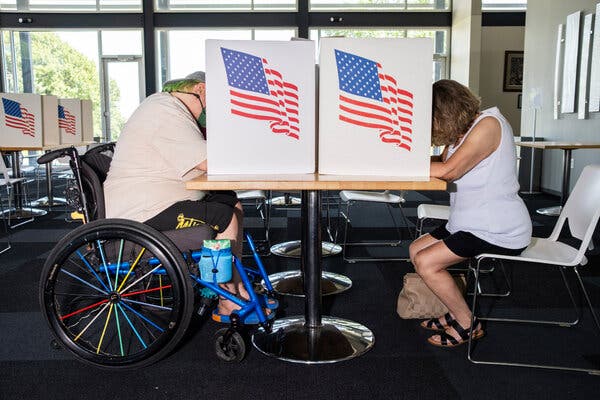
In a surprising turn, the governor races in two traditionally Republican states, Iowa and Ohio, are showing tight competition ahead of the November elections. This development comes as polls conducted by the New York Times/Siena reveal new dynamics in these Midwest battlegrounds.
The polls indicate a slim Democratic lead in Iowa while voters in Ohio are evenly split. This tight competition comes amid widespread dissatisfaction with President Trump’s performance among voters. Many express concern over the country’s current trajectory, with a majority stating the United States is veering in the wrong direction.
This disapproval could pose challenges for Republicans aiming to maintain control over the governor’s offices and Senate seats in both states. Both Iowa and Ohio are facing open governor races. In Iowa, Gov. Kim Reynolds opted not to seek a third full term, while Gov. Mike DeWine of Ohio reaches his term limit.
Over the past two decades, Iowa and Ohio have steadily shifted from swing states to reliable Republican territories, with Republican control of the governor’s offices and legislatures firmly established. In Iowa, all six members of Congress align with the Republican Party.
The governor race in Iowa is particularly close following the June 2 primary. Businessman Zach Lahn, known for his populist stance against agricultural interests, secured the Republican nomination by defeating Representative Randy Feenstra. Despite being labeled a “carpetbagger” due to his ties to Kansas, Lahn has gained traction by pledging to combat environmental pollution and cancer issues in Iowa.
This political landscape reflects the shifting sentiments and challenges facing Republicans as they approach the November elections.