
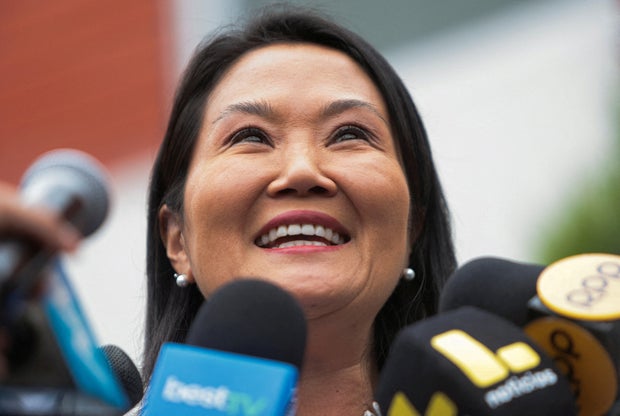
As of Tuesday, Peru’s right-wing presidential candidate Keiko Fujimori gained a significant lead in the presidential runoff election. With 99.86% of the votes counted, she held a narrow margin over her leftist opponent Roberto Sanchez. Fujimori captured 50.12% of the votes, maintaining a lead of over 43,000 votes, as reported by the National Office of Electoral Processes.
Despite the nearing completion of vote counting, election officials have yet to finalize the results. About 131 tally sheets, accounting for around 39,000 votes, still need processing. This number is unlikely to close the gap enough for Sanchez to overtake Fujimori. Consequently, the electoral authority announced it will delay declaring a winner until mid-July.
A victory for Fujimori would reinforce Latin America’s recent political shift to the right. Meanwhile, in neighboring Colombia, populist Abelardo de la Espriella recently secured a victory in a tense presidential runoff.
Concerns about crime have spurred voter support for hardline candidates like Fujimori. However, Sanchez has voiced discontent, stating he will not acknowledge a government led by Fujimori, blaming alleged electoral process violations. He claims there were administrative irregularities involving overseas ballots, which predominantly supported Fujimori. Approximately 300,000 such votes, influenced by support from the United States and Japan, favored Fujimori.
Fujimori’s party has expressed a desire to wait for all votes to be counted before officially declaring victory. The winning candidate will assume office on July 28 for a five-year term. This runoff election featured Keiko Fujimori, daughter of former President Alberto Fujimori, against Roberto Sanchez, linked to former President Pedro Castillo.
The election comes during a period of political turmoil in Peru, marked by several presidents facing legal and political challenges. Although many hoped this election would stabilize the country, the results reveal significant political divisions, particularly between the urban coastal regions and the rural, Indigenous southern areas.