
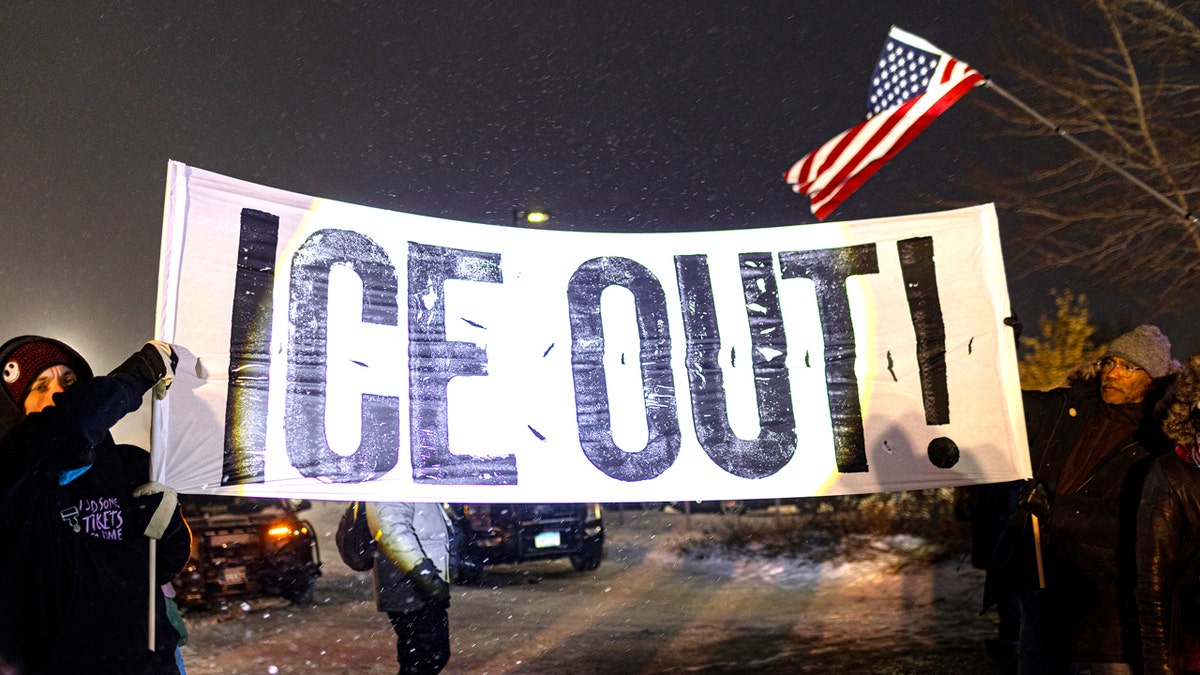
The Department of Homeland Security (DHS) has criticized Minnesota officials, claiming their actions regarding an ICE agent’s prosecution amount to a ‘political stunt.’ The conflict involves whether Gregory Morgan Jr., an Immigration and Customs Enforcement agent, should face charges in state or federal court. Morgan stands accused of pointing a firearm at motorists during a traffic incident as he returned from a federal immigration enforcement operation in the Twin Cities.
Morgan’s legal team, with support from federal authorities, argues that the Supremacy Clause of the U.S. Constitution shields him from state prosecution. This clause establishes that federal law takes precedence over conflicting state laws. Historically, courts have recognized that federal officers may be protected in specific situations when acting within their official duties.
However, Minnesota prosecutors contend that such protections do not apply in this case, asserting that Morgan’s actions were outside any legitimate federal law enforcement role. The dispute has expanded into a broader legal discussion about federal officers’ protections.
Hennepin County prosecutors aim to keep the case in state court. In contrast, the federal government supports Morgan’s effort to transfer it to federal court. The Department of Justice filed a notice for Senior Trial Attorney Paul Quast to represent the United States in the case.
“These actions by Minnesota sanctuary politicians are nothing more than a political stunt,” a DHS spokesperson stated. “States do not have the authority to charge a federal law enforcement officer while performing his official duties.”
The statement was released as Hennepin County Attorney Mary Moriarty’s office urged a federal judge to deny Morgan’s request to transfer the case from Minnesota’s jurisdiction. Prosecutors argued that Morgan’s “moment of road rage” should not be seen as part of a federal enforcement action.
The filing from the Hennepin County Attorney’s Office, in partnership with the Institute for Constitutional Advocacy and the Washington Litigation Group, asserted no meaningful connection exists between the alleged assault and Morgan’s responsibilities as an ICE agent. According to them, Morgan’s authority did not justify the confrontation with motorists on a state highway.
The filing noted, “There is no evidence of any job-related circumstance requiring the defendant to rush to his destination or to drive on the highway shoulder to get there.” The document stated that Morgan chose “to drive illegally on the shoulder to avoid rush-hour traffic” and pointed a firearm at those who obstructed his path.
Ryan Pacyga, Morgan’s attorney, filed a petition last week, asserting the events happened during Morgan’s federal law enforcement duties. He claimed Morgan and his partner feared “imminent bodily harm” during the incident.
Court records show Morgan was returning to the Whipple Federal Building at Fort Snelling on February 5 after taking part in Operation Metro Surge. The incident occurred on Highway 62 near the Interstate 35W interchange. Prosecutors allege Morgan, accompanied by another ICE agent, drove on the highway shoulder during rush hour when a Cadillac blocked their path, prompting Morgan to draw and point a handgun at the vehicle’s occupants.
One motorist called 911 to report a man aiming a Glock at his face, while both occupants later expressed they feared for their safety. Morgan was charged with two counts of second-degree assault and was released after posting $100,000 bail.
This case is part of a larger legal context following Operation Metro Surge. Another ICE agent, Christian Castro, faces multiple assault charges related to a separate incident, which resulted in protests across Minneapolis.
The Justice Department, Moriarty’s office, and Pacyga were contacted for further comments regarding the ongoing cases.