
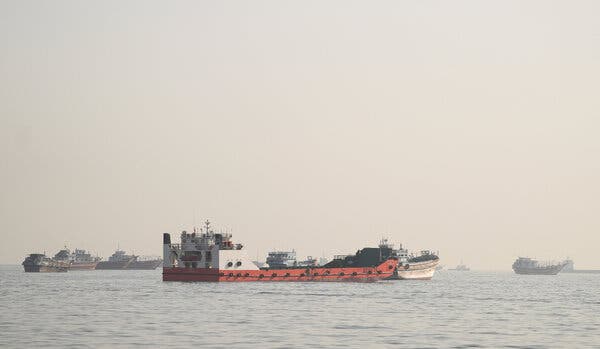
Iran announced plans to charge fees for services provided to vessels passing through the Strait of Hormuz, despite previous declarations that the passage would remain toll-free. This move could introduce new costs for global shipping of energy supplies, which had not been required before the recent U.S.-Israeli conflict with Iran.
President Trump stated that the strait would remain permanently free of tolls, but Iran indicated that fees would apply for unspecified services. The Iranian Foreign Ministry spokesperson, Esmaeil Baghaei, clarified that Iran would not impose transit tolls, but fees could be charged for services provided. However, details regarding the services were not specified, although environmental charges were suggested.
Legally, there is a distinction between tolls, a payment for passage, and fees for actual services. Maritime law experts assert that while fees can be legitimate in specific contexts, a toll for using the Strait of Hormuz would not be permissible.
The issue of charging for passage through the strait arose after the U.S. and Israeli attacks on Iran led to retaliatory strikes on commercial ships in regional waters. Following these events, Iranian officials proposed fees beginning in March, leading to the establishment of the Persian Gulf Strait Authority by May, responsible for managing safe passage permits.
In May, Iran and Oman discussed a payment system for ships, focusing on fees for services rendered.