
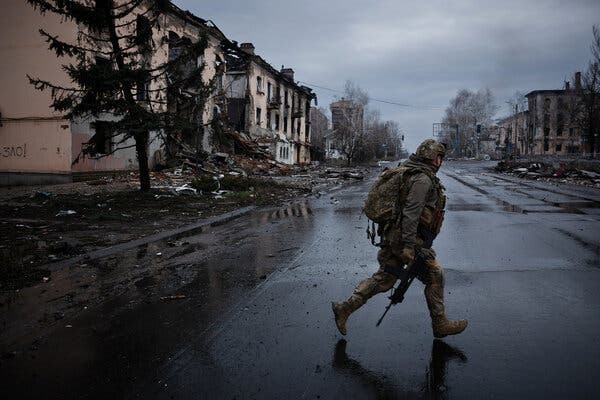
The conflict in Ukraine has drawn numerous comparisons to World War I due to its intense infantry battles and high casualties. Initially, the notion that this war could outlast such a historic and lengthy conflict seemed improbable. However, as of Thursday, Ukraine’s war has lasted 1,569 days, exceeding the duration of World War I.
Russian President Vladimir V. Putin launched the invasion of Ukraine in February 2022, expecting a swift victory within days. Despite these expectations, Ukrainian forces pushed back, transitioning the fight into a protracted war of attrition. Even soldiers on the ground, like one referring to himself by the call sign ‘France,’ expected the war to find a resolution after two or three years of fighting, anticipating some political agreement.
The war continues, and no peace talks are underway. Surveys indicate that approximately half of Ukrainians do not foresee an end before next year. This outlook would bring the conflict close to yet another significant benchmark: World War II’s six-year duration. Some Ukrainians even regard the war’s origins as tracing back to 2014, following Russia’s annexation of Crimea.
The ongoing war’s impact on regions like Kostiantynivka, which suffers from drone warfare, highlights the evolution and adaptation within modern conflict scenarios. The technological advancements seen in this war echo the transformations during World War I. In both conflicts, new technologies have redefined the nature of warfare, leading to a grueling and enduring struggle.
As the world observes the lengthy nature of Ukraine’s war, questions rise about future resolutions and the continuing parallels with past global conflicts.