
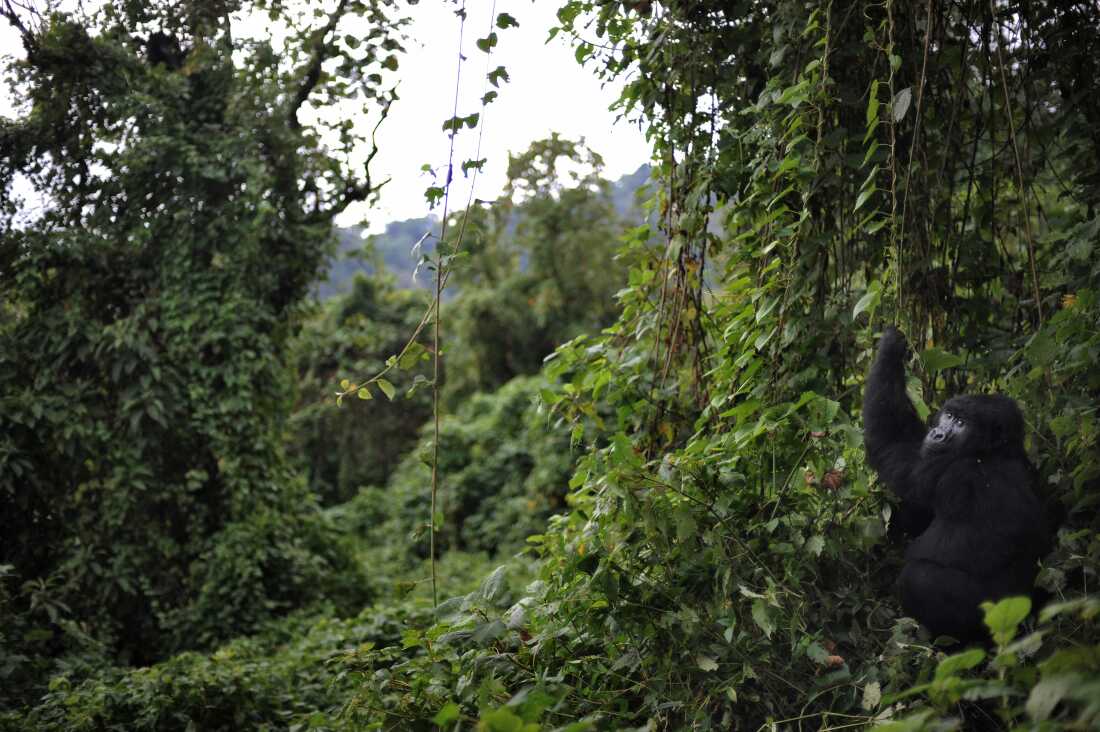
Virunga National Park: A Sanctuary for Mountain Gorillas
Located in the Democratic Republic of Congo, Virunga National Park shelters several hundred mountain gorillas, representing about a third of the global population. Rangers are now implementing checkpoints to screen visitors for Ebola, aiming to shield these susceptible primates from the virus.
Roberto Schmidt/AFP/via Getty Images
The director of Virunga National Park, Emmanuel de Merode, often finds serenity in the park’s beauty. “Most evenings there are elephants crossing the river and pods of hippos,” he says, surrounded by Mitumba Mountains, home to lowland gorillas, and the snow-capped Rwenzori Mountains. Despite this calm, the park faces brutal rebel violence, compounded by an Ebola outbreak.
Challenges in Combating Ebola and Protecting Wildlife
De Merode leads over 800 park rangers, facing these dual threats with limited resources. The region has endured decades of conflict and a significant Ebola outbreak between 2018 and 2020. “The current situation is the worst we’ve experienced in 30 years,” he states, citing the absence of a vaccine for the active Ebola strain, decreased international aid, and escalating armed conflict. Nonetheless, the team persists in efforts to contain Ebola, constructing screening posts and safeguarding gorillas.
Collaboration and Strategy
De Merode emphasizes the importance of building screening posts along transit routes. Virunga National Park acts as a natural firewall, offering unique locations for effective screening. This strategy helps trace contacts faster when cases spread eastward into Uganda, Rwanda, or Kenya.
In partnership with Okapi Wildlife Reserve, the park manages the spread toward Kisangani and downstream to Kinshasa. The park is also constructing five screening posts at a cost of $44,000 each. These sites feature complex constructions with diagnostic rooms, internet connectivity, analysis rooms, and robust isolation centers. Security, including paramedics, is a key component.
Impact of Declining Foreign Aid
The DRC suffers from reduced foreign aid, significantly impacting Ebola response capabilities. International aid dropped from $1.4 billion in 2024 to just over $400 million in 2025. This decline has led to insufficient healthcare resources, resulting in the deaths of many health workers.
Faced with shortages in body bags and thermometers, the park managed to procure 100 body bags swiftly and plans to bring in 1,000 more. Special thermometers are also in short supply. With minimal vehicles for healthcare operations, five park vehicles are aiding health services.
Response to the Conflict
While violence in eastern DRC is not new, attacks within the park have increased due to the ongoing conflict. Recent weeks have seen multiple attacks on rangers, resulting in deaths and injuries. The connection between violence and the Ebola outbreak complicates efforts to manage the situation.
Protecting the Gorilla Population
Virunga is renowned for its gorillas, now numbering over 1,200 globally. However, Ebola poses a significant threat, with a high mortality rate among infected gorillas. Measures to protect them include halting tourism and reducing human contact, minimizing exposure to poaching threats.
Despite previous success in managing Ebola risks to gorillas, vigilance remains crucial. The park’s proactive strategies offer hope for safeguarding these endangered creatures.