
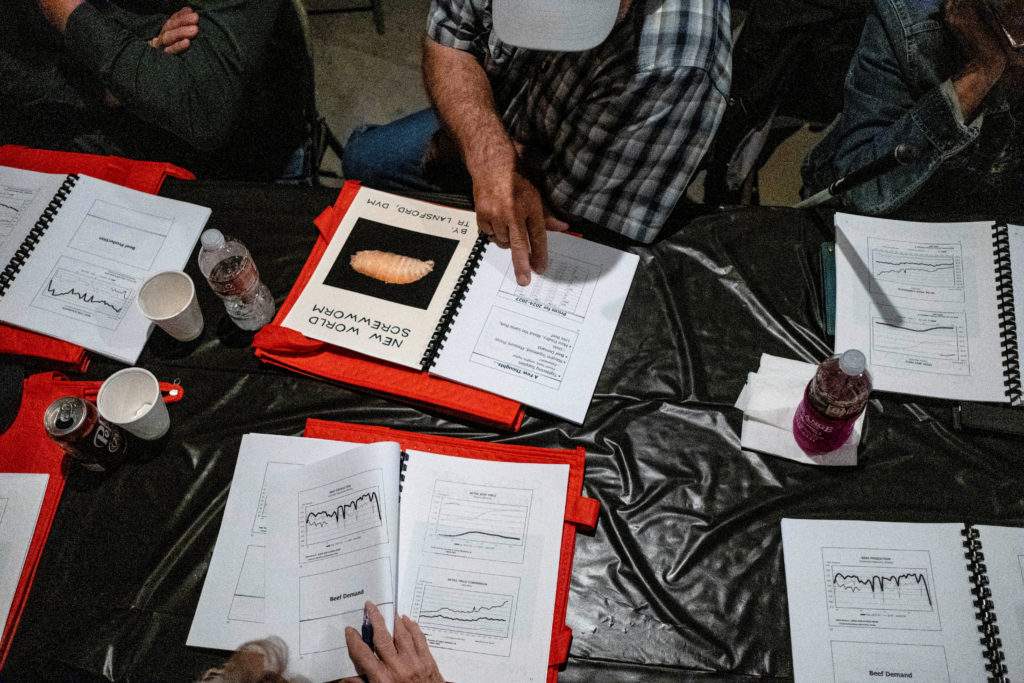
The U.S. Department of Agriculture has confirmed the presence of the New World screwworm fly in south Texas. This marks the first time in decades that this parasitic fly, whose larvae can consume living flesh, has posed a threat to U.S. cattle. The last significant domestic occurrence was over a generation ago.
Officials confirmed the latest case in a young calf in La Pryor, Texas, near the Mexico border. Texas has implemented a quarantine zone within a 12-mile radius to prevent the movement of warm-blooded animals without proper inspection. Agriculture Secretary Brooke Rollins noted that detailed measures are in place to handle the situation without panic.
The New World screwworm fly primarily threatens livestock, though it does not infest food. Authorities are optimistic about the infected calf’s recovery. Officials have been monitoring the fly’s movement across Mexico, recalling historic losses that the pest caused before its eradication in the 1970s. It last appeared in Texas in 1966.
Preventive efforts involved releasing sterile screwworm flies to mate with wild flies, preventing reproduction and reducing their population. USDA has expressed confidence in these measures, suggesting little risk of widespread infestation. Rollins remains optimistic about preventing the pest’s establishment in the U.S.
The fly poses a threat due to its flesh-eating larvae that originate from eggs laid in wounds or mucous membranes. This danger is not solely to cattle but extends to other mammals and occasionally humans. Untreated cases can lead to death.
In previous instances, effective elimination strategies included sterile fly releases. However, infrastructure for breeding these flies had been scaled down in the U.S. and centralized to Panama. In response to the current threat, the USDA has allocated significant funds to revitalize breeding facilities and erect new ones, both in Mexico and Texas.
Efforts to curb the threat include installing thousands of fly traps along the border, performing extensive testing on fly and animal samples, and closing the border to livestock imports. These actions are part of a broader strategy to contain the situation.
The public must adhere to quarantine regulations to halt further spread. Authorities urge staying within designated zones to support containment actions. Public cooperation remains critical in preventing a broader crisis.